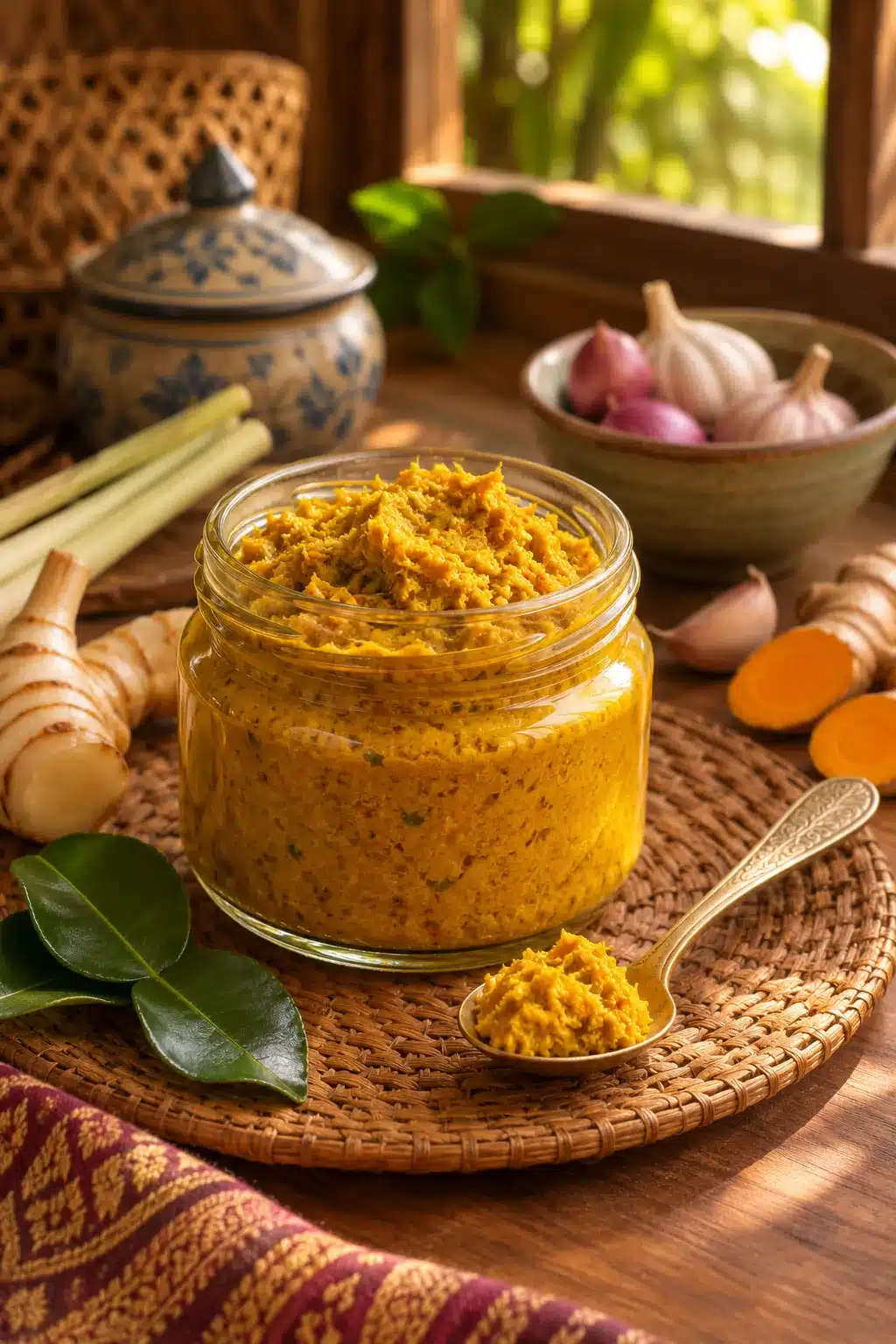
Easy Thai yellow curry paste brings roasted garlic, shallots, ginger, dried chiles, lemongrass, and warm spices together in one fragrant base. The paste takes about 55 minutes, but much of that time is hands-off roasting and soaking. Make a generous batch, use what you need for curry, and freeze the rest in small portions so a deeply flavored dinner is close whenever you need it.
What makes this yellow curry paste useful
This is a grocery-store-friendly curry paste rather than a hard-to-source project. Roasting the shallots and garlic softens their sharpness and adds sweetness, while fresh ginger and lemongrass keep the flavor bright. Dried Thai chiles let you control the heat: use fewer for a mild paste or more for a hotter batch.
The recipe yields about 2 cups, enough for several curry meals. It is also useful beyond curry: stir a spoonful into coconut milk for vegetables, whisk it into a quick sauce for shrimp, or add a little to a soup base.
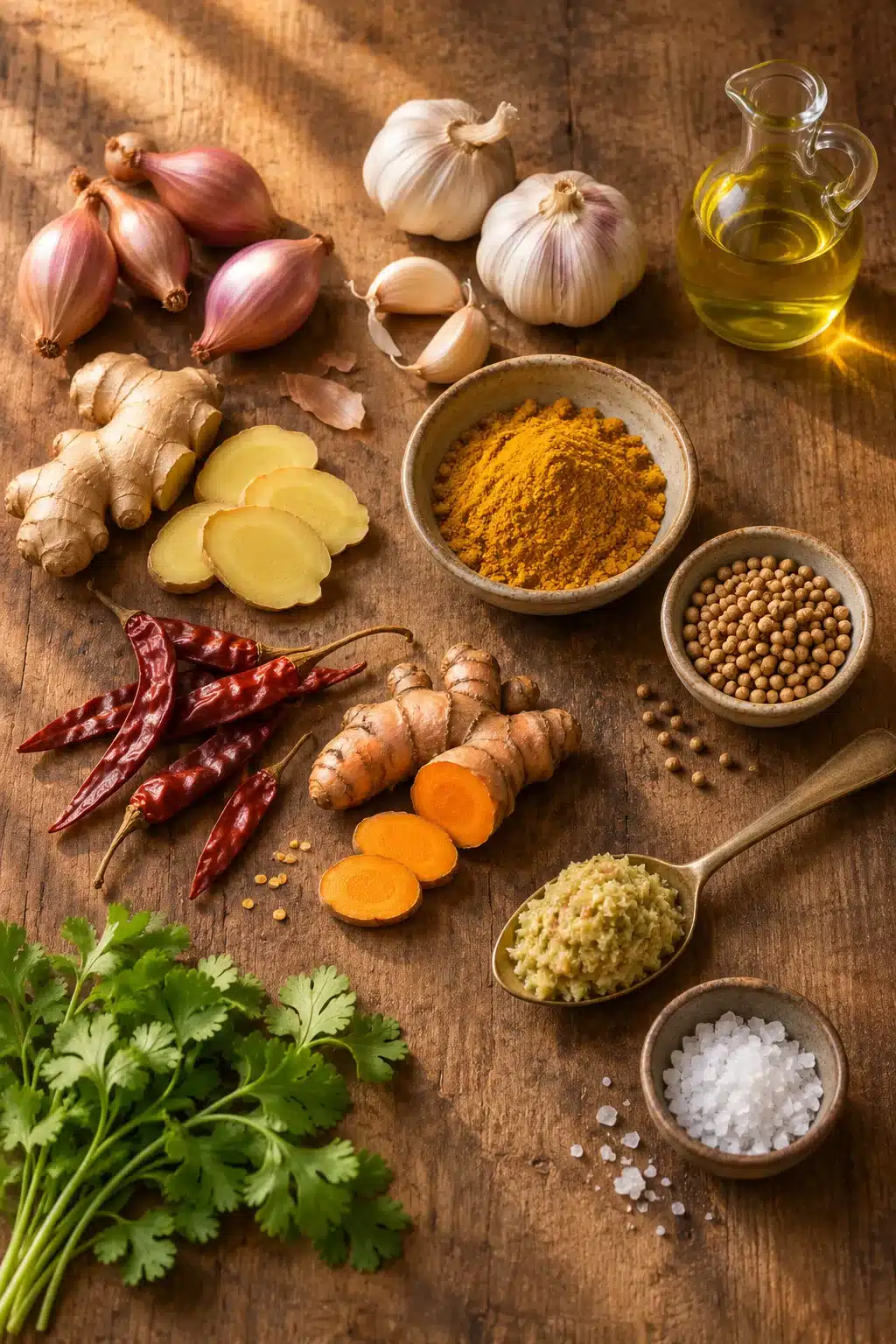
Ingredients for easy Thai yellow curry paste
- 4 large shallots, peeled
- 6 tablespoons avocado oil, divided
- 4 large heads garlic, outer paper removed and tops trimmed
- 1 6-inch piece fresh ginger, peeled and thinly sliced
- 5–20 whole dried Thai chili peppers
- 1 1/2 tablespoons salt
- 2–3 tablespoons turmeric
- 2–3 tablespoons mild curry powder
- 2 teaspoons roasted ground coriander
- 3 tablespoons lemongrass paste
- 1/4 cup packed cilantro leaves and stems
How to make the curry paste
The method is deliberately staged so each aromatic reaches the right texture before blending. Follow the temperatures and timings closely: the ginger comes out earlier, while the shallots and garlic need the extra heat to become tender and golden.
Preheat the oven to 350°F. Wrap the peeled shallots with 2 tablespoons oil, the sliced ginger with 2 tablespoons oil, and each trimmed garlic head with 2 tablespoons oil in separate foil packets. Bake the packets for 15 minutes. Remove the ginger, raise the oven to 400°F, and roast the shallots and garlic for 30 minutes more, until golden and fragrant. Cool, then squeeze the garlic from its skins. Cover the dried chiles with boiling water and soak for 15 minutes. Drain. Add the roasted shallots, garlic, ginger, drained chiles, salt, turmeric, curry powder, coriander, lemongrass paste, and cilantro to a food processor or powerful blender. Pulse or blend until a smooth or slightly chunky paste forms.
Start with the aromatics. Heat the oven to 350°F. Put the shallots in one foil packet with 2 tablespoons oil, the ginger in a second with 2 tablespoons oil, and the trimmed garlic heads in a third with the remaining 2 tablespoons oil. Seal the packets well so the aromatics roast gently.
- Place all the packets on a baking sheet and bake for 15 minutes.
- Remove the ginger, raise the oven to 400°F, and roast the shallots and garlic for 30 minutes more. They should be soft, golden, and very fragrant. Cool them enough to handle, then squeeze the garlic cloves from their skins.
- While the aromatics roast, cover the dried chiles with boiling water. Soak for 15 minutes, then drain thoroughly.
- Add the roasted shallots, garlic, ginger, drained chiles, salt, turmeric, curry powder, coriander, lemongrass paste, and cilantro to a food processor or powerful blender.
- Pulse or blend until the paste is smooth, or leave it slightly textured if you prefer. Scrape down the bowl once or twice so the spices and aromatics combine evenly.
Blend the roasted aromatics, drained chiles, salt, turmeric, curry powder, coriander, lemongrass paste, and cilantro in a food processor until a smooth or slightly chunky paste forms.
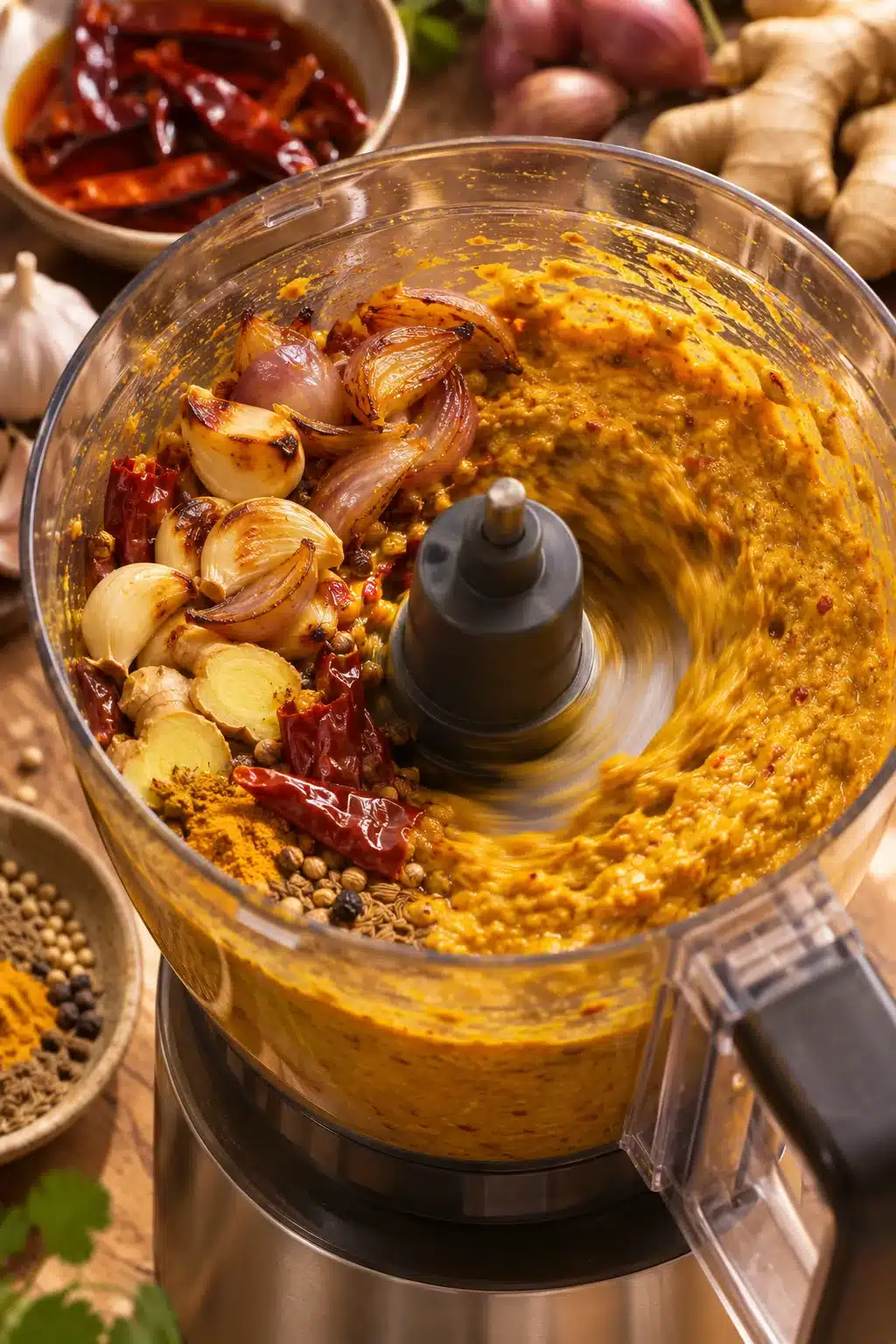
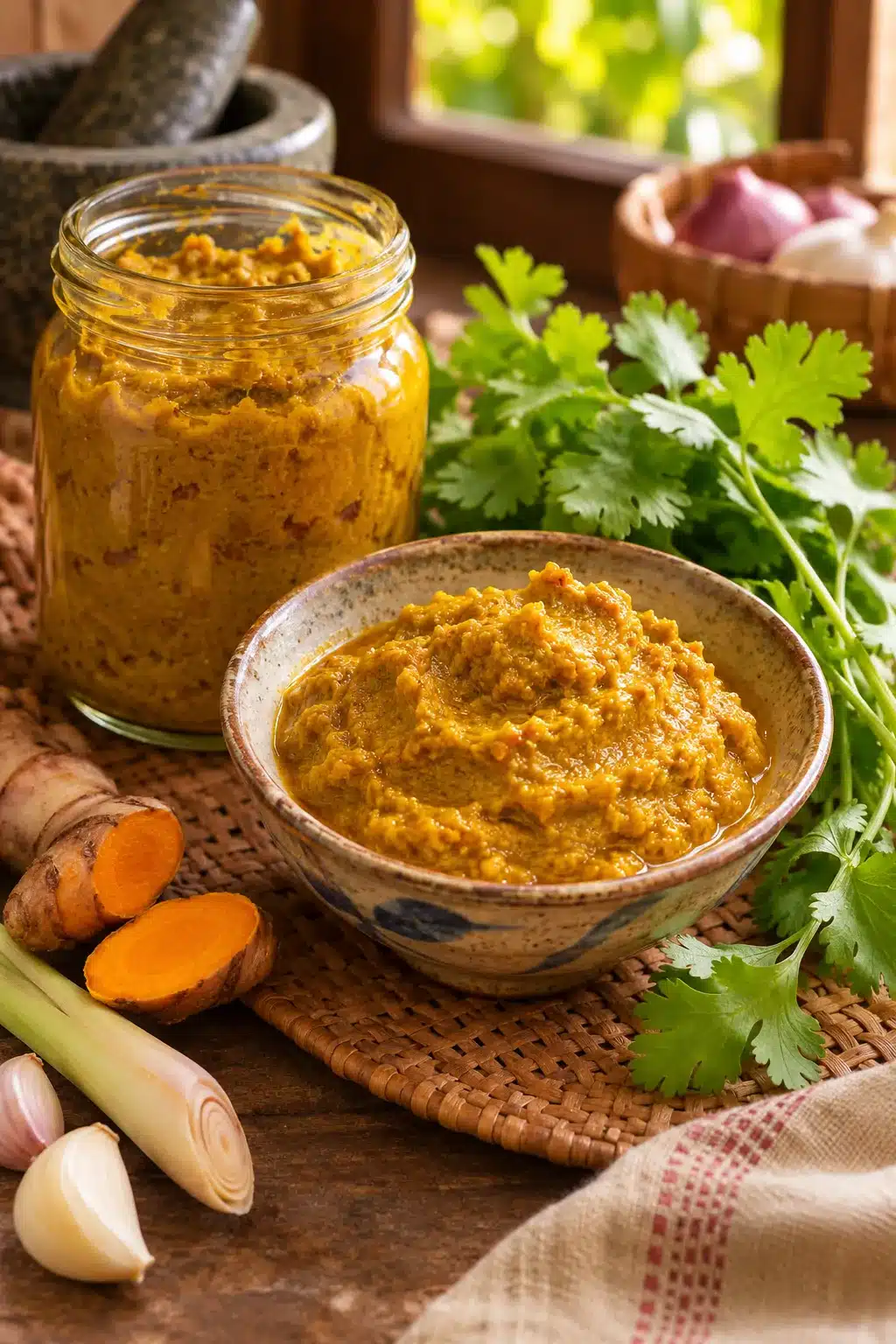
The finished paste should be thick enough to mound on a spoon and vividly yellow from the turmeric. If your machine needs help moving the mixture, pause to scrape rather than adding extra liquid; the oil and roasted aromatics are enough to make a spreadable paste.
How to use it
For a simple weeknight curry, warm 1/3 cup paste in a little oil, add coconut milk, and simmer with vegetables, chicken, beef, shrimp, or tofu. Add the protein and vegetables according to their cooking times, then taste for salt and finish with lime or fresh herbs. The paste also makes a flavorful base for roasted vegetables or a quick noodle sauce.
Why the flavor works
There is a useful balance in this paste. Roasted alliums provide body and sweetness, ginger and lemongrass bring fresh lift, and turmeric gives the color associated with yellow curry. Coriander and curry powder fill in the warm spice notes, while the chile quantity controls heat without changing the basic texture. Because the paste is concentrated, a little can season a whole pan of coconut milk and vegetables.
Serving ideas
Use the paste with coconut milk and serve the finished curry over jasmine rice. It is equally good with rice noodles, roasted cauliflower, green beans, potatoes, tofu, chicken, or shrimp. For a quick appetizer-style use, loosen a spoonful with coconut milk and serve it as a warm dip for roasted vegetables or grilled skewers. Add lime juice at the end if the curry needs brightness.
Tips and optional variation
Choose the chile quantity based on the final dish, not just the paste. Five chiles produce a gentler result, while 15–20 create substantial heat. Wear gloves when handling the soaked peppers and avoid touching your eyes.
Optional variation: for a more traditional flavor, replace part of the dried chile blend with harder-to-find Thai curry ingredients such as galangal or shrimp paste. Keep that adjustment optional so the main grocery-store version stays balanced and accessible.
Storage
Store the paste in a clean, airtight container in the refrigerator for about a week. Press a piece of parchment or plastic wrap directly against the surface to limit air exposure. For longer storage, spoon it into an ice cube tray, freeze until solid, and transfer the portions to a freezer container. Thaw only what you need.
Quick answers
Can I make the paste less spicy?
Yes. Start with 5 dried chiles and add more next time if you want extra heat. Removing some seeds can also soften the intensity, although chile heat varies.
What if I do not have a food processor?
A high-powered blender works well. Add the ingredients in batches if necessary and stop to scrape the sides until the paste is evenly blended.
How much paste should I use?
About 1/3 cup is a useful starting point for a curry that serves four to six, but adjust to the amount of coconut milk, protein, and vegetables in your dish.
FAQs
Once this easy Thai yellow curry paste is portioned and chilled, a flavorful curry is much easier to assemble. Keep a batch ready for vegetables, noodles, seafood, or a comforting coconut curry whenever dinner needs a bright, warmly spiced start.

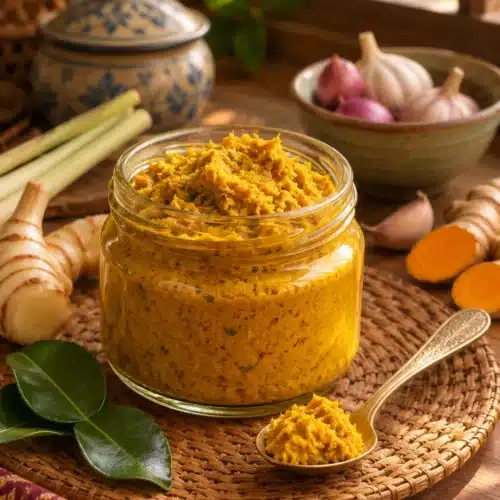
Easy Thai Yellow Curry Paste
Ingredients
Ingredients
- 4 large shallots peeled
- 6 tablespoons avocado oil divided
- 4 large heads garlic outer paper removed and tops trimmed
- 1 6-inch piece fresh ginger peeled and thinly sliced
- 5–20 whole dried Thai chili peppers rehydrated
- 1 1/2 tablespoons salt
- 2–3 tablespoons turmeric
- 2–3 tablespoons mild curry powder
- 2 teaspoons roasted ground coriander
- 3 tablespoons lemongrass paste
- 1/4 cup cilantro leaves and stems packed
Instructions
Instructions
- Preheat the oven to 350°F.
- Wrap the peeled shallots with 2 tablespoons oil, the sliced ginger with 2 tablespoons oil, and each trimmed garlic head with 2 tablespoons oil in separate foil packets.
- Bake the packets for 15 minutes. Remove the ginger, raise the oven to 400°F, and roast the shallots and garlic for 30 minutes more, until golden and fragrant. Cool, then squeeze the garlic from its skins.
- Cover the dried chiles with boiling water and soak for 15 minutes. Drain.
- Blend the roasted aromatics, drained chiles, salt, turmeric, curry powder, coriander, lemongrass paste, and cilantro in a food processor until a smooth or slightly chunky paste forms.