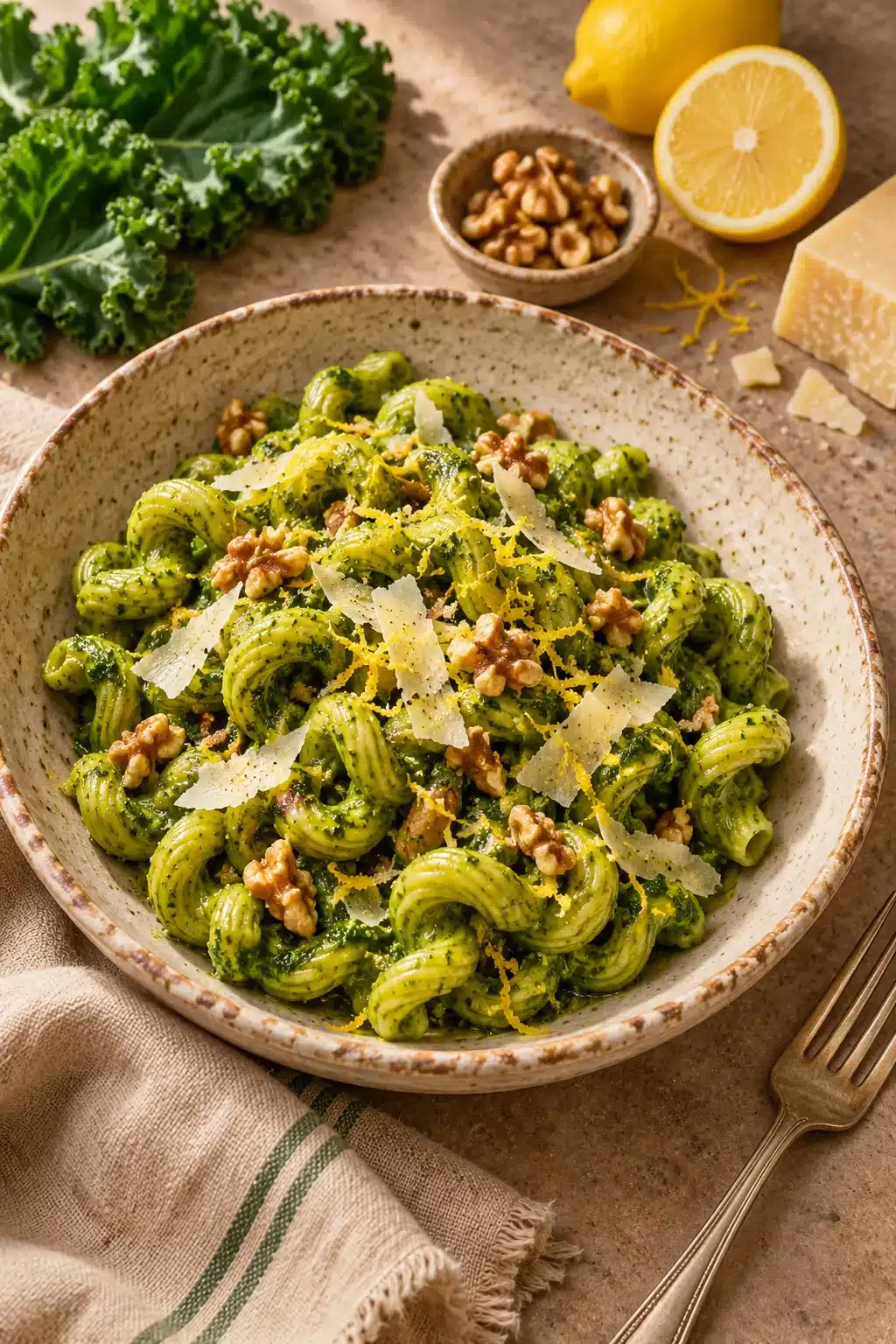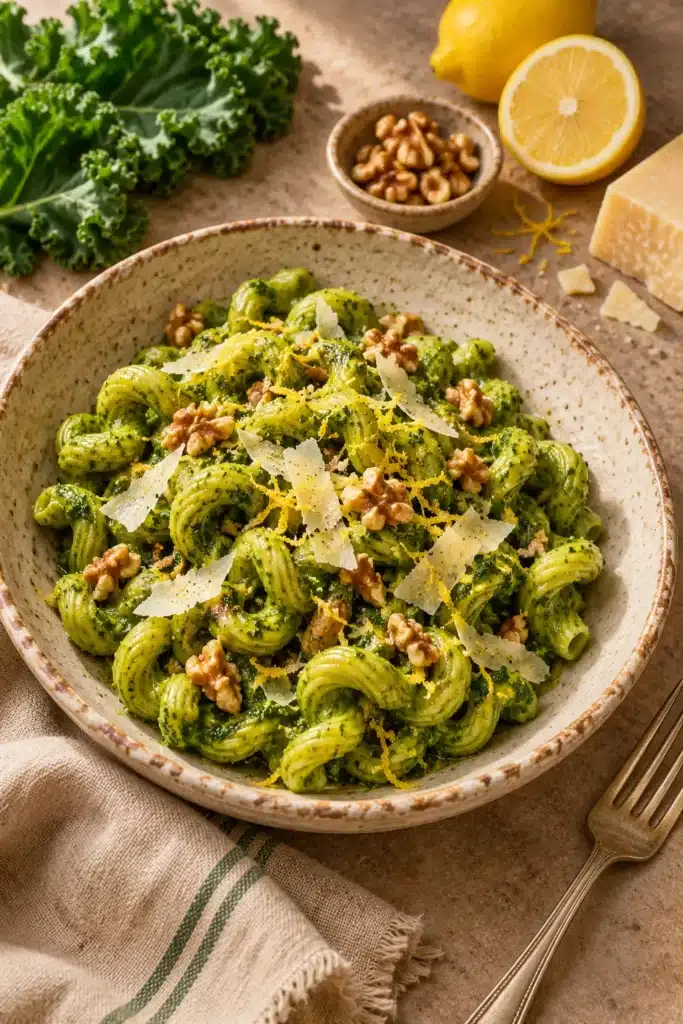
Kale pesto pasta is a bright, quick dinner that turns sturdy kale into a smooth, lemony sauce with walnuts, garlic, Parmesan, and olive oil. The pesto comes together while the pasta cooks, so the whole meal stays practical for a busy evening. Hot pasta water helps the sauce cling to every curve, while toasted walnuts add a gently nutty backbone. Serve it immediately with extra Parmesan for a fresh, satisfying bowl that is ready in about 25 minutes.
What makes kale pesto pasta work
Kale brings freshness without the delicate handling basil needs, and it keeps its color after the pasta is tossed. Lemon cuts through the olive oil and Parmesan, while walnuts give the pesto body. The sauce should be finely blitzed but still have enough texture to feel homemade.
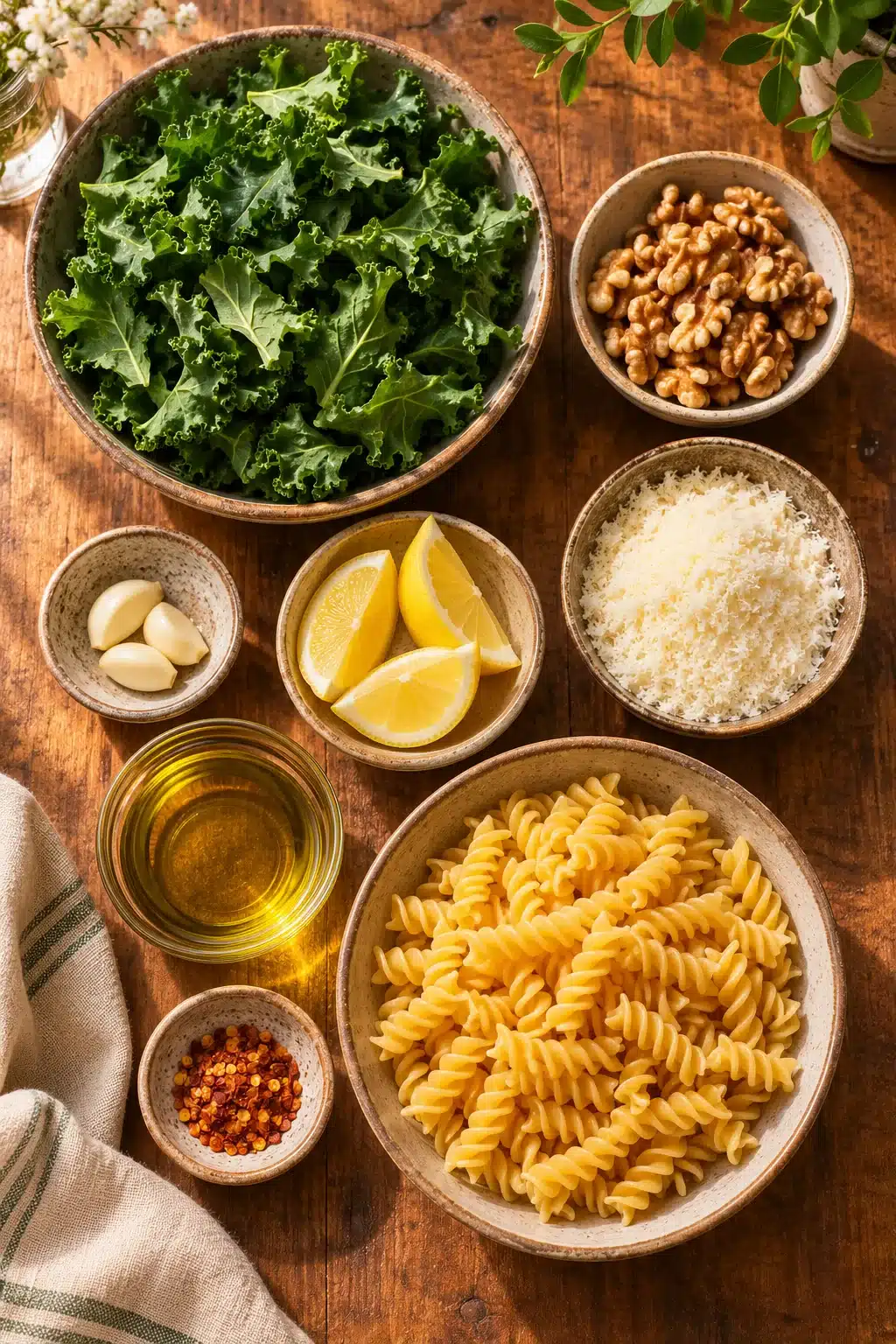
Ingredients
- 4 cups tightly packed kale leaves, torn by hand
- 1/2 cup finely grated Parmesan, plus more to serve
- 1 minced garlic clove
- 1/2 cup walnuts
- 2 teaspoons lemon zest and 3 tablespoons lemon juice
- 1/2 cup extra virgin olive oil
- 3/4 teaspoon kosher salt and 1/2 teaspoon optional red pepper flakes
- 500 g pasta, 2 teaspoons salt for the water, and 1/3 cup reserved pasta cooking water
How to make kale pesto pasta
- Bring a large pot of water to a boil with the pasta salt. Cook the pasta according to the packet directions.
- Before draining, reserve 1 cup of pasta cooking water, then drain and return the pasta to the pot.
- Toast the walnuts in a dry pan over medium-high heat for about 3 minutes, tossing until lightly browned and nutty.
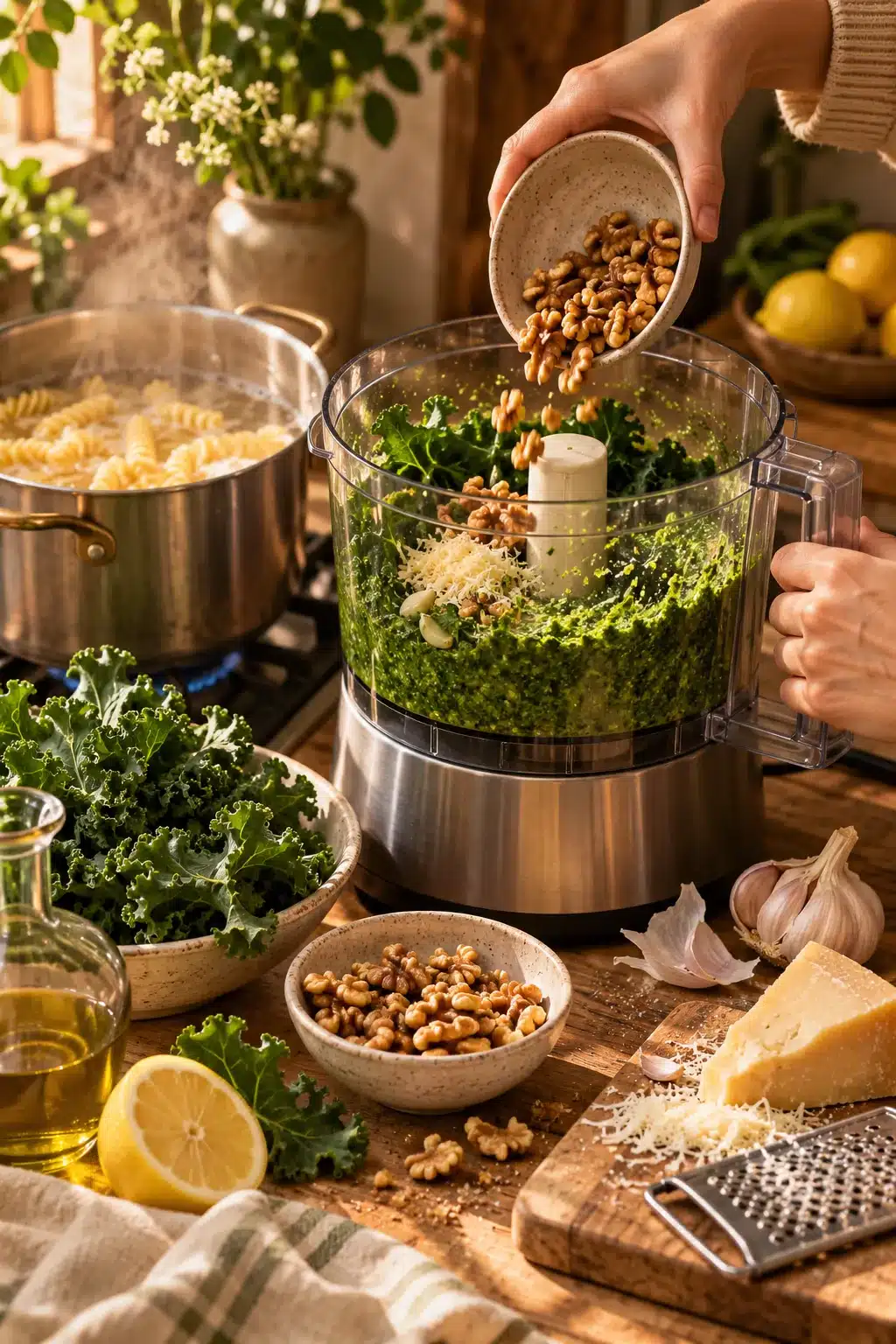
- Add the hot walnuts, kale, Parmesan, garlic, lemon zest, lemon juice, olive oil, pesto salt, and red pepper flakes to a bowl. Blitz until finely chopped and cohesive.
- Pour the pesto over the hot pasta with 1/3 cup reserved water. Toss until evenly coated, loosening with more water if needed, and finish with Parmesan.
Serving ideas
Serve the pasta hot with extra Parmesan and a little lemon zest. A simple green salad or roasted vegetables make an easy side. For lunch, it is also pleasant at room temperature as a pasta salad; add a splash of water or olive oil if the sauce tightens.
Tips and optional variation
Reserve more pasta water than you think you need because the starch is what turns the pesto into a glossy coating. For an optional variation, replace the walnuts with cashews or almonds, keeping the same quantity. Add cooked white beans or shredded chicken when you need a more substantial meal.
Storage and reheating
Refrigerate leftovers in a sealed container for up to three days. Reheat gently in a skillet or microwave with a spoonful of water, tossing until the sauce loosens. Avoid high heat, which can make the Parmesan and oil separate.
Quick answers
Can I use another pasta shape?
Yes. Long or short pasta both work; choose a shape with ridges or curves if you want it to hold more pesto.
How do I keep the pesto green?
Work quickly after blitzing and toss it with hot pasta rather than cooking the pesto in a pan.
Can I make it less spicy?
Leave out the red pepper flakes or replace them with a small amount of black pepper.
FAQ
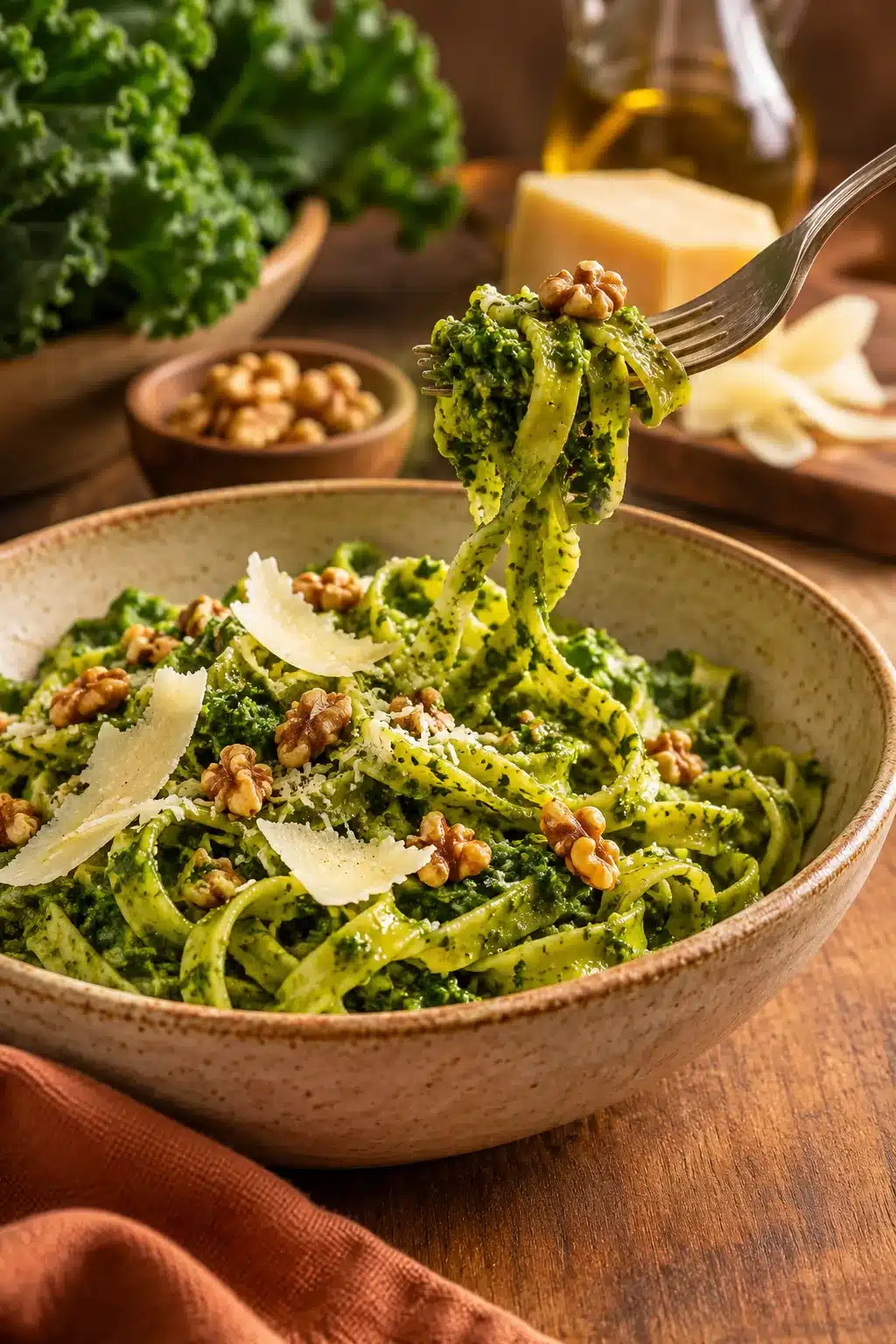
This kale pesto pasta is at its best when the sauce is bright, loose, and freshly tossed. Keep the pasta water nearby, finish with Parmesan, and you have a fast dinner with plenty of texture and flavor.
Why this kale pesto pasta is useful
This recipe solves several weeknight problems at once. Kale is sturdy, affordable, and easy to prepare because the leaves can be torn away from the stems. Walnuts add richness without requiring a separate sauce base, and the lemon keeps the finished dish lively rather than heavy. The pesto is blended while the pasta cooks, which means the two parts arrive at the same time and the hot pasta helps distribute the sauce evenly.
The order matters. Toasting the walnuts first develops a deeper aroma, while adding them hot to the blender or processor helps the pesto smell especially nutty. The kale does not need to become perfectly silky; a fine, cohesive texture gives the pasta little green flecks and makes the dish feel generous. Parmesan adds salt and savory depth, so taste before adding more salt at the table.
Texture and timing cues
Start the pesto as soon as the pasta water is boiling. The kale should look finely chopped and moist after blending, with no large tough pieces. If it seems too thick, add a small spoonful of pasta water. When the pasta is drained, it should be tender but still hold its shape. Toss immediately while it is hot, adding the reserved water gradually until the sauce looks glossy and coats the pasta instead of collecting underneath.
Do not simmer the pesto for a long time after blending. Heat from the pasta is enough to soften the garlic and bring out the Parmesan. Extended cooking can dull the lemon flavor and cause the cheese and oil to separate. A final taste should be bright, savory, and gently nutty, with heat from the pepper flakes only if you chose to include them.
Planning a complete dinner
For a simple meal, put the pasta on first and wash the kale while the water heats. Set the walnuts, cheese, garlic, and lemon near the work area so the pesto can be assembled without searching through the kitchen. A crisp salad with a sharp vinaigrette balances the rich olive oil, while roasted broccoli or green beans make the plate more substantial. This is also a useful recipe for a meatless dinner because the walnuts and Parmesan add satisfying richness.
For a larger table, keep extra Parmesan and lemon wedges nearby. The recipe is easy to scale, but a crowded food processor can leave the kale uneven, so blend in batches if necessary. Use a wide bowl for tossing; it gives the pesto room to spread over the pasta and makes it easier to judge whether another splash of cooking water is needed.
Common troubleshooting
If the sauce tastes flat, it usually needs a little more lemon juice or salt rather than more oil. If it is too sharp, add Parmesan and a few drops of olive oil. If the pasta looks dry after standing, stir in warm water one tablespoon at a time. If the pesto is fibrous, the kale stems may not have been removed fully; blend longer, or use younger leaves next time. These small adjustments preserve the intended balance without changing the core recipe.
Walnuts can burn quickly, so stay near the pan and toss them regularly. A few toasted brown spots are helpful; a dark, bitter smell is not. Likewise, reserve the cooking water before the colander goes into the sink. That starchy liquid is a key ingredient, not just a backup, and it gives the finished kale pesto pasta its smooth, clingy texture.
Optional variation
Optional variation: use cashews or almonds in place of walnuts, or omit the nuts for a lighter sauce. You can also fold in white beans, shredded rotisserie chicken, or halved cherry tomatoes after tossing. Keep these additions optional so the primary kale pesto pasta remains balanced and the pesto-to-pasta ratio stays right.

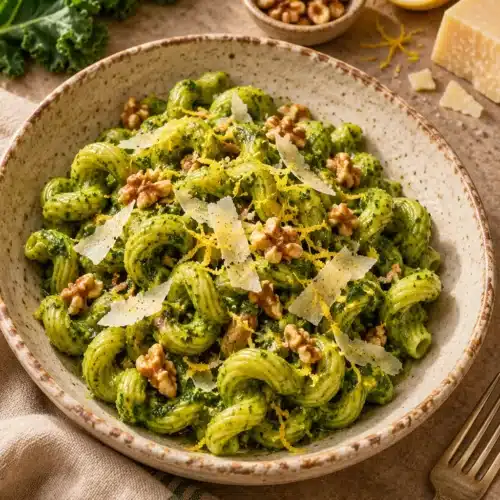
Kale Pesto Pasta with Walnuts and Parmesan
Ingredients
Ingredients
- 4 cups kale leaves tightly packed, torn by hand
- 1/2 cup Parmesan finely grated
- 1 clove garlic minced
- 1/2 cup walnuts
- 2 tsp lemon zest
- 3 tbsp lemon juice
- 1/2 cup extra virgin olive oil
- 3/4 tsp kosher salt for pesto
- 1/2 tsp red pepper flakes
- 500 g pasta any shape
- 2 tsp kosher salt for pasta water
- 1/3 cup reserved pasta cooking water
- Parmesan for serving
Instructions
Instructions
- Bring a large pot of water to a boil with the pasta salt. Cook the pasta according to the packet directions.
- Before draining, reserve 1 cup of pasta cooking water, then drain and return the pasta to the pot.
- Toast the walnuts in a dry pan over medium-high heat for about 3 minutes, tossing until lightly browned and nutty.
- Add the hot walnuts, kale, Parmesan, garlic, lemon zest, lemon juice, olive oil, pesto salt, and red pepper flakes to a bowl. Blitz until finely chopped and cohesive.
- Pour the pesto over the hot pasta with 1/3 cup reserved water. Toss until evenly coated, loosening with more water if needed, and finish with Parmesan.