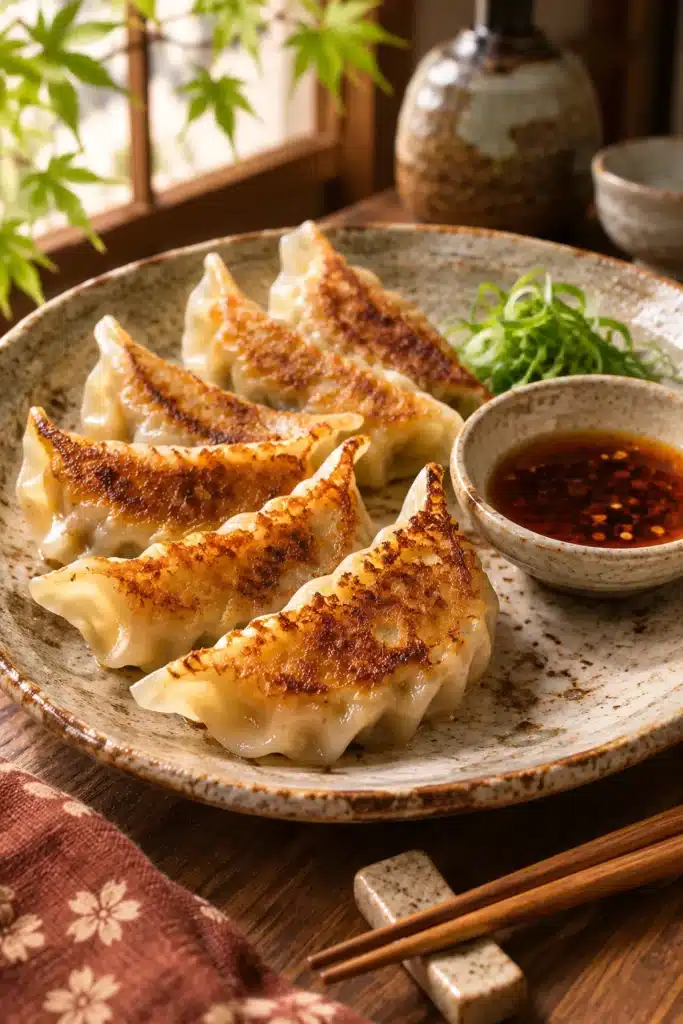
These gyoza japanese dumplings are a practical appetizer with juicy pork, finely chopped cabbage, garlic chives, fresh ginger, and soy sauce tucked into pleated wrappers. They develop a crisp skillet base while covered steaming makes the centers tender. This guide explains the filling, shaping, pan-frying, dipping sauce, storage, and the visual cues that help you cook a whole batch confidently.
These gyōza Japanese dumplings bring together juicy pork, finely chopped cabbage, garlic chives, ginger, and soy sauce inside pleated wrappers. The pan-frying method gives each dumpling a deeply golden, crisp base, while a short covered steam keeps the wrapper tender and cooks the filling through. You can shape the whole batch ahead, cook a dozen for dinner, and freeze the rest for another fast meal. The most important details are squeezing the cabbage dry, sealing the wrappers firmly, and waiting for the water to evaporate before serving.
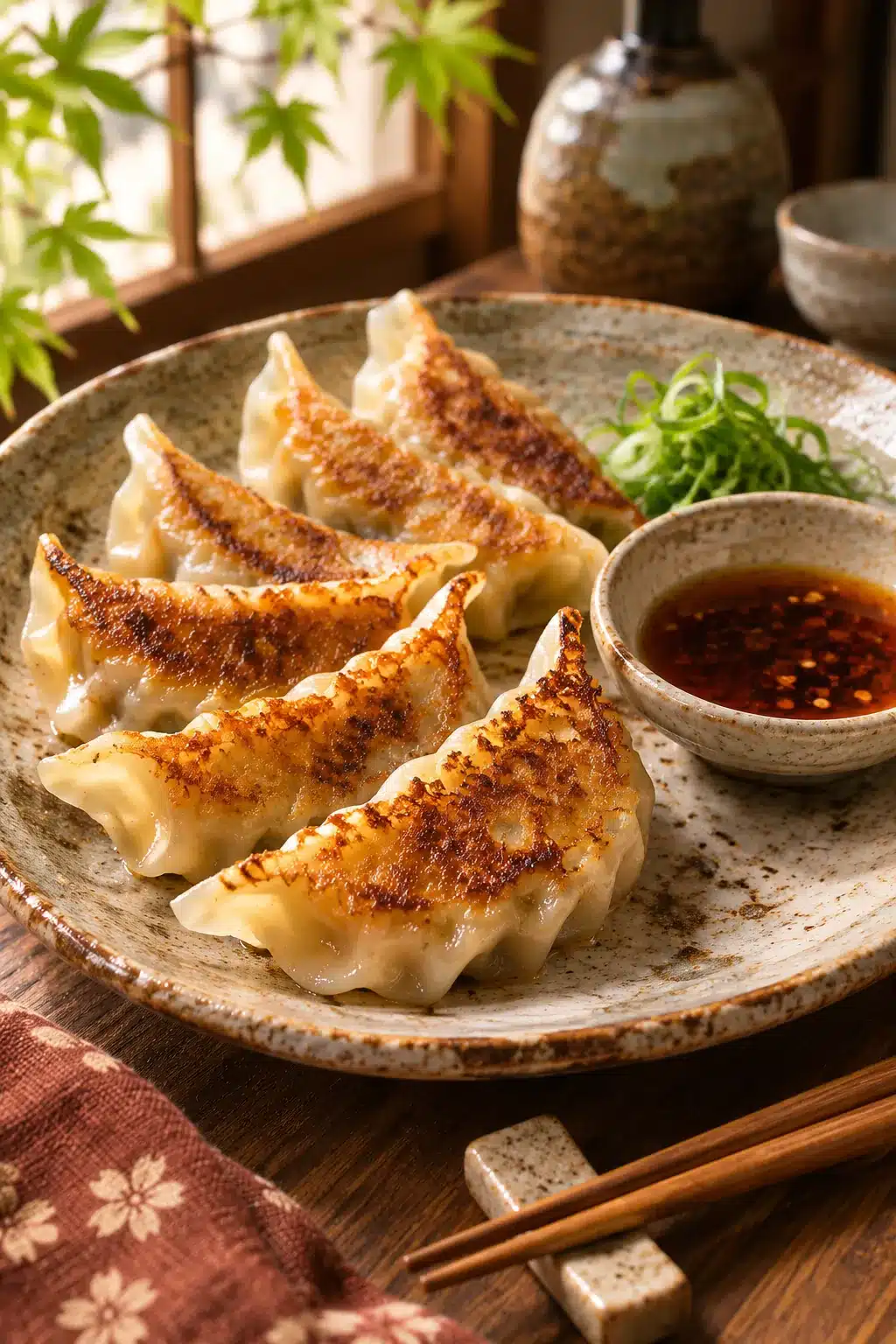
Gyoza japanese dumplings are easiest to recognize by their crisp skillet-browned base and tender steamed wrapper. The recipe also uses fresh ginger for a clean aromatic finish.
What are gyōza Japanese dumplings?
Gyōza are Japanese-style dumplings usually filled with pork and vegetables, then cooked in a skillet so the bottoms turn crisp while the tops steam. This version uses green cabbage for sweetness and moisture, garlic chives for a gentle onion note, and a small amount of cornstarch to help bind the filling. Round gyoza or wonton wrappers make the shaping straightforward. The finished dumplings should be juicy inside, lightly translucent around the pleats, and browned underneath.
Why this easy pork gyoza recipe works
Salting the cabbage first draws out water before it enters the filling, so the dumplings do not become watery or split. Fatty ground pork stays moist during the covered cooking stage, while ginger, garlic, sesame oil, and soy provide depth without needing a long marinade. Cooking in batches also matters: a little space lets the wrappers brown instead of steaming against one another. The final water evaporates completely, leaving the crisp base dry and pleasantly crackly.
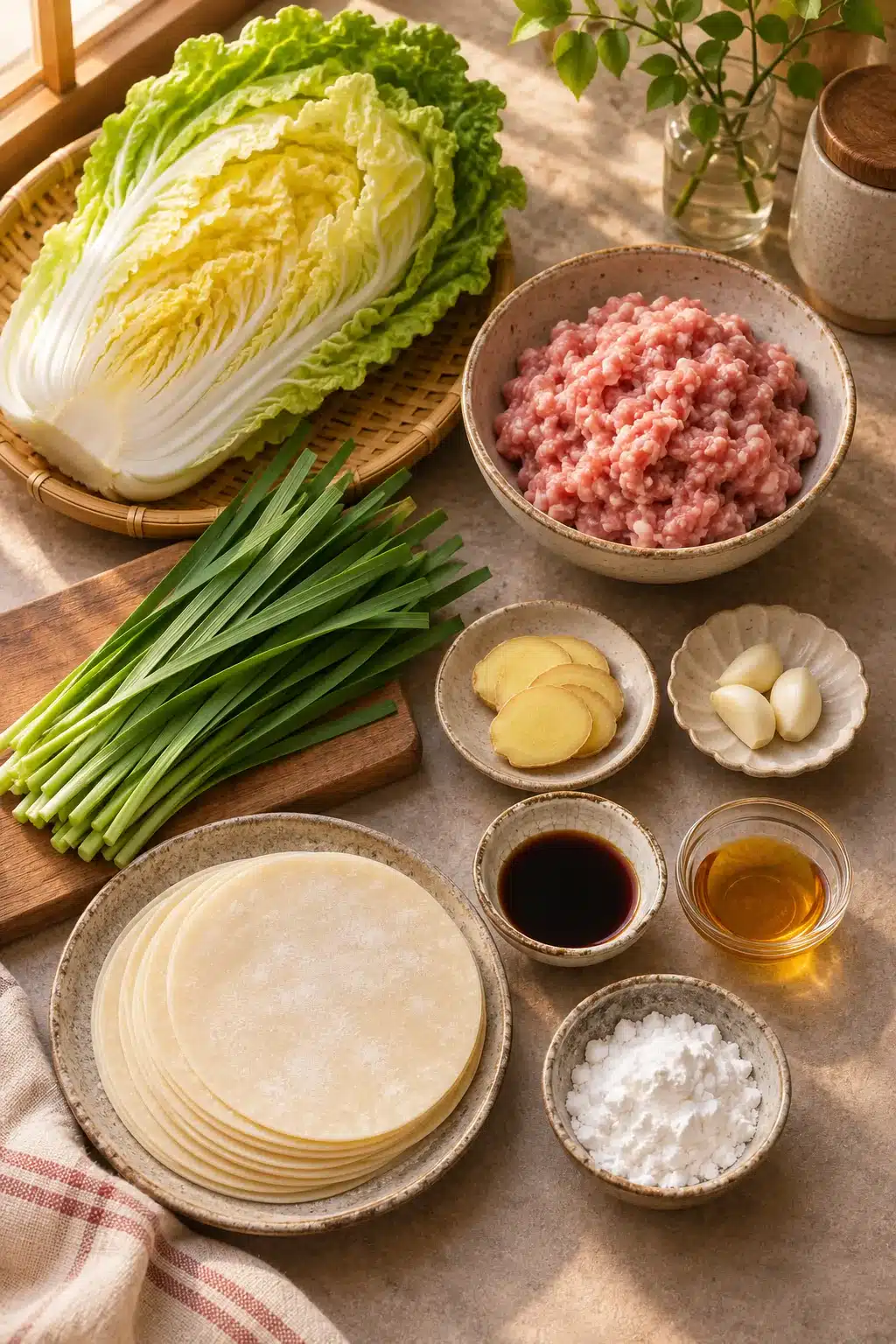
Ingredients for gyōza Japanese dumplings
- 1 1/2 cups green cabbage, very finely chopped
- 1 teaspoon salt, divided
- 1 pound ground pork, preferably not too lean
- 1 cup garlic chives, finely chopped
- 1 garlic clove, crushed
- 1 teaspoon grated ginger
- 1 teaspoon sesame oil
- 1 tablespoon cornstarch for the filling
- 2 teaspoons soy sauce
- 1 teaspoon cornstarch for the tray
- 40 to 45 round gyoza wrappers
- 3 tablespoons vegetable oil
- 1/3 cup water for each skillet batch
How to make the filling
Put the chopped cabbage in a small bowl with half the salt and leave it for 20 minutes. Squeeze it firmly with your hands until no obvious liquid runs out. Add it to a large bowl with the pork, garlic chives, garlic, ginger, sesame oil, filling cornstarch, soy sauce, and remaining salt. Mix with your hands just until the mixture looks cohesive. Overmixing can make the filling dense, so stop when the ingredients are evenly distributed.
How to shape and cook the dumplings
- Dust a baking tray with the tray cornstarch so the shaped dumplings do not stick.
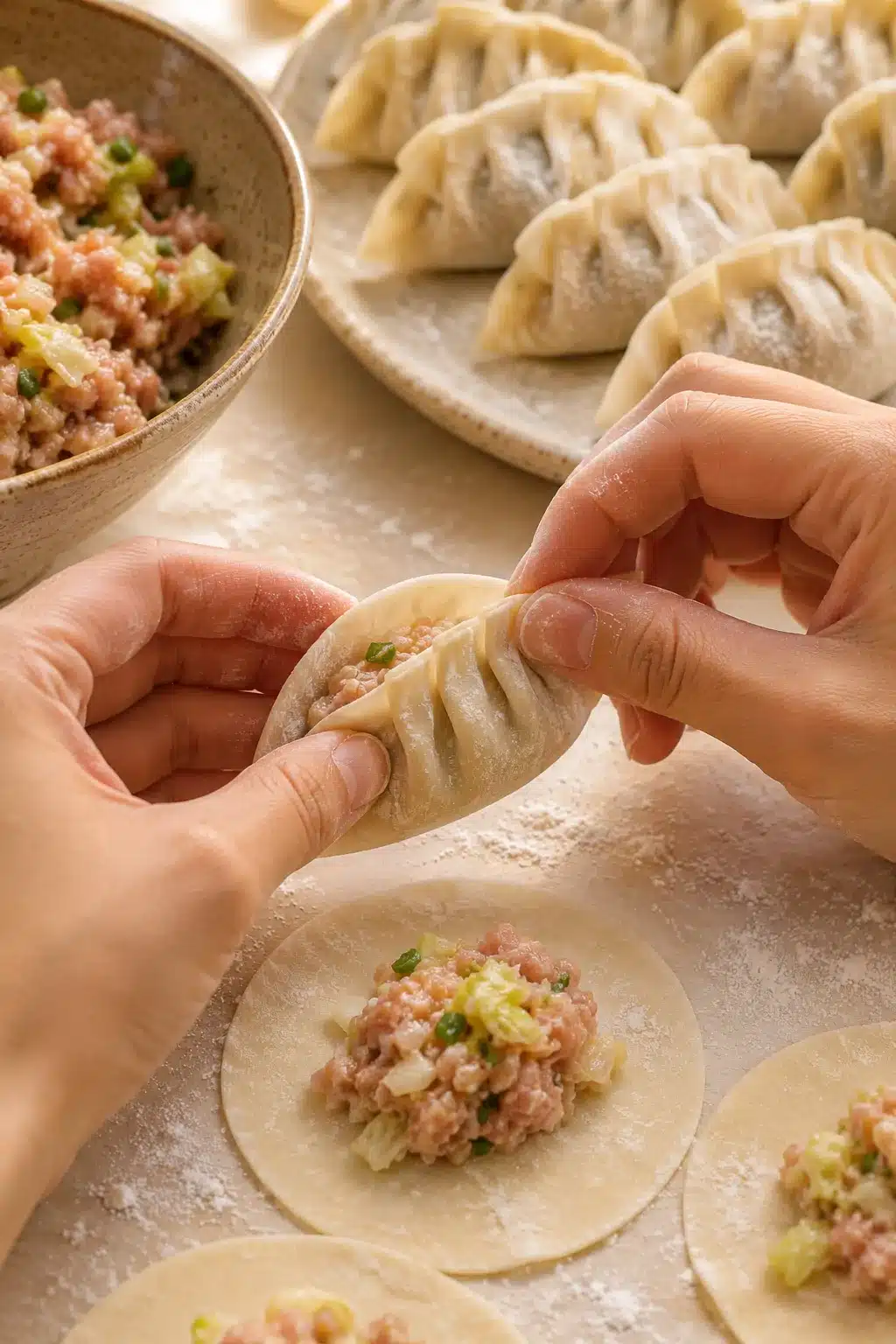
- Place one wrapper on your palm and brush water around half of its edge.
- Add one slightly heaped tablespoon of filling. Fold the wrapper over, form four pleats with your fingers, and press firmly to seal.
- Repeat with the remaining wrappers and filling, keeping finished dumplings covered so the edges stay flexible.
- Heat 1 tablespoon oil in a large lidded skillet over medium-high heat. Arrange about 12 dumplings with a little overlap.
- Cook until the undersides are light golden. Pour 1/3 cup water around the dumplings and cover immediately.
- Steam for 3 to 4 minutes, until the water has evaporated and the wrapper tops look slightly translucent. Remove the lid and let the base dry for a moment.
- Use a thin spatula to transfer the dumplings golden-side up. Repeat with the remaining batches.
How to know the gyoza are done
Look for three cues rather than relying on the clock alone. The underside should be evenly golden with a few deeper toasted spots. The upper wrapper should appear slightly translucent around the filling, not chalky or opaque. Finally, the water in the skillet must be gone before you lift the lid for serving; any remaining liquid softens the browned base. If the pan dries before the wrapper is tender, lower the heat and add a small splash of water, then cover again.
Serving ideas and dipping sauce
Serve hot with soy sauce, rice wine vinegar, and chili oil set out separately or mixed in equal portions with a generous splash of chili oil. A bowl of steamed rice, cucumber salad, or lightly dressed greens balances the rich pork filling. For a party, keep cooked batches on a warm plate with the crisp side facing up and replenish them rather than stacking them, which can trap steam.
Tips and an optional variation
The cabbage must be squeezed well, and the wrappers should remain covered while you work. If a wrapper tears, place it inside a second wrapper rather than trying to stretch it. A useful optional variation is to replace up to one-third of the pork with finely chopped shrimp; keep the cabbage and cooking method the same, and label this as a variation rather than changing the primary recipe. For a concrete weeknight use case, shape the dumplings after lunch, refrigerate them on a dusted tray, and pan-fry them just before dinner.
Storage and reheating
Uncooked dumplings can be frozen in a single layer on a cornstarch-dusted tray, then transferred to a sealed container once firm. Cook them from frozen using the same skillet method, allowing extra covered time for the filling to heat through. Refrigerate cooked dumplings for up to three days. Reheat them in a lightly oiled skillet with a splash of water and a lid, then uncover so the base crisps again. A microwave warms them quickly but will not restore the browned texture.
Gyoza japanese dumplings FAQ: questions answered
Can I use wonton wrappers? Yes, provided they are round and kept covered; thinner wrappers may need a gentler touch when pleating.
Why did my dumplings stick? The tray or skillet may not have had enough cornstarch or oil, or the dumplings may have been moved before the base browned.
Can I make them without pleats? Absolutely. Fold and press the wrapper into a half-moon; the seal matters more than the decoration.
- Combine cabbage and half the salt; rest 20 minutes, then squeeze out excess water.
- Mix the cabbage with pork, chives, garlic, ginger, sesame oil, cornstarch, soy sauce, and remaining salt.
- Dust a tray with cornstarch. Fill each wrapper with a heaped tablespoon, moisten the edge, pleat, and seal.
- Heat oil in a lidded skillet over medium-high heat and arrange about 12 dumplings.
- Cook until the bottoms are light golden, add water, cover, and steam 3 to 4 minutes until the water evaporates and wrappers look slightly translucent.
- Transfer golden-side up and serve with soy sauce, rice vinegar, and chili oil.
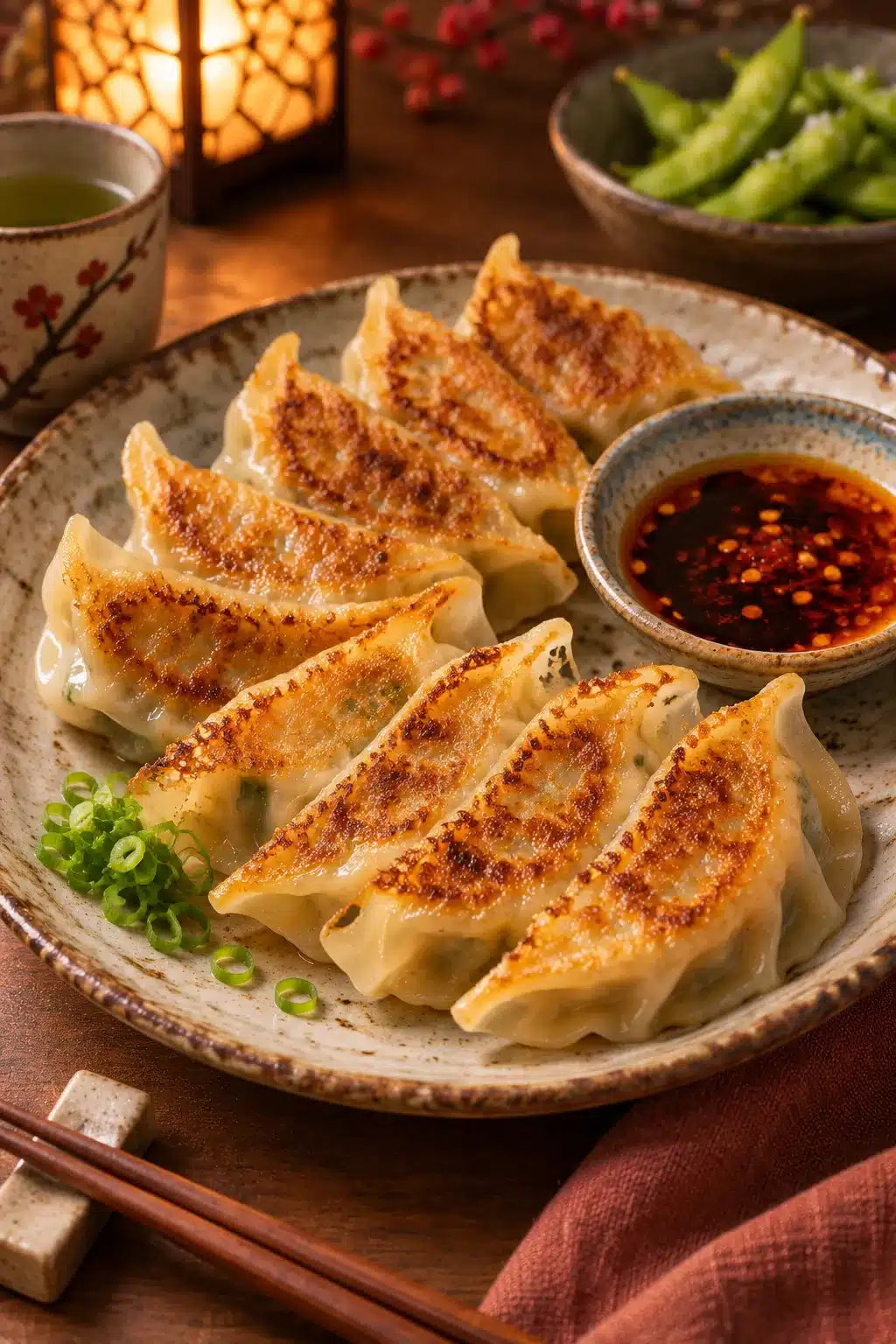
Serve these gyōza Japanese dumplings while the bases are crisp and the centers are hot, with the dipping sauce close by. Once the cabbage is properly drained and the skillet is allowed to dry, the process is repeatable: tender wrappers, savory filling, and the golden crust that makes homemade gyoza so satisfying.

Japanese Gyoza Dumplings
Ingredients
Ingredients
- 1 1/2 cups green cabbage very finely chopped
- 1 tsp salt divided
- 1 lb ground pork preferably fatty
- 1 cup garlic chives finely chopped
- 1 garlic clove crushed
- 1 tsp fresh ginger grated
- 1 tsp sesame oil
- 1 tbsp cornstarch
- 2 tsp soy sauce
- 1 tsp cornstarch for the tray
- 40-45 round gyoza wrappers
- 3 tbsp vegetable oil
- 1/3 cup water for each pan
Instructions
Instructions
- Combine cabbage and half the salt; rest 20 minutes, then squeeze out excess water.
- Mix the cabbage with pork, chives, garlic, ginger, sesame oil, cornstarch, soy sauce, and remaining salt.
- Dust a tray with cornstarch. Fill each wrapper with a heaped tablespoon, moisten the edge, pleat, and seal.
- Heat oil in a lidded skillet over medium-high heat and arrange about 12 dumplings.
- Cook until the bottoms are light golden, add water, cover, and steam 3 to 4 minutes until the water evaporates and wrappers look slightly translucent.
- Transfer golden-side up and serve with soy sauce, rice vinegar, and chili oil.