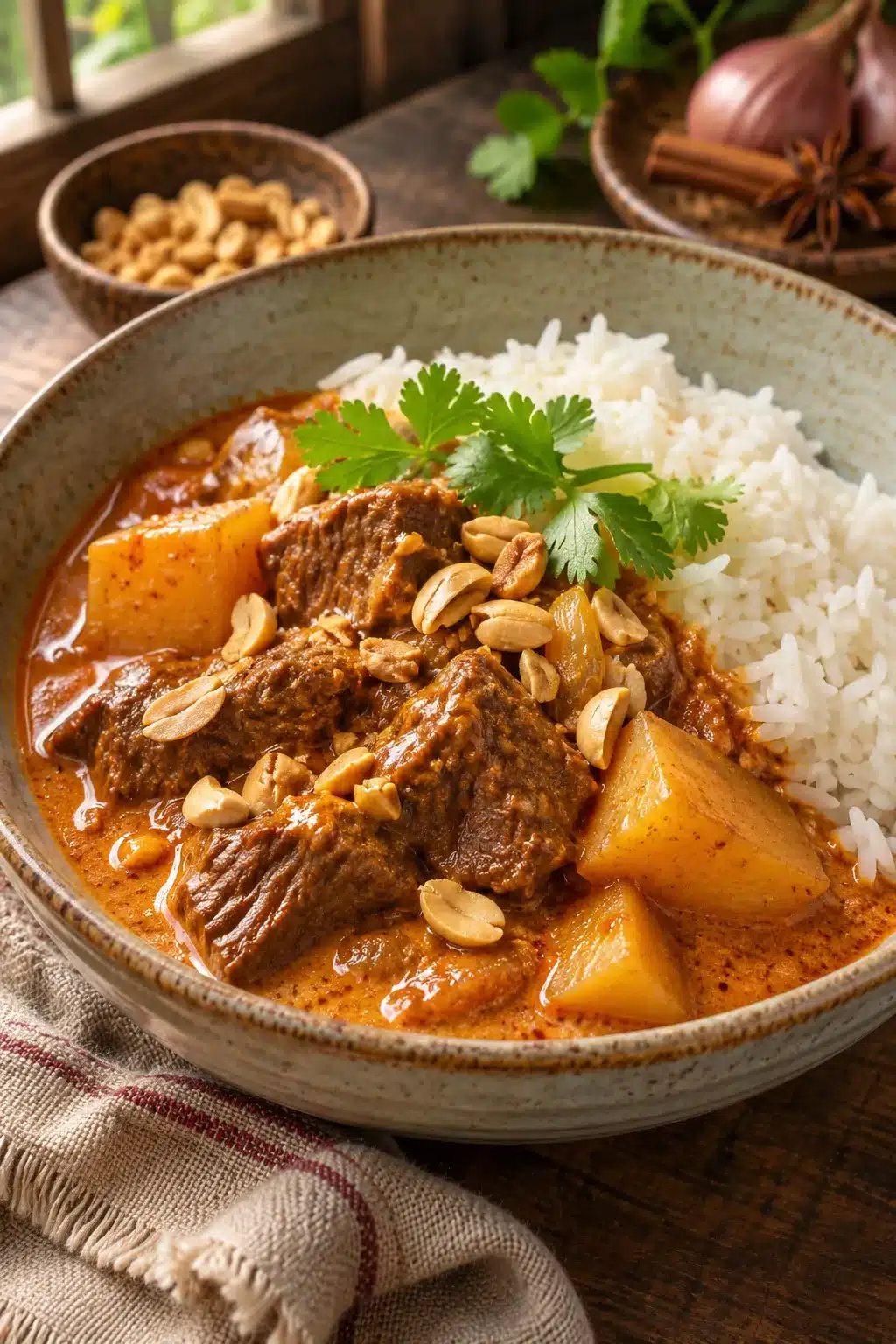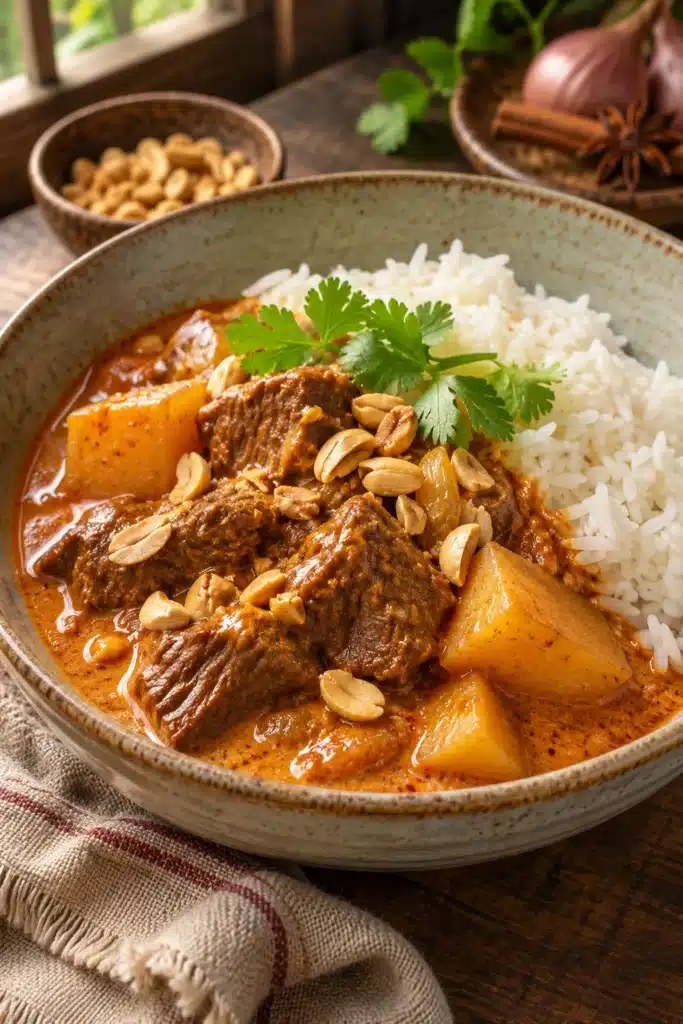
Massaman curry is a slow-simmered Thai curry with a deep, fragrant sauce, tender beef, creamy coconut milk, potatoes, and peanuts. This version takes time because the beef becomes fork-tender and the curry paste is toasted and charred for extra depth, but the process is straightforward. The finished dish balances warmth, gentle heat, sweetness, tang, and saltiness over jasmine rice, with enough sauce to coat every grain and enough texture to keep each bite interesting. It is a generous, make-ahead-friendly dinner for a relaxed weekend meal or a busy evening planned in advance.
What makes Massaman curry special?
The signature flavor comes from layering rather than relying on one strong spice. Charred aromatics add smokiness, toasted spices add fragrance, and tamarind keeps the rich coconut sauce bright. Potatoes absorb the curry while peanuts provide the essential contrast.
Why this beef curry works
Beef chuck is suited to the long braise because connective tissue softens gradually. Cooking the curry paste separately lets its raw, wet notes cook away before coconut milk and braising liquid are added. Add the potatoes near the end so they hold their shape while becoming tender.
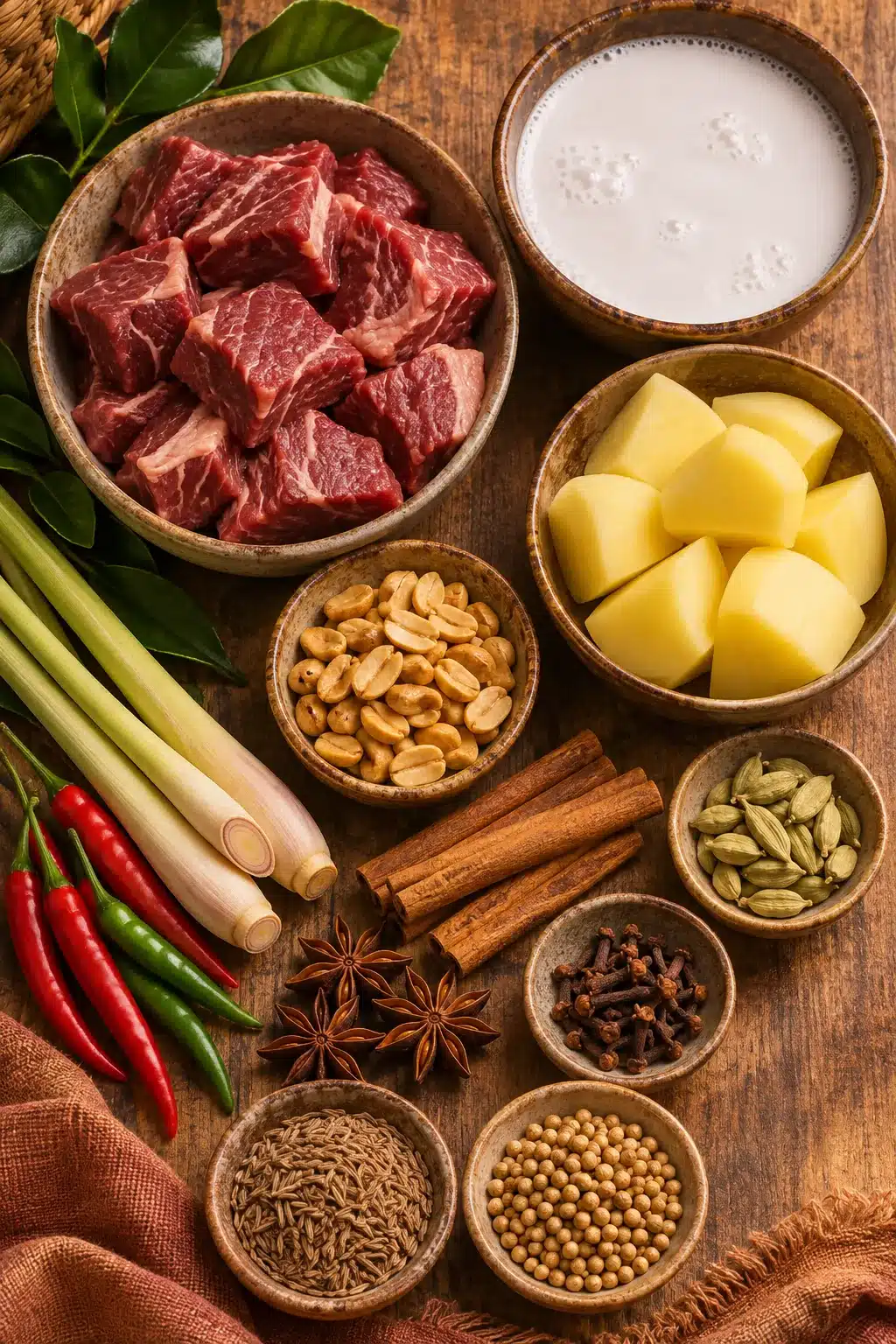
Ingredients for Massaman curry
- 1 lemongrass — trimmed
- 6 dried red Asian chillies
- 4 eschalots — peeled
- 5 cloves garlic — unpeeled
- 3 cm galangal — peeled and sliced
- 4–6 tbsp water
- 1/2 tsp ground cloves
- 3/4 tsp cumin
- 1/8 tsp ground nutmeg
- 3/4 tsp coriander
- 1/2 tsp cardamom
- 1/2 tsp cinnamon
- 700 g beef chuck — cut into cubes
- 500 ml low-sodium beef broth
- 2 bay leaves
- 1/4 cup vegetable oil
- 400 ml full-fat coconut milk
- 1 cinnamon quill
- 1 star anise
- 1 tsp tamarind paste
- 1 tbsp fish sauce
- 1 tbsp white sugar
- 2 medium-small potatoes — peeled and cubed
- 3 tbsp peanuts — roughly chopped
- 1 batch — steamed jasmine rice
How to make Massaman curry
Plan ahead for the beef braise, then prepare the paste while it cooks.
- Trim the lemongrass, reserve the trimmings for the beef, and finely chop the tender white part.
- Place the beef, broth, bay leaves, and lemongrass trimmings in a saucepan. Bring to a boil, then simmer gently for 1 1/2 to 2 hours, until fork-tender. Remove the beef and reserve the braising liquid.
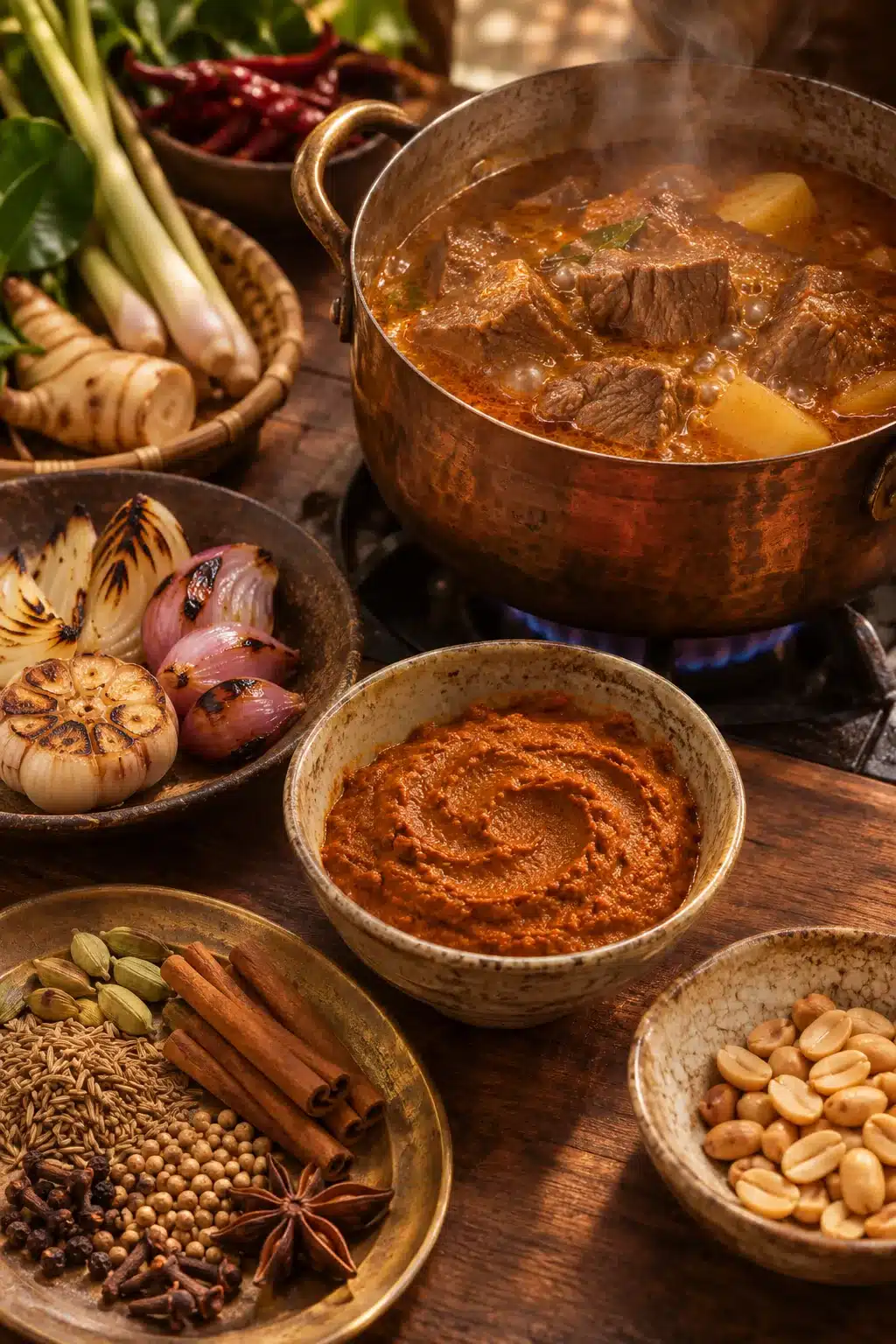
- Char the eschalots, garlic, galangal, and dried chillies in a dry, smoking-hot skillet. Cool; peel the garlic, grate the galangal, and shake the seeds from the chillies.
- Toast the ground cloves, cumin, nutmeg, coriander, cardamom, and cinnamon for about 30 seconds.
- Blend the chillies, galangal, lemongrass, toasted spices, eschalots, garlic, and water into a smooth paste.
- Heat oil in a large pot. Cook the paste for 3 minutes, until thick and fragrant. Stir in coconut milk, cinnamon, star anise, and the reserved braising liquid; simmer 3 minutes.
- Stir in tamarind, fish sauce, and sugar. Add potatoes and cook about 7 minutes, turning them as needed.
- Return the beef and simmer about 2 minutes, until the sauce thickens. Balance the sweet, salty, and sour flavors, adding a little water if needed.
- Serve over jasmine rice with peanuts and optional sliced chilli or crispy shallots.
Serving ideas
Spoon the curry over steamed jasmine rice and finish with chopped peanuts. Crispy fried shallots and thinly sliced red chilli are optional but useful for texture and color. A cool cucumber salad or lightly dressed greens make a fresh side for the rich sauce.
Tips and optional variation
Keep the skillet dry while charring the aromatics and watch the spices closely; they should smell fragrant, not dark or bitter. Taste the finished sauce after the beef returns, then adjust tamarind, fish sauce, and sugar in small amounts. For a practical shortcut, use a good store-bought Massaman paste and focus your time on the beef braise and final balance.
Cooking notes for a balanced sauce
Massaman curry should be thick enough to cling to the beef and potatoes but loose enough to spoon over rice. If the sauce looks oily, stir gently rather than boiling hard. If it looks too thick, loosen it with a little reserved braising liquid or water. Small seasoning adjustments are more reliable than adding a large amount of sugar, fish sauce, or tamarind at once.
The beef braise is the main timing checkpoint. A cube that still resists a fork needs more gentle cooking, while a tender cube can be removed so it does not dry out while the curry paste is prepared. Keeping the beef and liquid together until the final sauce comes together also makes the recipe easier to stage.
A practical meal plan
For a dinner party, braise the beef earlier in the day and refrigerate it with its cooking liquid. Prepare the curry paste in advance, then finish the sauce and potatoes shortly before serving. Cook jasmine rice while the curry simmers. This order keeps the kitchen organized and lets the final dish arrive hot without rushing the seasoning.
If you are serving children or guests who prefer mild food, reduce the dried chillies and offer sliced chilli at the table. The warm spices, coconut milk, peanuts, and tender beef still provide plenty of character. Keep garnishes separate so everyone can choose the level of heat and crunch they want.
Storage and reheating
Cool leftovers promptly, refrigerate them in a covered container, and reheat gently in a saucepan with a splash of water. The sauce may thicken when chilled. Reheat until piping hot, and keep rice stored separately so it does not absorb all the curry overnight.
Search questions answered
What does Massaman curry taste like?
It is rich and aromatic, with coconut, warm spices, mild chilli heat, tangy tamarind, and a sweet-salty finish.
What beef is best for Massaman curry?
Beef chuck works well because a long, gentle braise turns it tender while keeping the sauce savory.
Can I make it ahead?
Yes. The flavor develops as it rests; cool and refrigerate the curry promptly, then reheat gently.
FAQs
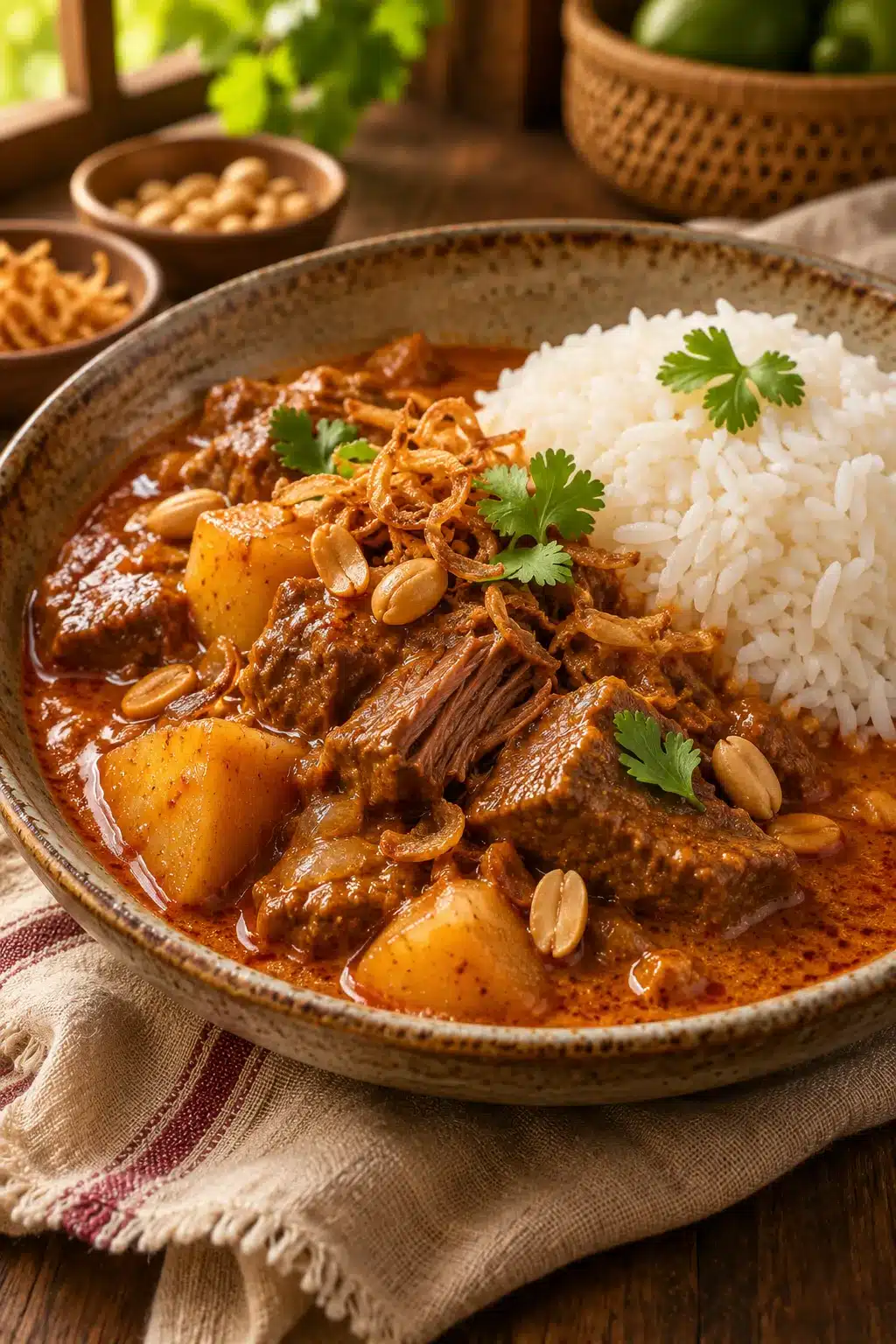
With patient braising and careful seasoning, Massaman curry becomes a deeply comforting dinner that is worth making for a weekend table or a make-ahead meal.


Massaman Curry with Tender Beef and Coconut Sauce
Ingredients
Ingredients
- 1 lemongrass trimmed
- 6 dried red Asian chillies
- 4 eschalots peeled
- 5 cloves garlic unpeeled
- 3 cm galangal peeled and sliced
- 4–6 tbsp water
- 1/2 tsp ground cloves
- 3/4 tsp cumin
- 1/8 tsp ground nutmeg
- 3/4 tsp coriander
- 1/2 tsp cardamom
- 1/2 tsp cinnamon
- 700 g beef chuck cut into cubes
- 500 ml low-sodium beef broth
- 2 bay leaves
- 1/4 cup vegetable oil
- 400 ml full-fat coconut milk
- 1 cinnamon quill
- 1 star anise
- 1 tsp tamarind paste
- 1 tbsp fish sauce
- 1 tbsp white sugar
- 2 medium-small potatoes peeled and cubed
- 3 tbsp peanuts roughly chopped
- 1 batch steamed jasmine rice
Instructions
Instructions
- Trim the lemongrass, reserve the trimmings for the beef, and finely chop the tender white part.
- Place the beef, broth, bay leaves, and lemongrass trimmings in a saucepan. Bring to a boil, then simmer gently for 1 1/2 to 2 hours, until fork-tender. Remove the beef and reserve the braising liquid.
- Char the eschalots, garlic, galangal, and dried chillies in a dry, smoking-hot skillet. Cool; peel the garlic, grate the galangal, and shake the seeds from the chillies.
- Toast the ground cloves, cumin, nutmeg, coriander, cardamom, and cinnamon for about 30 seconds.
- Blend the chillies, galangal, lemongrass, toasted spices, eschalots, garlic, and water into a smooth paste.
- Heat oil in a large pot. Cook the paste for 3 minutes, until thick and fragrant. Stir in coconut milk, cinnamon, star anise, and the reserved braising liquid; simmer 3 minutes.
- Stir in tamarind, fish sauce, and sugar. Add potatoes and cook about 7 minutes, turning them as needed.
- Return the beef and simmer about 2 minutes, until the sauce thickens. Balance the sweet, salty, and sour flavors, adding a little water if needed.
- Serve over jasmine rice with peanuts and optional sliced chilli or crispy shallots.