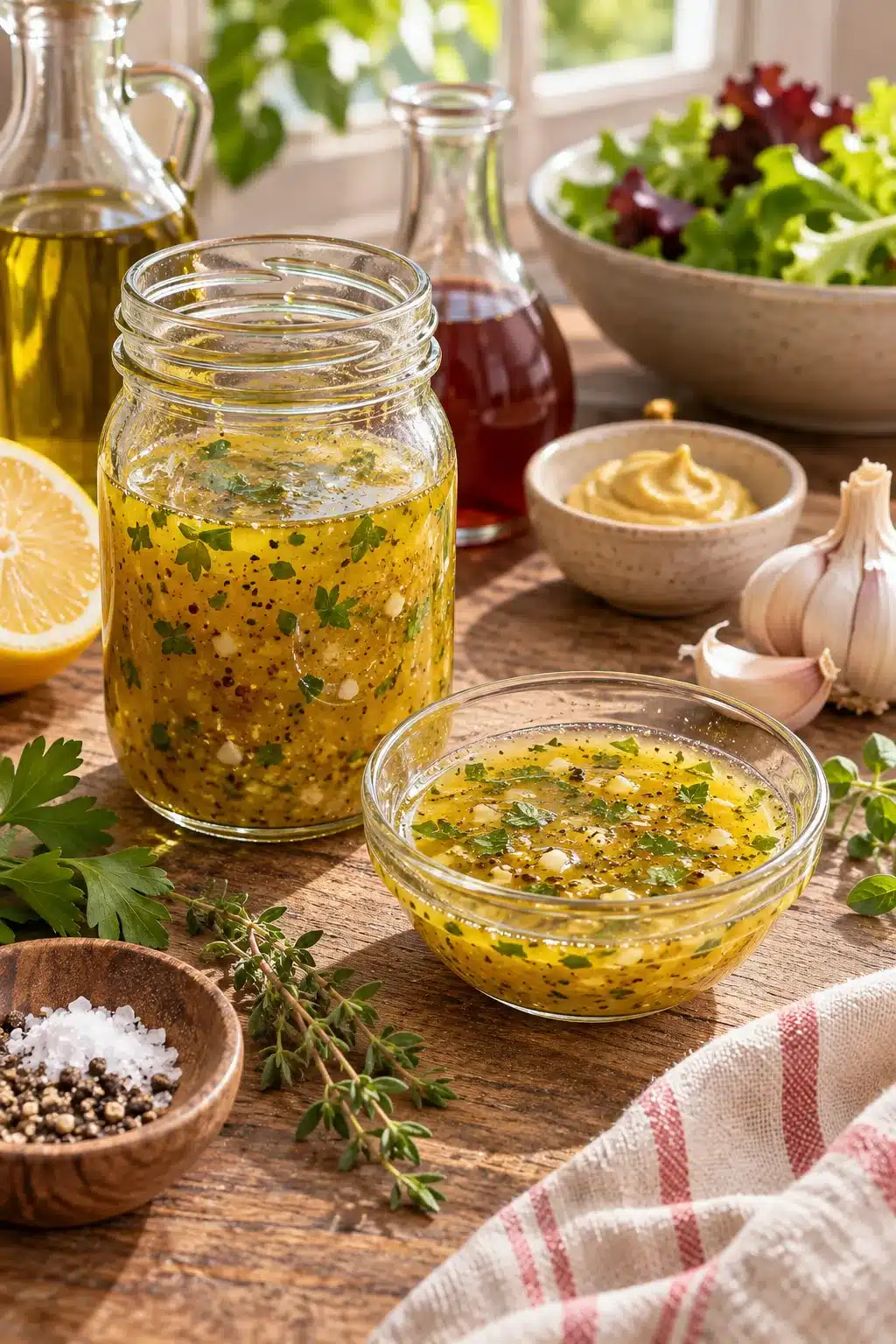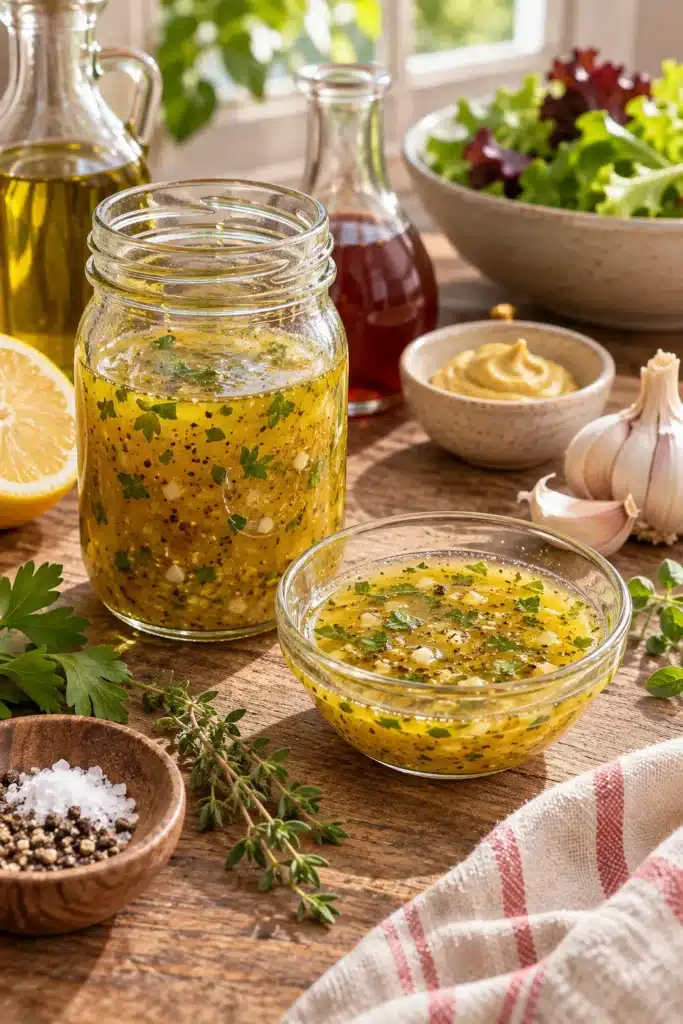
Everyday salad dressing is a five-minute homemade staple that turns crisp greens, roasted vegetables, grain bowls, and simple lunches into something complete. This everyday salad dressing combines vinegar or lemon juice, extra-virgin olive oil, Dijon mustard, garlic, salt, black pepper, and flexible herbs in one jar. It is bright, savory, lightly tangy, and easy to adjust, so you can make exactly the flavor your salad needs without reaching for a bottled dressing.
What Is Everyday Salad Dressing?
This is a simple shaken vinaigrette built around an easy oil-to-acid balance. The oil provides body, while vinegar or lemon juice adds brightness. Dijon mustard helps the ingredients blend, garlic brings savory depth, and a little honey or sugar can soften a sharp edge. The finished dressing is pourable rather than thick, with herbs and pepper suspended throughout after shaking.
Why This Everyday Salad Dressing Works
The formula is deliberately flexible. Cider vinegar gives a rounded, gentle tang, while lemon juice tastes fresher and lighter. Extra-virgin olive oil adds a fruity finish, but another neutral oil works when you want the acid and herbs to stand out. Dijon makes the dressing taste cohesive, and tasting at the end lets you correct salt, sweetness, or acidity before it reaches the salad.
Ingredients for Everyday Salad Dressing
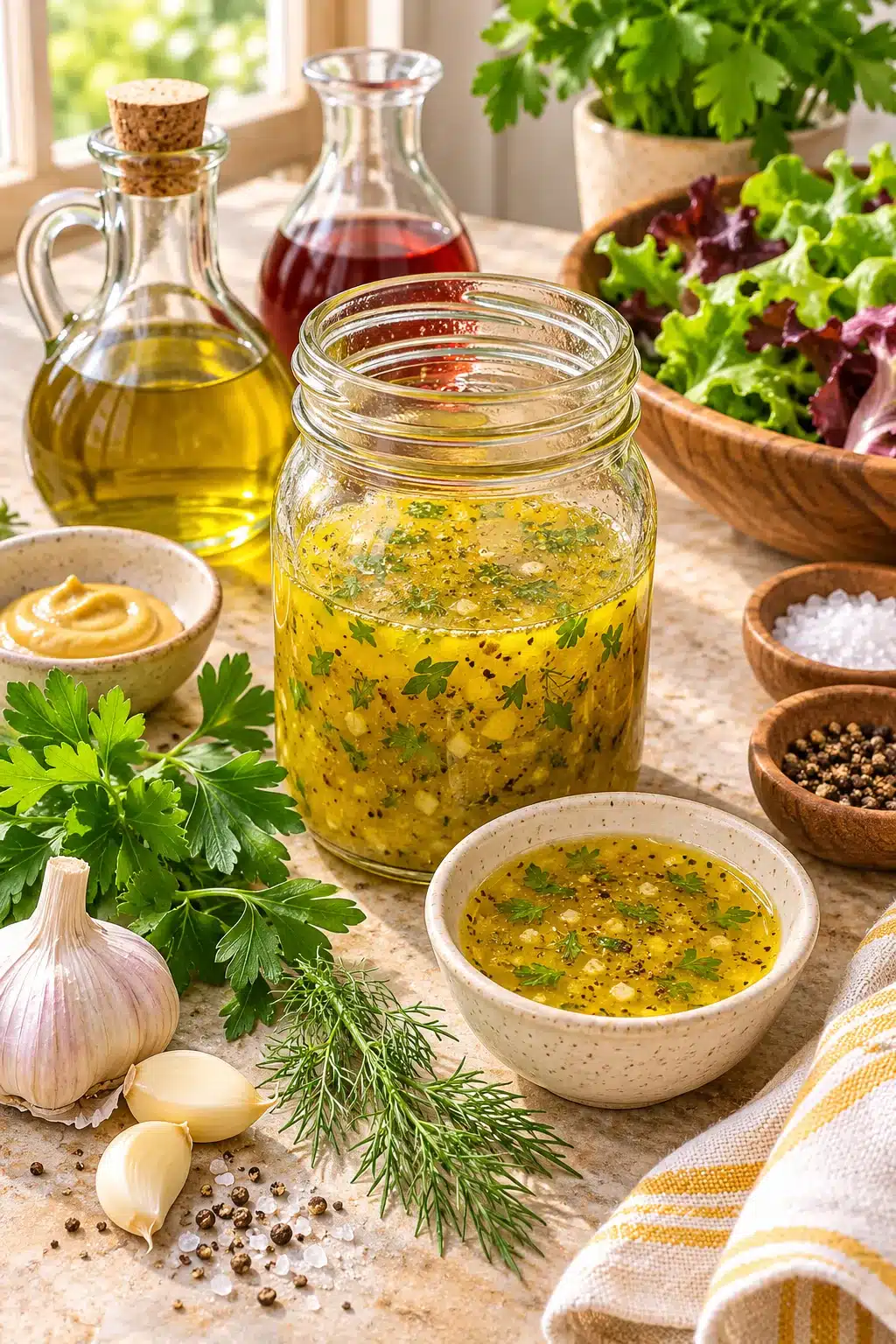
You will need 1 tbsp vinegar or lemon juice, 3 tbsp extra-virgin olive oil, 1/2 tsp Dijon mustard, 1/2 tsp salt, 1/2 tsp freshly ground black pepper, and 1 small clove garlic pressed or finely minced. Optional flavorings include 1 tsp lemon zest, 1/4 tsp sugar, 1 tsp honey, 1 tsp fresh herbs, 1/2 tsp dried herbs, and 1 pinch red pepper flakes. These additions let the same base suit leafy salads, roasted vegetables, or grain bowls.
How to Make Everyday Salad Dressing
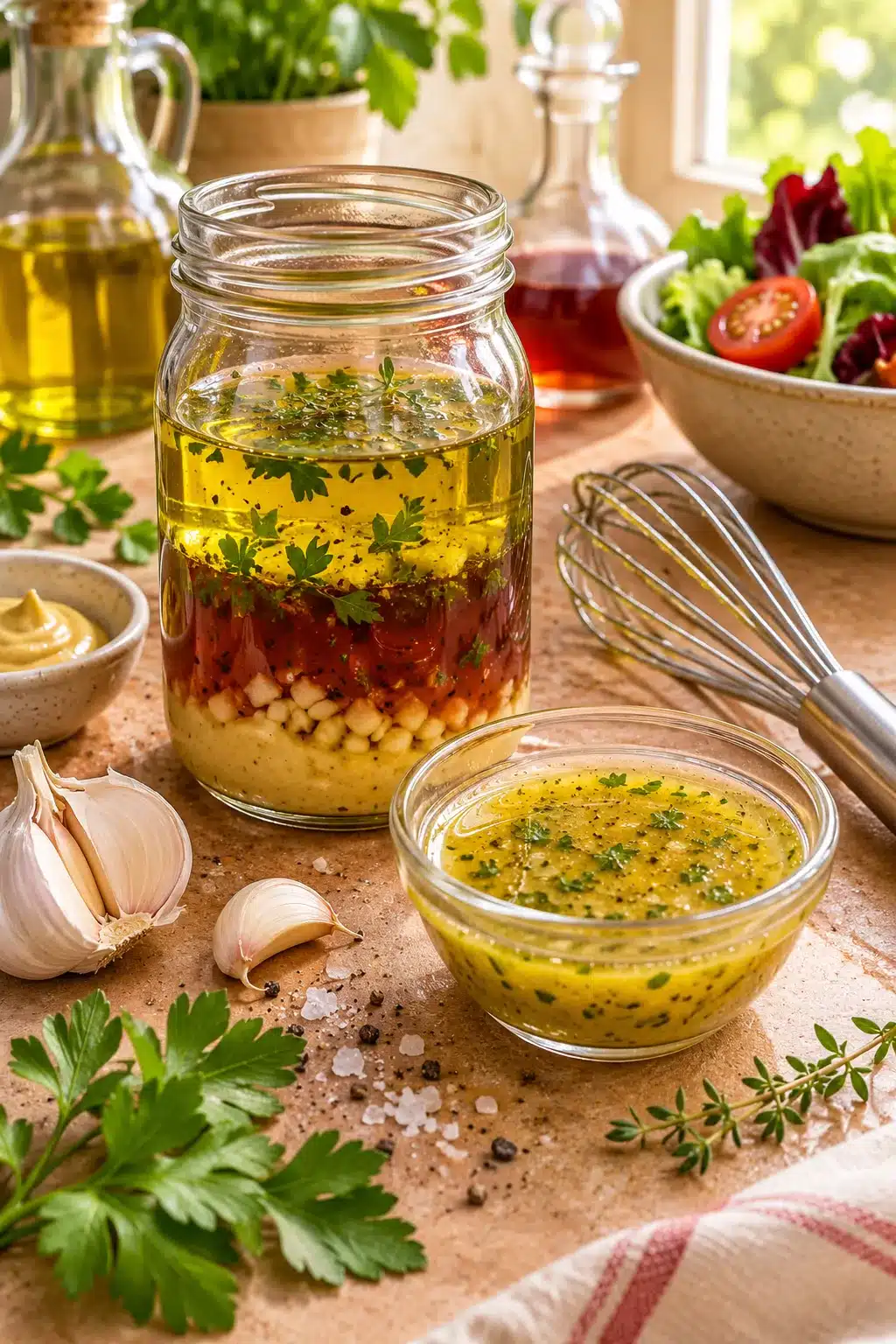
Add the vinegar or lemon juice, oil, Dijon mustard, salt, pepper, garlic, and any optional flavorings to a jar. Seal the jar and shake vigorously until the mustard dissolves and the dressing looks blended. Taste and adjust the balance with a little more vinegar, oil, salt, or honey if needed. Use immediately on dry salad leaves or vegetables, or refrigerate without fresh garlic and herbs for longer storage.
How to Balance the Flavor
Taste a drop on a lettuce leaf. If it feels flat, add salt. If it is too sharp, add olive oil or honey. If it tastes heavy, add vinegar or lemon juice. Black pepper and Dijon should support the dressing, while fresh herbs are best added close to serving. This small tasting step turns a reliable formula into a dressing that suits your particular salad.
Optional Variation
Optional variation: Make a creamy everyday salad dressing by stirring in Greek yogurt after shaking the base. For a sweeter version, use honey and lemon juice together. For a sharper herb dressing, choose cider vinegar, dried herbs, and red pepper flakes. Keep the same base proportions while changing one or two flavor accents so the dressing remains balanced.
How to Serve Everyday Salad Dressing
Dry salad leaves before dressing so the vinaigrette clings. Start with a small amount, toss thoroughly, and add more only if needed. It is also useful over cucumber and tomato salads, steamed green beans, roasted carrots, potatoes, cooked grains, or warm vegetables. Because the dressing is bright and flexible, it connects ingredients without hiding their textures.
Storage and Make-Ahead Tips
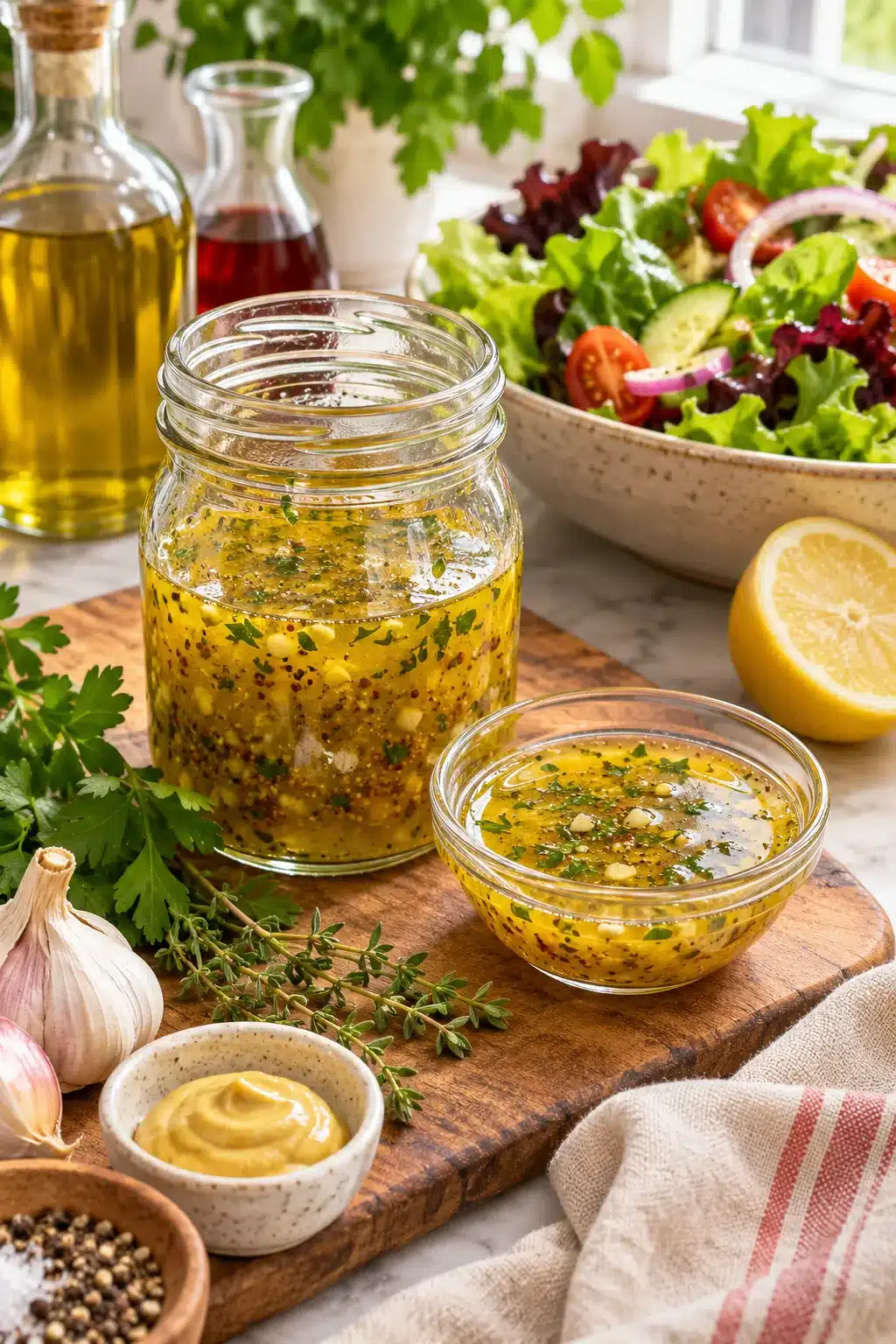
Keep the dressing in a clean sealed jar in the refrigerator. Olive oil may cloud when chilled, so let it stand briefly and shake again before serving. For the freshest flavor, add fresh garlic and fresh herbs close to serving. A version made with vinegar, oil, salt, pepper, Dijon, and dried herbs is convenient to prepare ahead. Always smell and taste refrigerated leftovers before using them.
Recipe Tips
- Use mild vinegar for a softer dressing or lemon juice for a brighter finish.
- Fresh herbs and garlic are best when the dressing will be used soon.
- Shake again before pouring because oil and acid naturally separate.
- Dress only the amount of salad you plan to eat immediately.
Everyday Salad Dressing FAQ
What is the best oil?
Extra-virgin olive oil gives the most flavor, but a neutral oil works when you prefer the acid, herbs, or mustard to lead.
Can I omit mustard?
Yes. The dressing still works, though it may separate more quickly. Shake it firmly immediately before serving.
How long does it keep?
A basic oil-and-vinegar version keeps chilled for several days. Fresh garlic and herbs shorten its best-quality window.
Why does it separate?
Oil and acid naturally separate. Dijon and vigorous shaking temporarily disperse them, and another shake restores the texture.
+
Choosing the Acid and Herbs
Small ingredient changes make this dressing feel different without changing the method. Cider vinegar is especially good when the salad includes apples, cabbage, roasted squash, or toasted nuts. Lemon juice suits cucumber, avocado, spinach, and delicate greens. Fresh parsley gives a clean grassy note, while thyme or oregano makes the dressing feel more Mediterranean. Dried herbs are practical for a make-ahead jar because they soften as they sit. If you use red pepper flakes, start with a pinch and let the dressing rest for a few minutes before deciding whether it needs more heat.
Making a Better Salad
A good dressing cannot rescue wet, bruised leaves, so preparation matters. Wash greens, spin them dry, and cut larger leaves into comfortable bites. Add sturdy vegetables first, then toss with enough dressing to lightly coat every piece. Salt the salad only after tasting the dressing, because the vinaigrette already contains salt and mustard. Serve promptly for the best crunch. Any leftover dressing can also brighten a simple lunch of beans, cooked grains, roasted vegetables, or leftover chicken.


Everyday Salad Dressing
Ingredients
Ingredients
- 1 tbsp vinegar or lemon juice cider vinegar is especially good
- 3 tbsp extra-virgin olive oil or another neutral oil
- 1/2 tsp Dijon mustard smooth mustard
- 1/2 tsp salt
- 1/2 tsp black pepper freshly ground
- 1 small clove garlic pressed or finely minced
- 1 tsp lemon zest finely grated
- 1/4 tsp sugar
- 1 tsp honey
- 1 tsp fresh herbs finely chopped
- 1/2 tsp dried herbs
- 1 pinch red pepper flakes
Instructions
Instructions
- Add the vinegar or lemon juice, oil, Dijon mustard, salt, pepper, garlic, and any optional flavorings to a jar.
- Seal the jar and shake vigorously until the mustard dissolves and the dressing looks blended.
- Taste and adjust the balance with a little more vinegar, oil, salt, or honey if needed.
- Use immediately on dry salad leaves or vegetables, or refrigerate without fresh garlic and herbs for longer storage.