
Lemonade scones are the shortcut to a tender, fluffy bake when you want something warm without rubbing butter into flour. Self-raising flour supplies the lift, thickened cream adds richness, and lemonade brings both liquid and a little sweetness. The dough comes together in minutes, so these scones are ideal for a relaxed breakfast, an afternoon tea plate, or a last-minute treat served with jam and whipped cream.
What these lemonade scones are like
These are lightly sweet Australian-style scones with a soft interior and a gently golden top. The lemonade does not make them taste strongly lemony; it helps create a loose, airy dough. They are best eaten warm, when the crumb is tender and the edges are still delicate.
Why the three-ingredient method works
Self-raising flour combines flour and raising agent in one ingredient, while cream contributes fat and moisture at the same time. Carbonated lemonade loosens the mixture and supports the lift in the oven. The key is restraint: mix only until the flour is nearly absorbed and knead just enough to bring the dough together.
How to make lemonade scones
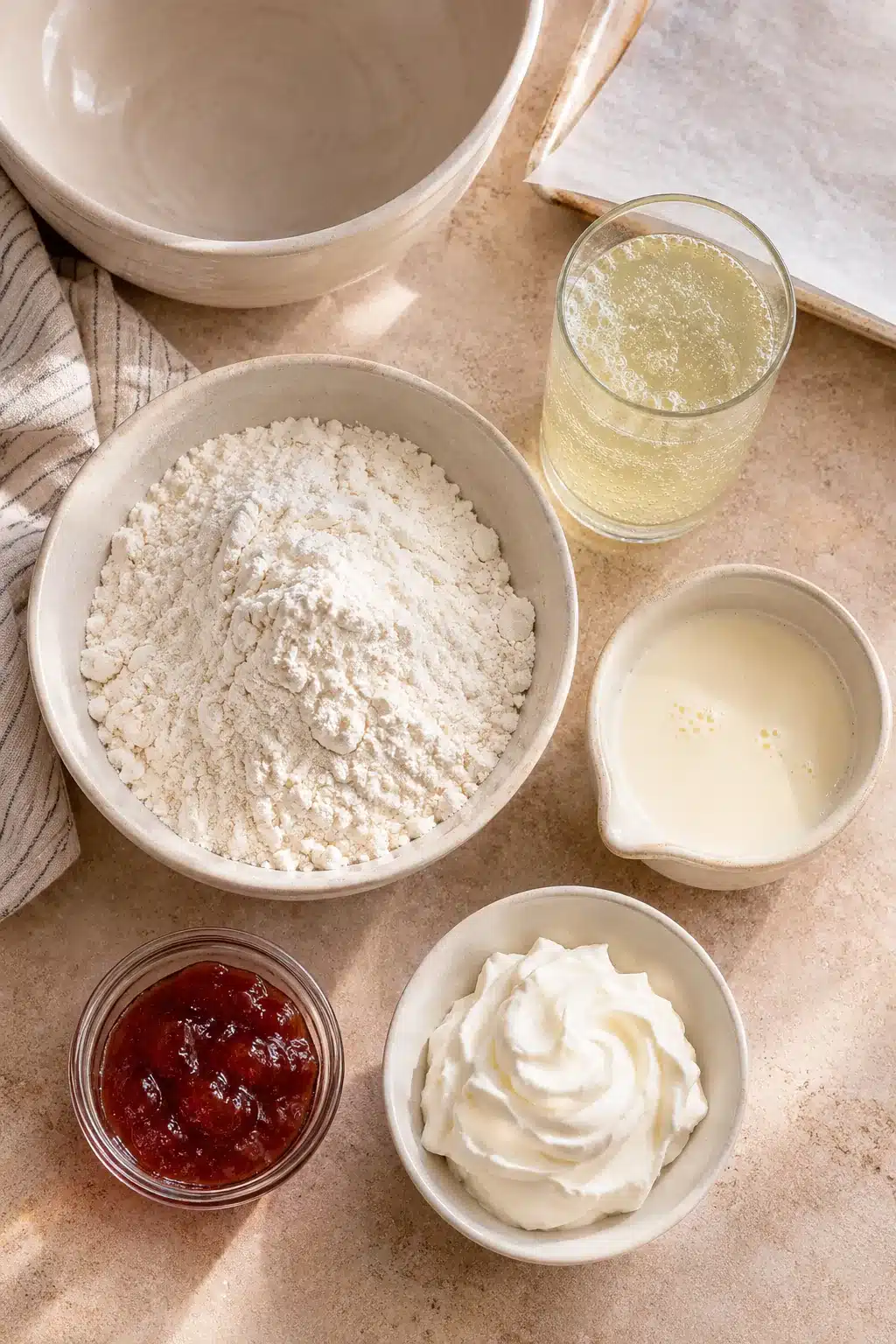
Ingredients
- 3 1/2 cups self-raising flour, plus extra for dusting
- 1 cup thickened cream, not whipped
- 1 cup lemonade
- Whipped cream, optional, for serving
- Jam, optional, for serving
Method
- Heat the oven to 200°C/390°F (180°C fan) and line a baking tray with parchment paper.
- Mix the flour, cream, and lemonade in a bowl until the flour is mostly combined; do not overmix.
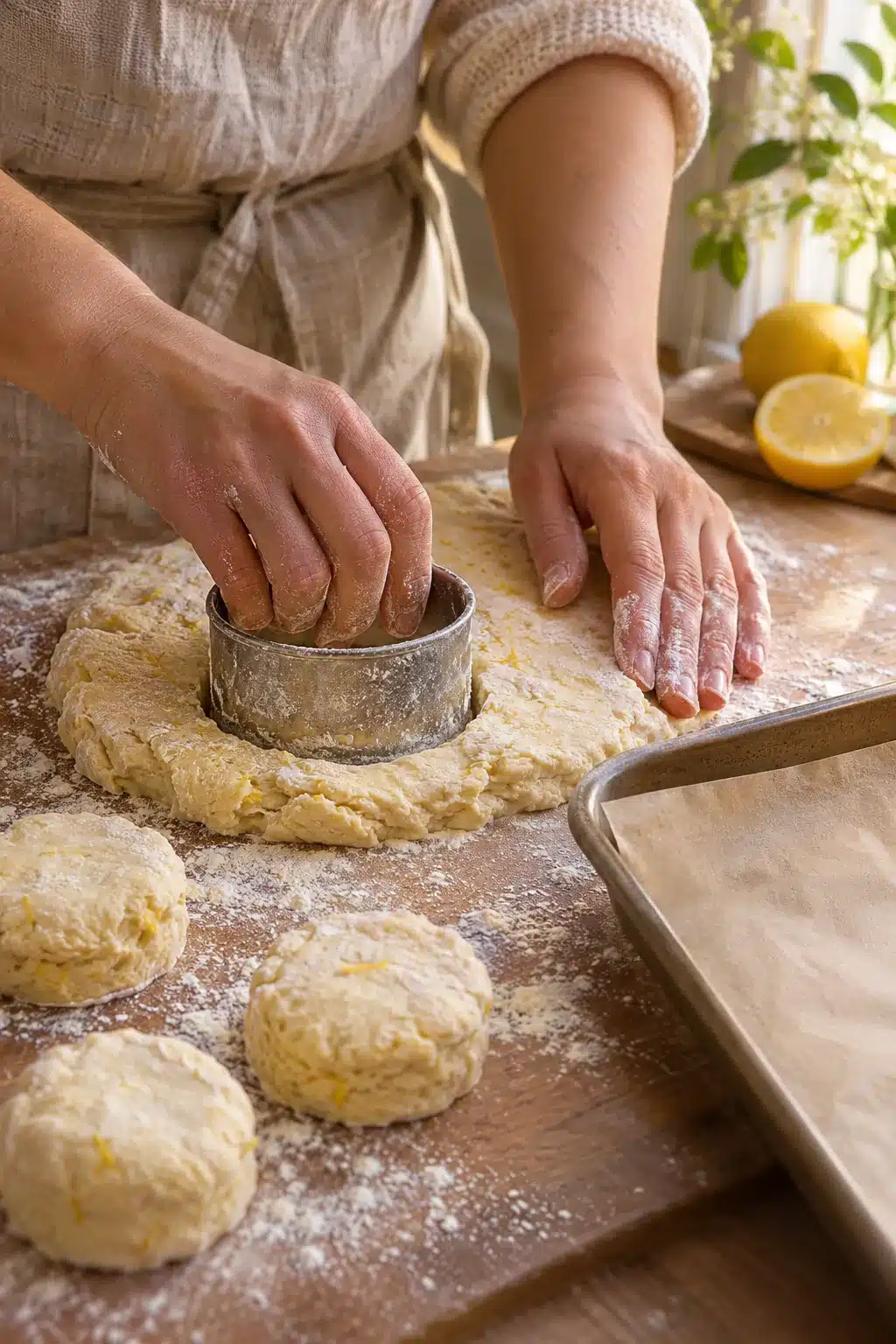
- Turn the dough onto a floured surface, knead gently 3 to 5 times, and pat it into a 2.5 cm/1 inch thick disc.
- Cut rounds with a floured 6 cm/2.5 inch cutter, pressing straight down without twisting.
- Place the rounds on the tray and bake for about 15 minutes, until risen and lightly golden.
- Cool briefly, then split and serve warm with whipped cream and jam.
How to tell when they are ready
Look for a pale golden top and sides that have visibly risen. The surface should feel set rather than wet, while the base should be lightly coloured. Because ovens vary, begin checking around 12 minutes, but allow the full bake time if the centres still look doughy.
Serving ideas
Split the scones while warm and add a spoonful of jam followed by whipped cream, or reverse the order if you prefer. They also work as a simple breakfast with fresh fruit and tea. For a gathering, bake them shortly before serving and arrange them in a lined basket so the crust stays soft.
Tips for light, tender scones
Measure the flour without packing it into the cup, keep the cream cold, and avoid adding extra flour to the dough. A sticky surface is normal; dust the bench and cutter lightly instead. Press the cutter straight down and do not twist, then place the rounds close together for softer sides.
Optional variation
For a less sweet serving, keep the dough exactly as written and use plain yogurt or softly whipped cream alongside the jam. This is an optional serving variation, not a change to the primary dough, so the texture and bake remain predictable.
Storage and reheating
Store cooled scones in an airtight container for up to two days. Their texture is nicest on the day they are baked. Rewarm one briefly in a low oven or microwave, then add cream and jam after heating. Freeze unfilled scones well wrapped for up to two months and thaw before gently reheating.
Search answers for lemonade scones
Can I use sparkling lemonade?
Yes. Plain carbonated lemonade is the intended liquid; its bubbles and sweetness are part of the shortcut method.
Why are my scones dense?
Overmixing, heavy kneading, or twisting the cutter can compress the dough. Mix lightly and handle it only enough to shape and cut.
What should I serve with them?
Jam and whipped cream are the classic pairing, but fresh fruit and tea make an easy breakfast or afternoon snack.
The dough is intentionally soft, and that is a useful visual cue rather than a problem to fix with a large amount of extra flour. If the mixture looks dry before it leaves the bowl, check that the cream was measured correctly and that the lemonade was not left open for a long time. On the other hand, if it is very wet, dust the bench lightly and use a floured cutter instead of kneading in handfuls of flour.
For even baking, keep the cut rounds similar in thickness and leave a little room between them on the tray. Smaller rounds may finish early, while a thicker centre needs more time to set. Letting the baked scones stand for a few minutes makes them easier to split without compressing the crumb.
FAQs about lemonade scones

With three core ingredients and a short bake, lemonade scones make a dependable warm treat. Keep the dough light, serve them freshly split, and let the jam and cream provide the finishing contrast.


Lemonade Scones
Ingredients
Ingredients
- 3 1/2 cups self-raising flour plus extra for dusting
- 1 cup thickened cream heavy cream, not whipped
- 1 cup lemonade plain carbonated lemonade
- whipped cream to serve
- jam to serve
Instructions
Instructions
- Heat the oven to 200°C/390°F (180°C fan) and line a baking tray with parchment paper.
- Mix the flour, cream, and lemonade in a bowl until the flour is mostly combined; do not overmix.
- Turn the dough onto a floured surface, knead gently 3 to 5 times, and pat it into a 2.5 cm/1 inch thick disc.
- Cut rounds with a floured 6 cm/2.5 inch cutter, pressing straight down without twisting.
- Place the rounds on the tray and bake for about 15 minutes, until risen and lightly golden.
- Cool briefly, then split and serve warm with whipped cream and jam.