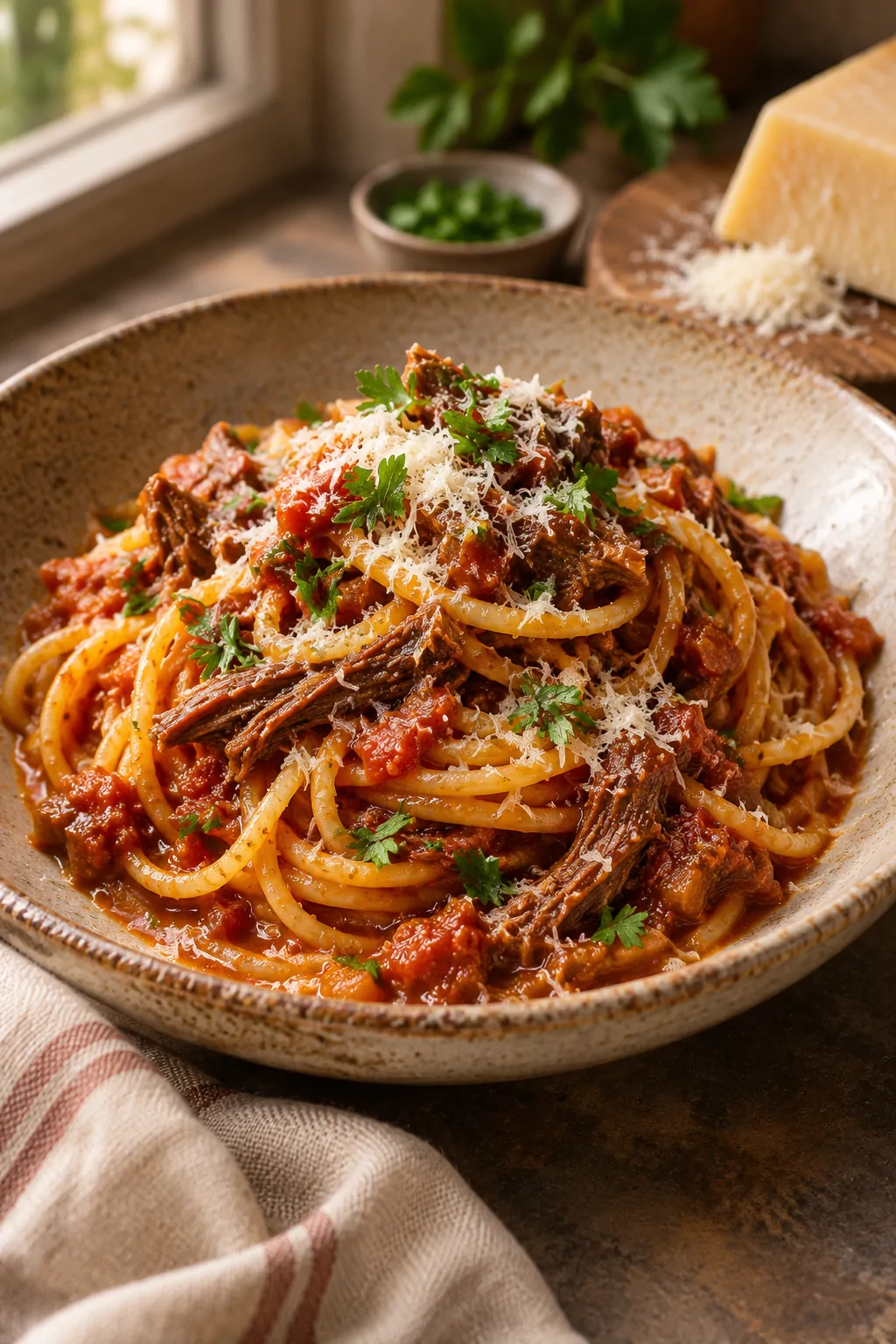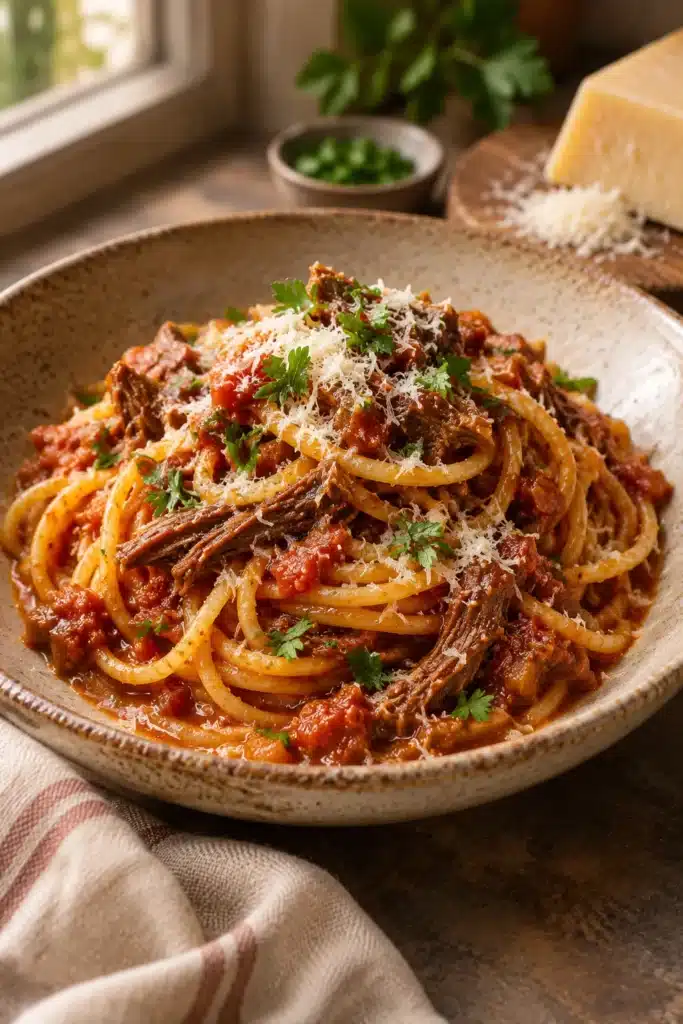
Beef cheek ragu pasta turns tender leftover beef, rich sauce, and spaghetti into a fast, deeply savory dinner. The ragu comes together in one pan with onion, garlic, tomatoes, and tomato paste, while reserved pasta water helps the sauce coat every strand. This practical beef cheek ragu pasta is especially useful when slow-cooked beef cheeks are already prepared and you want a satisfying second meal in about 15 minutes.
What Is Beef Cheek Ragu Pasta?
This dish combines shredded beef cheeks and their flavorful sauce with spaghetti and a bright tomato base. Because the beef is already cooked, the short simmer is used to warm it and blend flavors rather than tenderize it. The result should be glossy, rich, and easy to twirl.
Why This Beef Cheek Ragu Pasta Works
Leftover beef cheek brings deep flavor and a tender texture. Onion and garlic add a fresh aromatic foundation, while crushed tomatoes and tomato paste balance the richness. Finishing the spaghetti in the sauce matters: starchy pasta water helps the sauce cling instead of pooling at the bottom of the bowl.
How to Make Beef Cheek Ragu Pasta
Ingredients
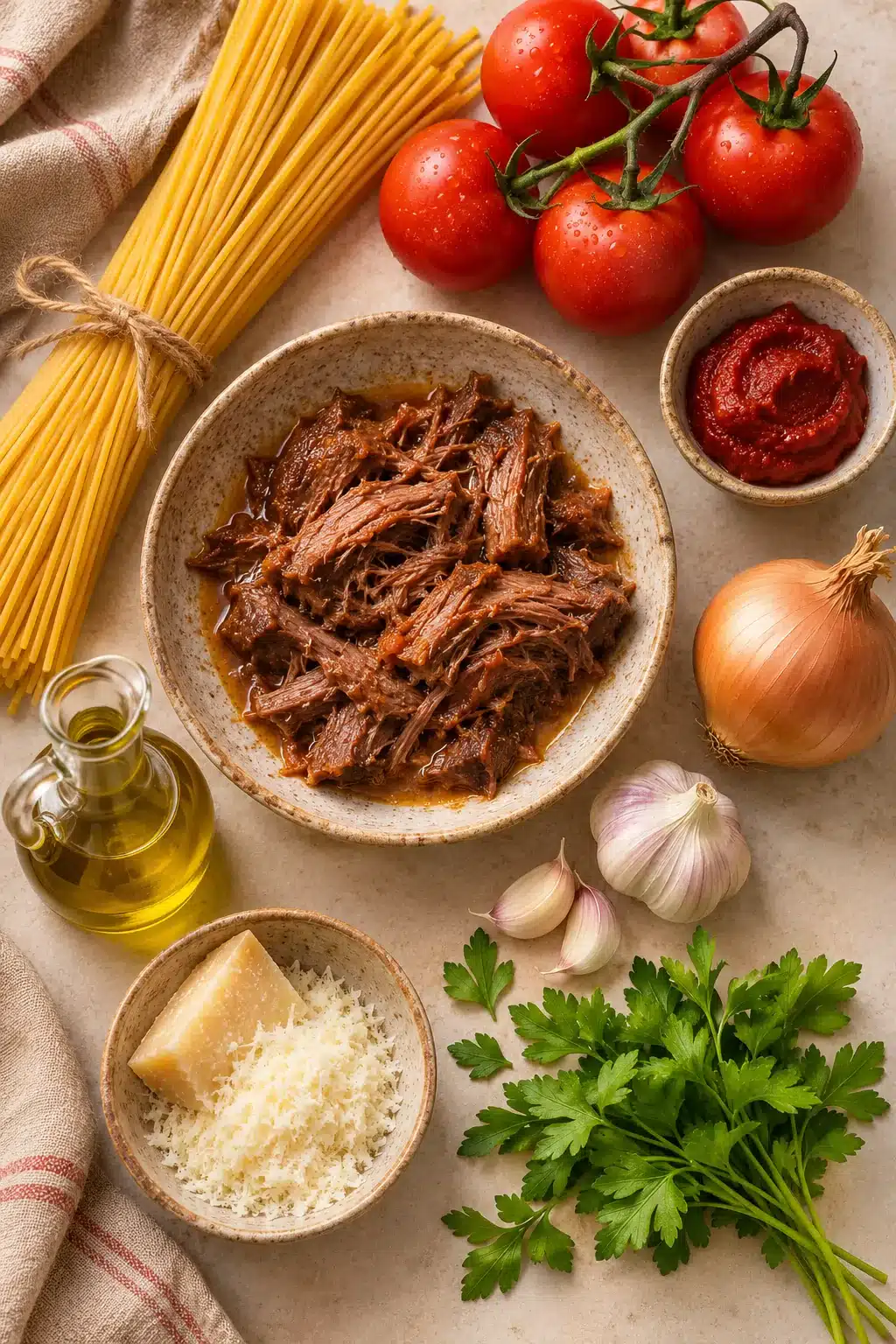
- 350 g dried spaghetti
- 2 cups leftover shredded beef cheeks
- 1 cup beef cheek sauce
- 1 brown onion, diced
- 2 garlic cloves, minced
- 2 tablespoons olive oil
- 2 cups crushed tomatoes
- 3 tablespoons tomato paste
- 1/2 cup water
- Salt and black pepper to taste
- Freshly grated Parmesan and parsley for serving
Method
- Bring a large pot of salted water to a boil. Add the spaghetti and cook until just before al dente, then reserve some pasta water.
- Meanwhile, heat the olive oil in a large pan over medium-high heat. Sauté the onion and garlic for about 3 minutes until softened.
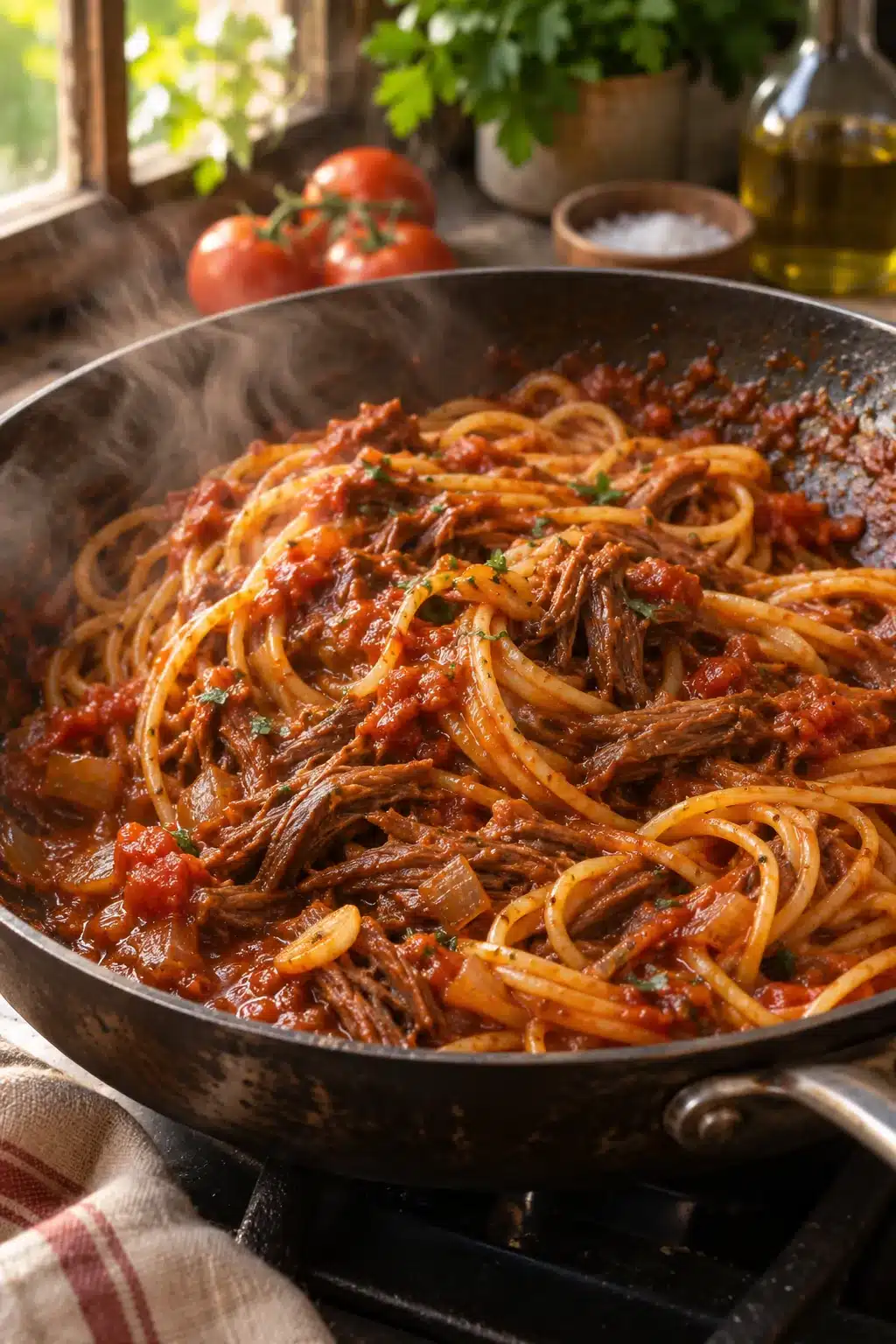
- Add the shredded beef, reserved sauce, crushed tomatoes, tomato paste, water, salt, and pepper. Bring to a rapid simmer.
- Transfer the spaghetti directly into the pan with the ragu. Add about 1/2 cup pasta water and toss for 1 to 2 minutes until the sauce clings to the pasta.
- Serve immediately with freshly grated Parmesan and finely chopped parsley.
Serving Ideas
Serve the pasta immediately while the sauce is glossy. Add Parmesan and parsley at the table, and offer a crisp green salad or steamed vegetables alongside the rich ragu. Crusty bread is useful for any sauce left in the bowl. A little black pepper gives the finished dish a sharper edge.
Tips and Optional Variation
Reserve more pasta water than you expect to need. Add it gradually during tossing so you can loosen the sauce without making it watery. Shred the beef into bite-size pieces and keep it with some cooking liquid until it goes into the pan.
Optional variation: replace the spaghetti with bucatini, linguine, or rigatoni. Keep the same beef, tomato, and sauce quantities, and cook the alternate pasta just short of al dente before finishing it in the ragu.
Storage and Reheating
Refrigerate leftover ragu and pasta separately when possible for up to three days. Reheat the ragu gently with a splash of water, then toss it with freshly warmed pasta. If the sauce seems thick, add a tablespoon of water at a time until it loosens and coats the noodles.
Beef Cheek Pasta Search Answers
For a quick leftover beef dinner, this recipe works because the slow-cooked meat needs only a brief simmer. For the best texture, finish the pasta in the pan rather than mixing it with a sauce that has cooled. If the beef sauce is already salty, taste before adding more salt.
FAQ: Beef Cheek Ragu Pasta
Finish and Serve
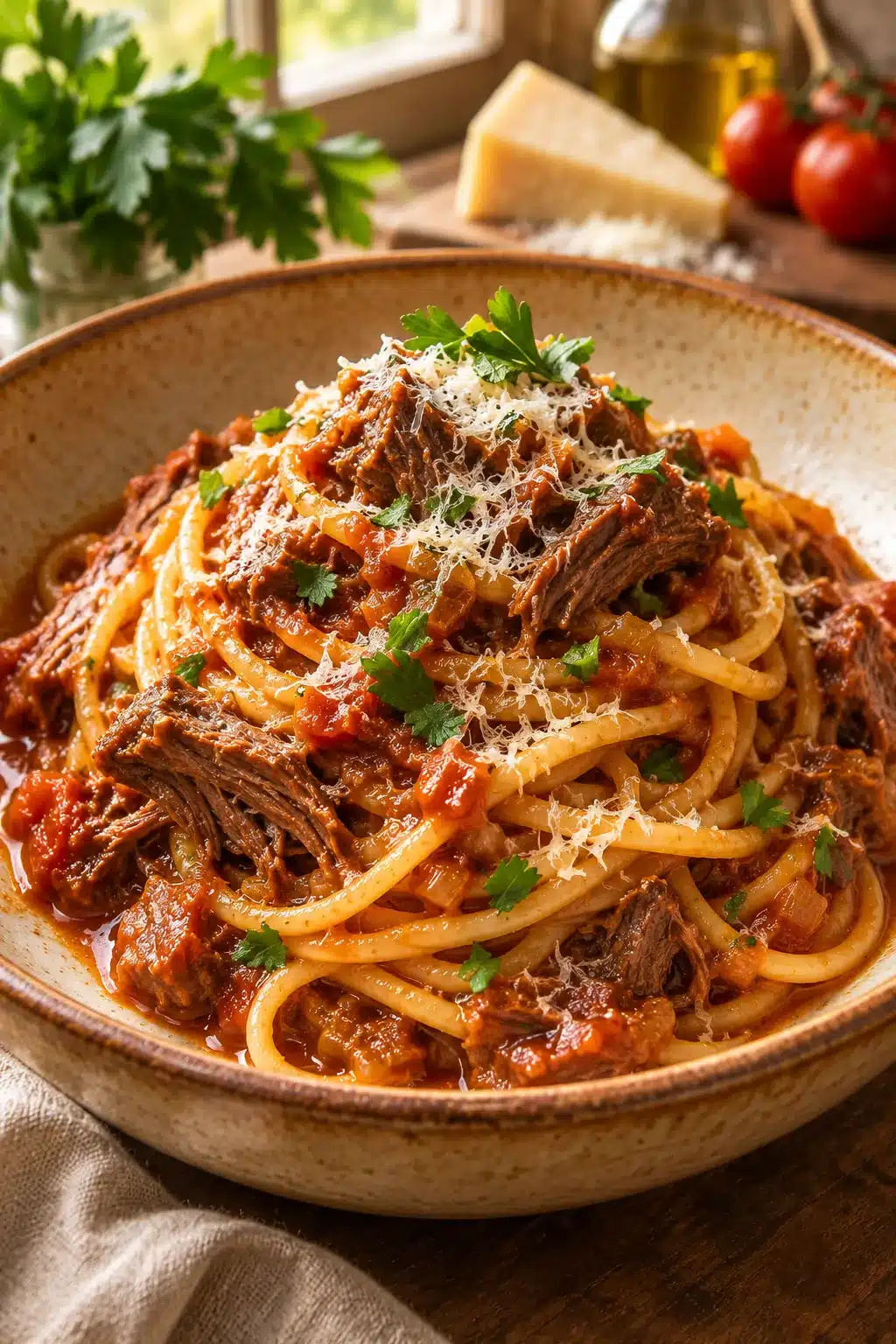
When the noodles are coated and the beef is hot, finish with Parmesan and parsley and serve straight away. The contrast of tender beef, bright tomato, and silky spaghetti makes this a useful second meal from prepared beef cheeks.
Making the Sauce Taste Balanced
Beef cheek sauce can vary in richness depending on how much cooking liquid remains. Start with the measured cup of sauce, then taste after the tomatoes have simmered. The tomato paste should deepen the flavor without making the ragu taste sharp. If the sauce is thick before the pasta goes in, use a little water; if it is loose, let it bubble briefly before adding the noodles.
Keep the simmer lively but controlled. The beef is already tender, so prolonged boiling is unnecessary and can make shredded meat dry. Look for small bubbles around the pan and a sauce that coats the back of a spoon. Once the pasta is added, toss continuously enough to distribute the beef through the strands without breaking the spaghetti.
A Practical Leftover Dinner
This recipe is a concrete use case for leftover slow-cooked beef cheeks: one earlier braise becomes a different meal with very little extra cooking. Shred the beef while it is cold or warm, removing only unusually large pieces of fat or connective tissue. Keep the sauce alongside it so the meat stays moist. Then prepare the pasta dinner when you need something fast but substantial.
If serving children or guests who prefer milder food, leave extra pepper and Parmesan at the table. For a more savory finish, use a small spoonful of the reserved beef sauce when loosening the pan. The goal is a cohesive ragu where every strand is coated and the beef remains visible in tender pieces.

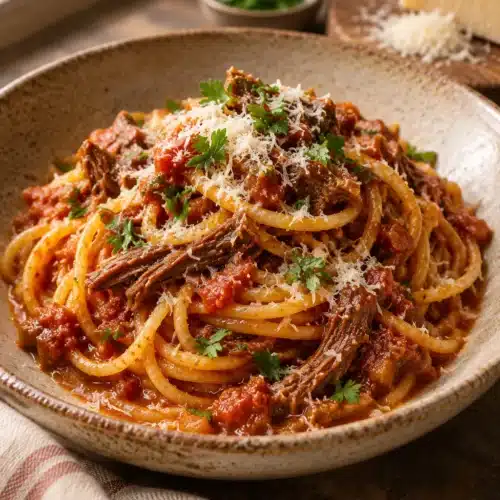
Beef Cheek Ragu Pasta
Ingredients
Ingredients
- 350 g dried spaghetti
- 2 cups leftover shredded beef cheeks from slow-cooked beef cheeks
- 1 cup beef cheek sauce reserved from the slow-cooked beef
- 1 brown onion diced
- 2 garlic cloves minced
- 2 tbsp olive oil
- 2 cups crushed tomatoes canned
- 3 tbsp tomato paste
- 1/2 cup water plus pasta cooking water as needed
- 1 to 2 tsp salt to taste
- black pepper to taste
- freshly grated Parmesan and parsley for serving
Instructions
Instructions
- Bring a large pot of salted water to a boil. Add the spaghetti and cook until just before al dente, then reserve some pasta water.
- Meanwhile, heat the olive oil in a large pan over medium-high heat. Sauté the onion and garlic for about 3 minutes until softened.
- Add the shredded beef, reserved sauce, crushed tomatoes, tomato paste, water, salt, and pepper. Bring to a rapid simmer.
- Transfer the spaghetti directly into the pan with the ragu. Add about 1/2 cup pasta water and toss for 1 to 2 minutes until the sauce clings to the pasta.
- Serve immediately with freshly grated Parmesan and finely chopped parsley.