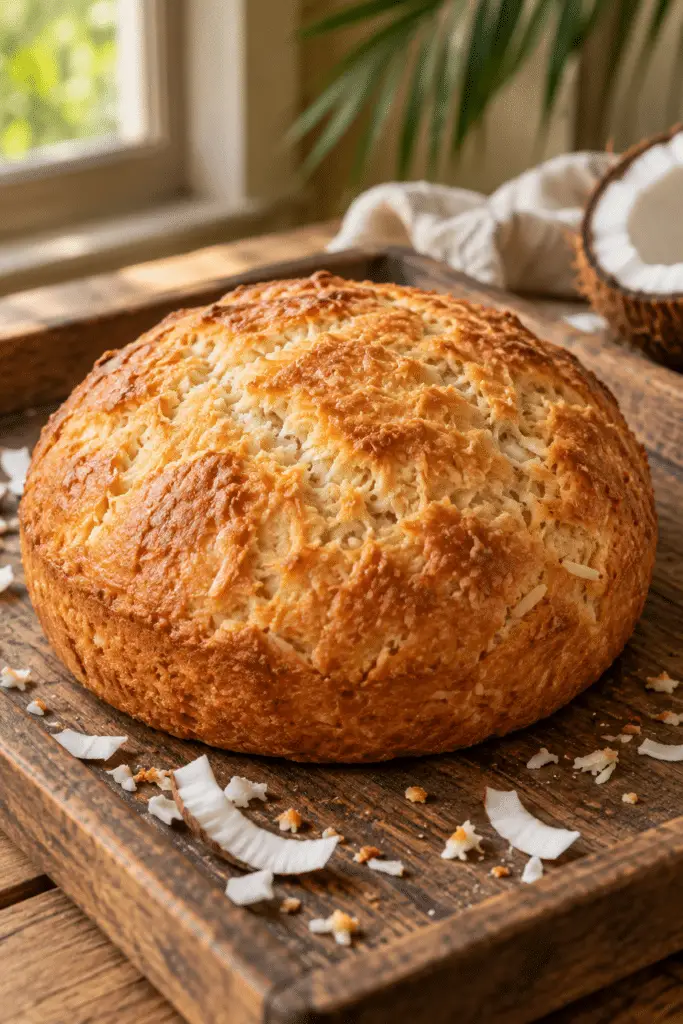
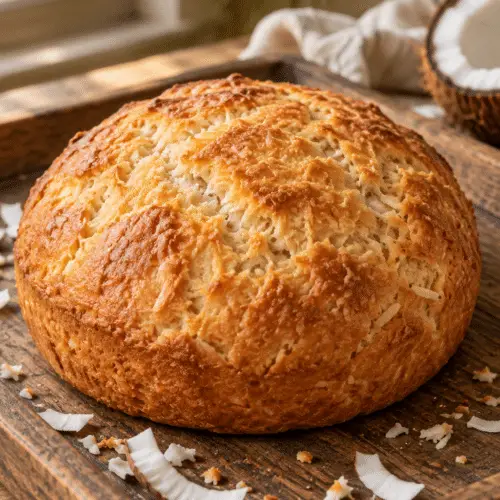
Coconut bake is a soft, thick Caribbean bread with a tender middle, lightly golden crust, and warm coconut-and-nutmeg aroma. This coconut bake recipe brings those qualities together with coconut milk, shredded coconut, butter, and a little yeast. The dough is pressed into a tray rather than shaped into a tall loaf, so it is approachable for a first attempt and easy to cut into wedges for breakfast, a snack, or a savory filling.
What Is Coconut Bake?
Coconut bake, also called Trinidad pot bake, is a substantial bread traditionally enjoyed with breakfast foods and savory accompaniments. It is not a cake and it is not a crisp biscuit: the inside should be tender and bread-like, while the outside takes on gentle color and chew. Coconut milk supplies richness and moisture, and shredded coconut gives each slice a pleasantly textured bite.
This version yields 8 servings. Its total time is about 70 minutes, including the short rests that allow the yeast dough to relax and gain lift. Because the dough is baked in a buttered tray, the finished bread has an even thickness that makes doneness easy to judge.
Why This Coconut Bake Works
Flour creates structure, while softened butter coats some flour before liquid is added. That rubbing-in step helps keep the crumb tender. Warm, rather than hot, coconut milk hydrates the dough and carries coconut flavor throughout it. Yeast adds lightness during the rests, while sugar, salt, and nutmeg keep the flavor balanced.
The dough remains fairly thick when it goes into the tray, which is intentional. Pricking the surface gives steam places to escape and helps the bread bake evenly. The second rest happens while the oven heats, keeping the process compact without sacrificing texture.
How to Make Coconut Bake
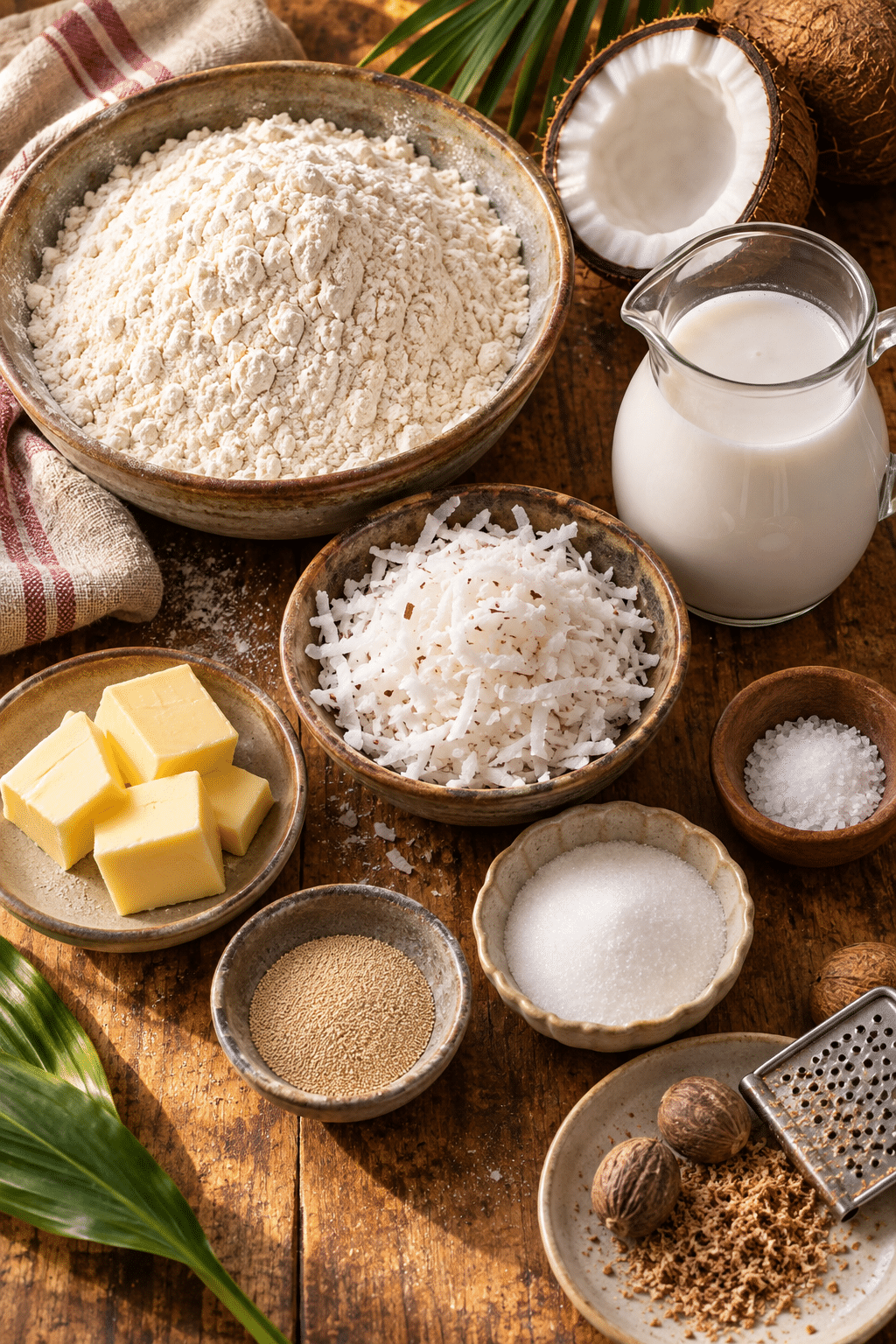
Gather everything before mixing. Slightly warm the coconut milk and soften the butter; neither should be hot or melted. A buttered baking tray, mixing bowl, and fork are all you need. Keep the mixing order below so the butter disperses evenly and the dough stays tender.
Ingredients
- 4 cups all-purpose flour
- 2 cups slightly warmed coconut milk
- 1 cup shredded coconut
- 1/4 cup softened butter
- 2 teaspoons yeast
- 1 tablespoon sugar
- 1/4 teaspoon salt
- 1/4 teaspoon ground nutmeg
Method
- Mix flour, yeast, sugar, salt, and nutmeg.
- Rub in butter until crumbly, then add coconut and warmed coconut milk.
- Knead briefly, cover, and rest 20 to 25 minutes.
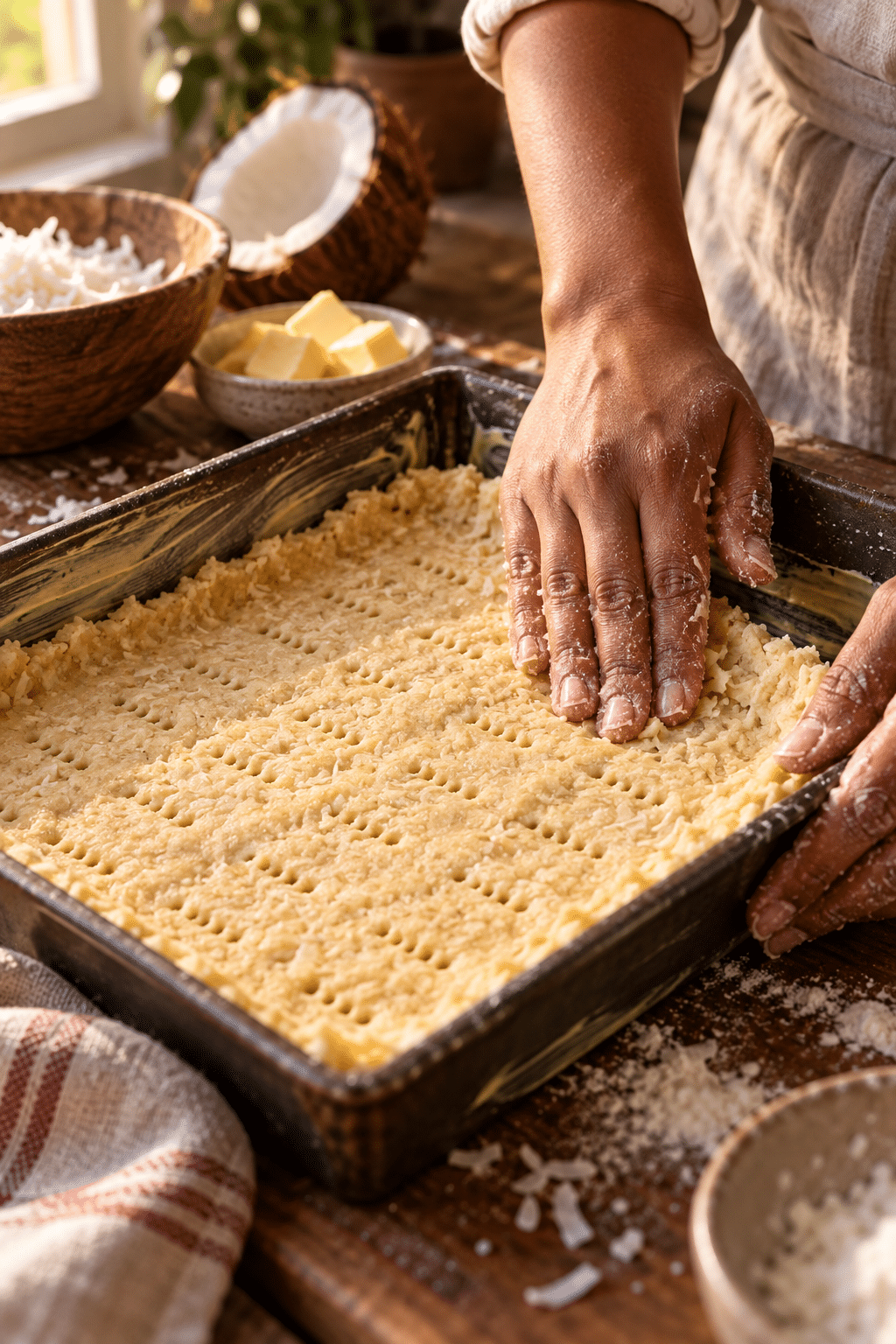
- Press into a buttered tray and prick with a fork.
- Rest 15 to 25 minutes while heating the oven to 400°F.
- Bake about 20 minutes until light golden and cool before cutting.
For the first step, stir the dry ingredients until yeast and seasonings are distributed. Rub the softened butter through the flour with your fingertips until the mixture looks crumbly. This prevents large butter pockets and spreads richness through the dough. Add the shredded coconut before adding liquid.
Pour in the slightly warmed coconut milk and knead briefly, just until there are no dry patches. Avoid adding extra flour too quickly: a soft, slightly tacky dough bakes more tenderly than a stiff one. Cover the bowl and let it rest for 20 to 25 minutes. The dough need not double in size.
Butter the tray thoroughly, then press the dough out evenly. If it springs back, pause briefly and continue; the rest helps it relax. Prick the top with a fork, making shallow holes across the surface rather than tearing through it. Let it rest another 15 to 25 minutes while the oven reaches 400°F.
Bake for about 20 minutes. Look for a light golden surface and edges that appear set. The center should no longer look wet or wobble when the tray is gently moved. Cool the bread before cutting so the crumb can finish setting and the wedges hold their shape. If the top colors quickly while the center remains wet, loosely tent it and continue baking.
Serving Ideas
Serve coconut bake warm with butter, mild cheese, eggs, or a savory fish filling. Its gentle sweetness also works with avocado, sliced tomato, or pepper sauce. For a concrete use case, cut a cooled wedge horizontally and fill it with warmed saltfish or another flaky savory fish for a filling breakfast or lunch.
For a simple breakfast, toast slices lightly and add butter while they are warm. With a strongly seasoned dish, choose bright, fresh accompaniments so the coconut remains noticeable. The bread is sturdy enough to hold a filling but tender enough to eat on its own.
Tips for Better Texture
Measure flour carefully and use the coconut milk amount as the starting point. Flour absorbs liquid differently, so mix patiently before deciding whether the dough needs adjustment. The finished dough should be cohesive and pliable, not crumbly. An even layer matters too: a very thick center needs longer to set than thin edges.
Do not skip cooling. Cutting immediately can compress the interior and make it seem gummy even when properly baked. If the dough feels dry before resting, check that the coconut milk was measured accurately; if it feels loose, give it a minute of kneading before adding flour.
Optional Variation
Optional variation: For a more pronounced coconut aroma, toast a small portion of the shredded coconut and cool it completely before adding it. This is an optional flavor change, not part of the primary recipe, so keep the total quantity at 1 cup and do not alter the dough’s liquid or rising times.
Storage and Reheating
Cool coconut bake completely before storing it. Keep pieces in an airtight container at room temperature for up to two days. For longer storage, wrap individual wedges well and freeze them for up to two months. Label the package with the date so the bread is easy to use in order.
Thaw frozen pieces in the refrigerator or at room temperature, then warm them gently in a low oven or toaster oven. Avoid overheating, which can dry the crumb. A little butter after reheating can restore a pleasant tender finish.
Coconut Bake Search Answers
Is Trinidad coconut bake sweet?
This recipe is gently sweet rather than dessert-like. Sugar supports flavor and browning, while coconut milk, shredded coconut, and nutmeg provide most of its character.
What should coconut bake feel like?
It should be thick and tender inside with a lightly golden outside. The crumb should set cleanly when cooled, without a wet center or hard, dry crust.
What can you serve with coconut bake?
Butter, cheese, eggs, avocado, and savory fish fillings all complement it. Choose accompaniments according to whether you want breakfast, a snack, or lunch.
Coconut Bake FAQs
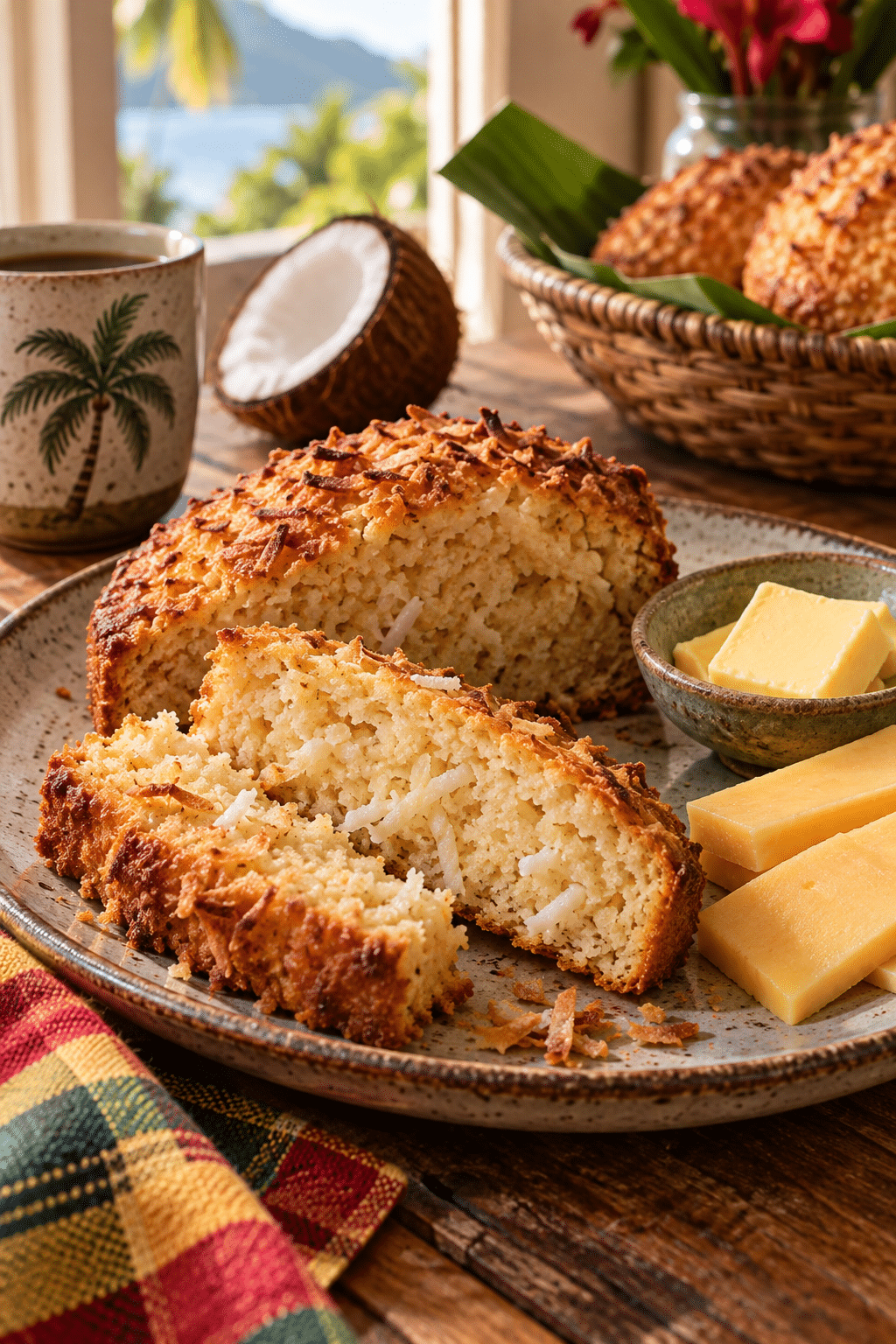
Once cooled, this coconut bake is easy to slice and flexible enough for breakfast or savory meals. Its tender coconut-rich crumb, lightly golden surface, and subtle nutmeg make a simple tray bake that rewards careful resting and gentle reheating.

Coconut Bake (Trinidad Pot Bake)
Ingredients
Ingredients
- 4 cups all-purpose flour
- 2 cups coconut milk slightly warmed
- 1 cup shredded coconut
- 1/4 cup butter softened
- 2 teaspoons yeast
- 1 tablespoon sugar
- 1/4 teaspoon salt
- 1/4 teaspoon ground nutmeg
Instructions
Instructions
- Mix flour, yeast, sugar, salt, and nutmeg.
- Rub in butter until crumbly, then add coconut and warmed coconut milk.
- Knead briefly, cover, and rest 20 to 25 minutes.
- Press into a buttered tray and prick with a fork.
- Rest 15 to 25 minutes while heating the oven to 400°F.
- Bake about 20 minutes until light golden and cool before cutting.
Featured Comments
“Impressed! Clear steps and restaurant-level results. Perfect for busy nights.”
“New favorite here — turned out amazing. crowd-pleaser was spot on.”
“Super easy and turned out amazing! My family asked for seconds. Saving this one.”
“This sweet treat was absolutely loved — the light really stands out. Thanks!”
“Made it tonight and wow — perfect for busy nights! Will definitely make Coconut Bake (Trinidad Pot Bake) again.”
“Packed with flavor and so simple. Exactly what I wanted from Coconut Bake (Trinidad Pot Bake).”