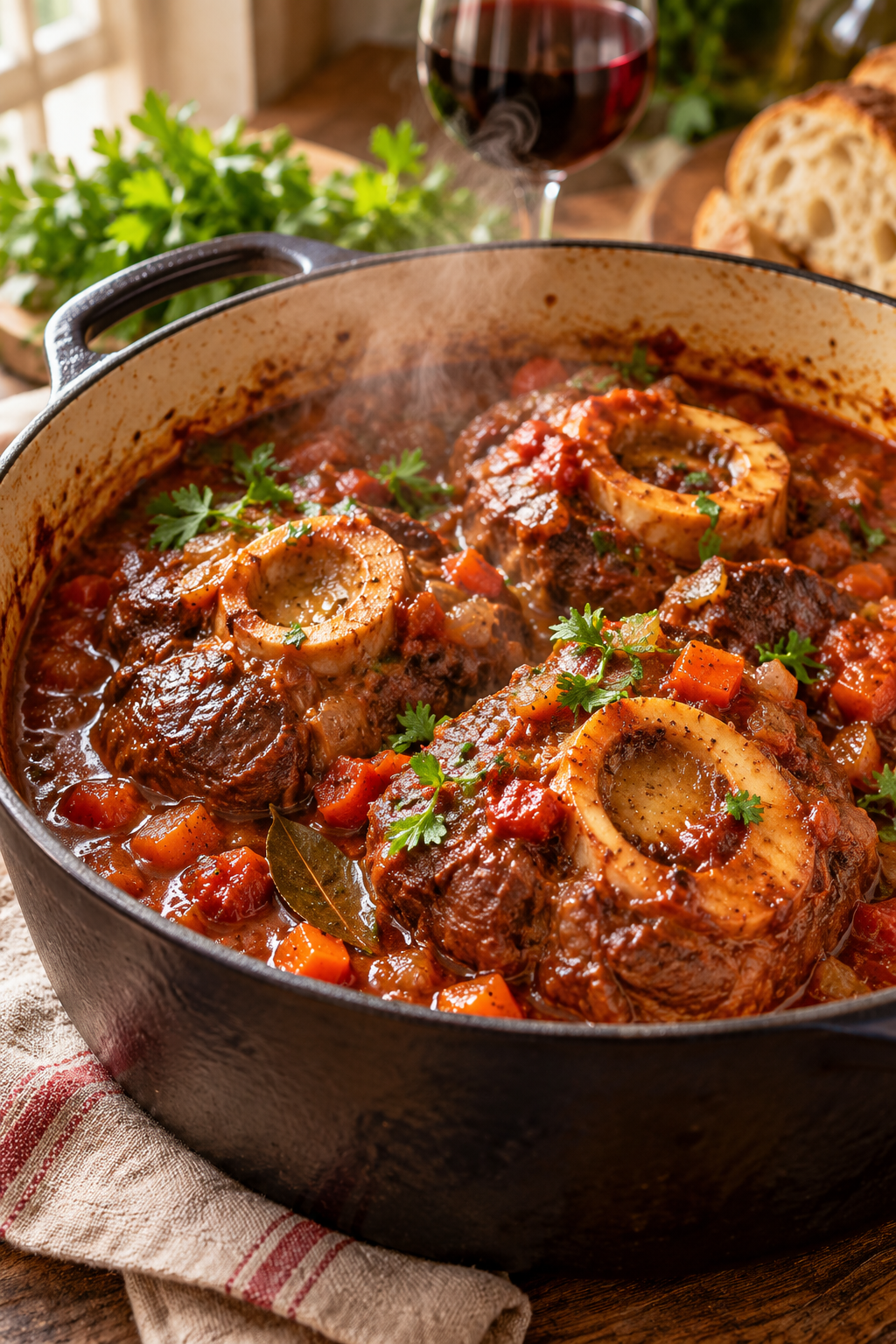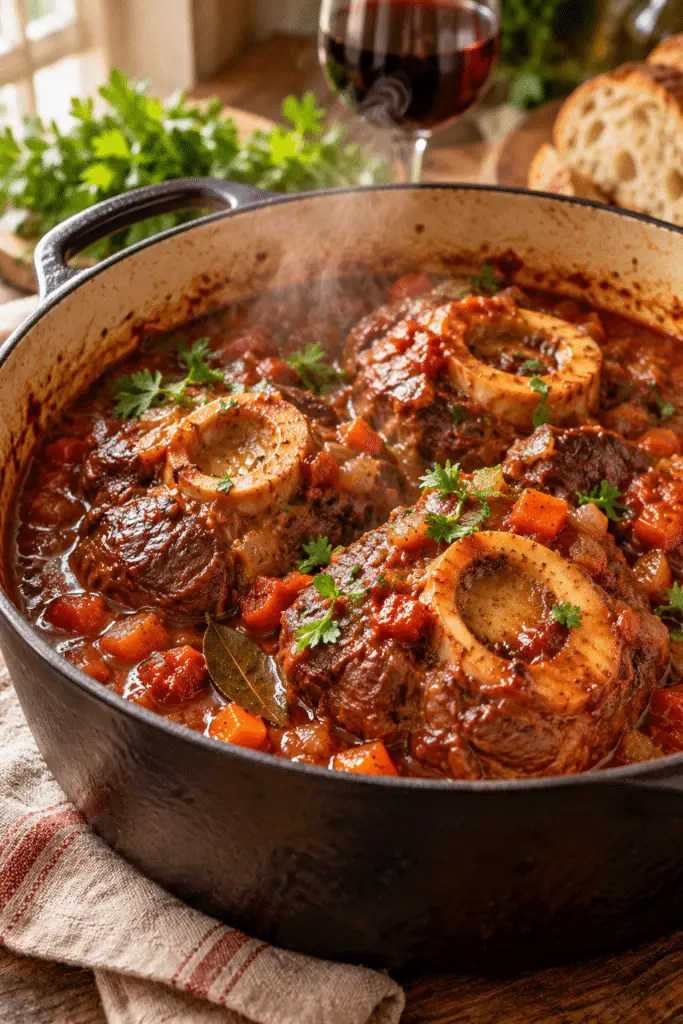
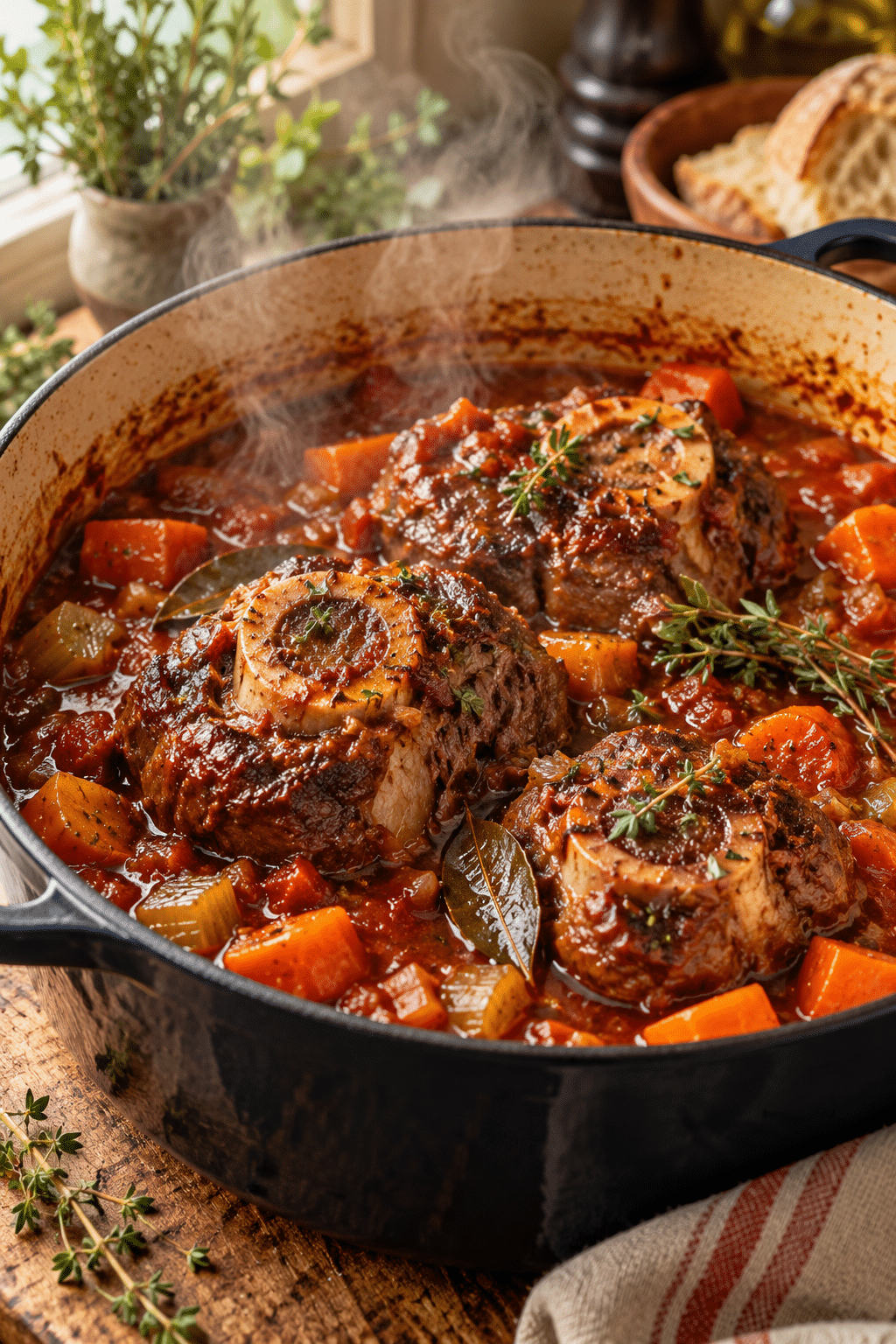
Osso buco is a slow-braised Italian-style dinner built around beef shanks, and this version makes the rich dish approachable in one Dutch oven. The meat browns first, then cooks gently with red wine, crushed tomatoes, beef broth, garlic, and herbs until it is fork-tender. The finished sauce is concentrated on the stovetop so every serving gets a spoonful of savory, silky flavor. Plan on a little over an hour of oven time, plus a few minutes to prepare the vegetables.
What is osso buco?
Osso buco means “bone with a hole,” referring to the marrow-filled center of a cross-cut shank. Beef shanks work especially well here because the connective tissue melts during the covered braise, giving the sauce body while keeping the meat moist. Serve the shanks whole, with the sauce spooned over the top.
Why this recipe works
Deep browning creates the foundation of flavor before the liquid is added. Red wine loosens the caramelized bits from the pan, while tomatoes and broth provide acidity and savory depth. The covered oven time does the tenderizing work; reducing the sauce afterward keeps it from tasting thin.
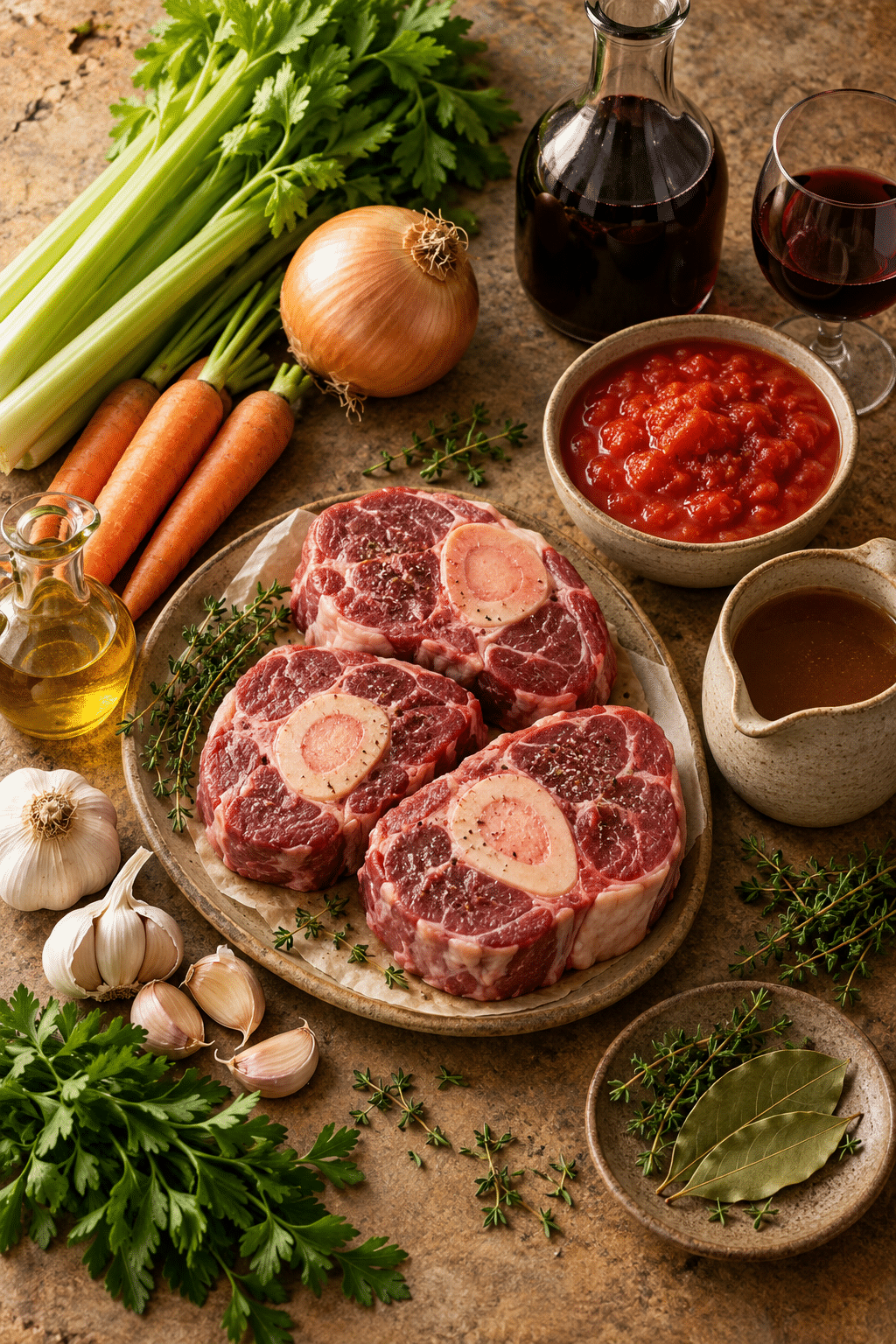
Ingredients for osso buco
- 4 tablespoons olive oil, divided
- 4 beef shanks, about 3 pounds total
- Kosher salt and fresh ground black pepper, to taste
- 2 stalks celery, diced
- 1 large carrot, peeled and diced
- 1 small yellow onion, finely diced
- 4 cloves garlic, minced
- 2 cups red wine
- 2 cups crushed tomatoes
- 2 cups beef broth
- 3 thyme sprigs
- 2 bay leaves
- Chopped fresh parsley, for garnish
How to make osso buco
Heat the oven to 350°F. Warm 3 tablespoons of the oil in a Dutch oven or braiser over medium-high heat. Pat the shanks dry, rub with the remaining oil, season generously, and brown for 3 to 4 minutes per side. Transfer them to a plate.
- Reduce the heat to medium. Cook the celery, carrot, and onion for 4 minutes, stirring often, then add the garlic for 15 seconds.
- Pour in the wine and scrape the browned bits from the bottom. Cook for 8 minutes.
- Stir in the tomatoes, broth, thyme, and bay leaves. Season and bring the liquid to a simmer.
- Return the shanks, cover, and bake for 1 to 1 hour 20 minutes, until fall-apart tender.
- Move the shanks to a plate. Simmer the sauce on the stovetop for 5 minutes, until reduced and thickened.
- Pour the sauce over the beef, garnish with parsley, and serve.
Serving ideas
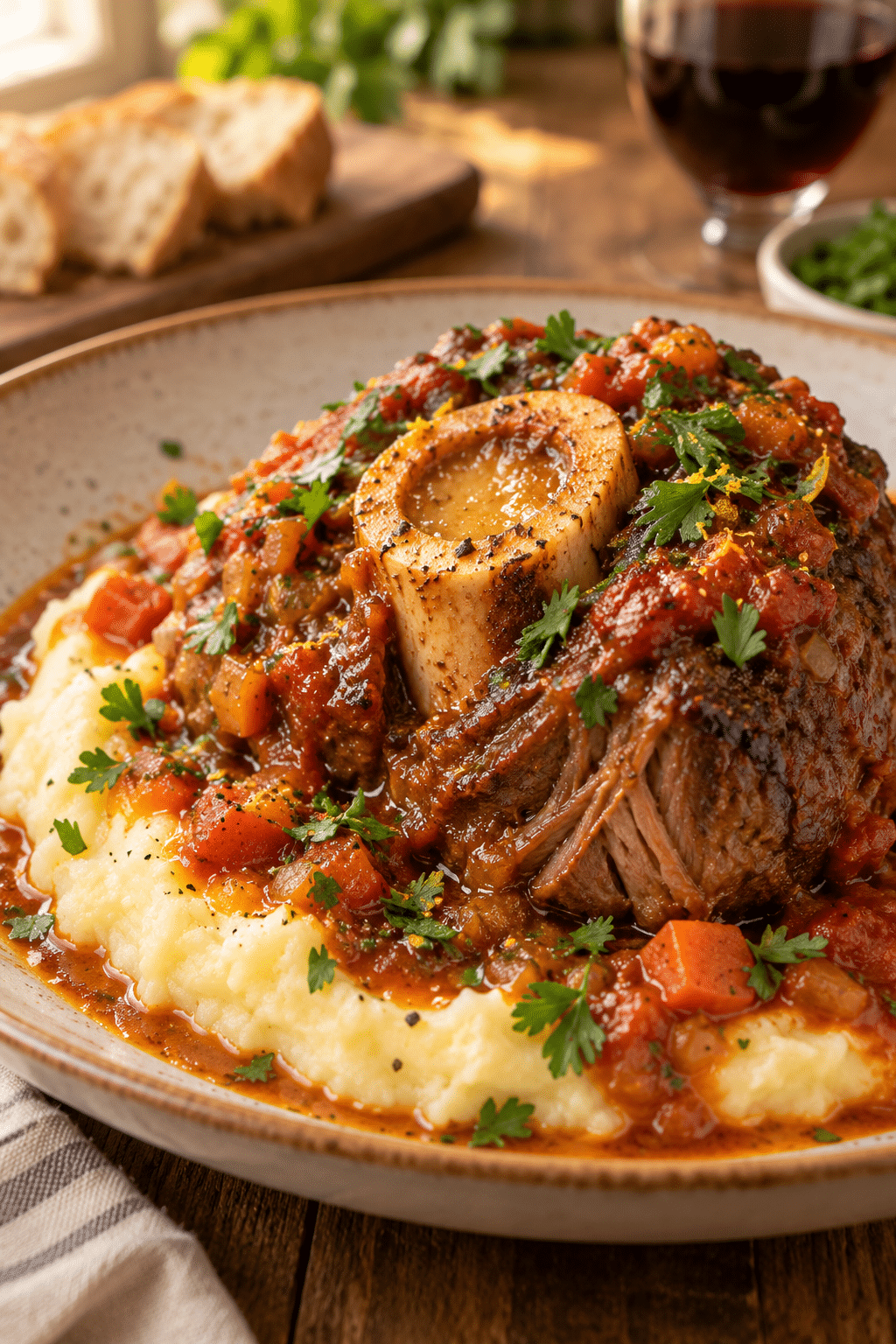
Spoon the shanks and sauce over mashed potatoes, polenta, risotto, or crusty bread. The starch helps catch the tomato-rich braising liquid. A simple green salad or steamed green beans brings freshness to the plate. For a dinner party, serve one shank per person with extra sauce at the table.
Tips and optional variation
Dry the shanks thoroughly before browning; surface moisture will slow caramelization. Avoid crowding the pan, and brown in batches if needed. The best doneness cue is texture: a fork should slide into the meat easily and the shank should feel loose around the bone. An optional variation is a quick gremolata of chopped parsley, lemon zest, and garlic sprinkled over each serving.
Storage and reheating
Cool leftovers promptly and refrigerate the beef and sauce in a covered container for up to 3 days. Reheat gently in a covered saucepan or Dutch oven with a splash of broth. The dish can also be frozen in portions for up to 3 months; thaw overnight in the refrigerator before reheating.
Search-query answers
What cut is used for osso buco?
Cross-cut beef shanks are a practical choice because their connective tissue becomes tender during braising.
What do you serve with osso buco?
Mashed potatoes, polenta, risotto, and crusty bread all pair well with the rich sauce.
How do you know osso buco is done?
The meat should be fork-tender and nearly falling from the bone after the covered bake.
FAQs
With patient browning and a covered oven braise, osso buco becomes a deeply flavored dinner that is simple to serve and generous enough for a table of six.
Detailed method notes
Preheat the oven to 350°F. Heat 3 tablespoons olive oil in a Dutch oven or braiser over medium-high heat. Pat dry the beef shanks, rub with the remaining oil, season with salt and pepper, and brown 3 to 4 minutes per side. Remove the shanks, reduce heat to medium, and cook celery, carrot, and onion for 4 minutes; stir in garlic for 15 seconds. Add wine, scrape up browned bits, and cook 8 minutes. Stir in tomatoes, broth, thyme, and bay leaves; season and bring to a simmer. Return shanks, cover, and bake 1 to 1 hour 20 minutes until fall-apart tender. Remove shanks and reduce the sauce on the stovetop for 5 minutes. Pour sauce over the shanks. Garnish with parsley and serve.
For the most even cooking, choose shanks of similar thickness and leave a little room between them as they brown. If the pan is crowded, the beef will steam instead of developing a dark crust. That crust is especially valuable because the wine will dissolve it into the sauce. Keep the heat moderate while the vegetables soften so the garlic does not scorch.
The covered braise should maintain a gentle simmer rather than a vigorous boil. Check the liquid once during the oven time; if it has reduced dramatically, add a small splash of broth. When the meat is ready, it should yield easily to a fork without needing to be pulled apart. Letting the shanks rest briefly while the sauce reduces keeps serving tidy and gives the juices a moment to settle.
Osso buco is a useful make-ahead main course for a weekend dinner, holiday meal, or relaxed gathering because the final assembly is simple. Prepare a starch while the sauce reduces, then spoon the sauce around the shanks rather than hiding the bone. A little chopped parsley brightens the deep flavors, while lemony gremolata is a clearly optional finish for cooks who want extra freshness.
Because the sauce contains both wine and tomatoes, it has enough brightness to balance the richness of the shanks. Taste it only after reduction before adding more salt. If it seems too sharp, a longer simmer will round it out; if it seems too thick, loosen it with warm broth so the flavor stays concentrated.
For serving, use a wide shallow bowl so the sauce stays around the meat and the bone remains visible. Creamy polenta is ideal for a casual supper, while risotto makes the dish feel more formal. Leftover sauce is also useful over pasta, roasted vegetables, or toasted bread.
To plan the timing, chop the vegetables before heating the pan and measure the liquids in advance. Once the shanks enter the oven, the recipe needs little attention, which makes it practical when guests are arriving. The kitchen work is mostly finished before the final sauce reduction and parsley garnish.

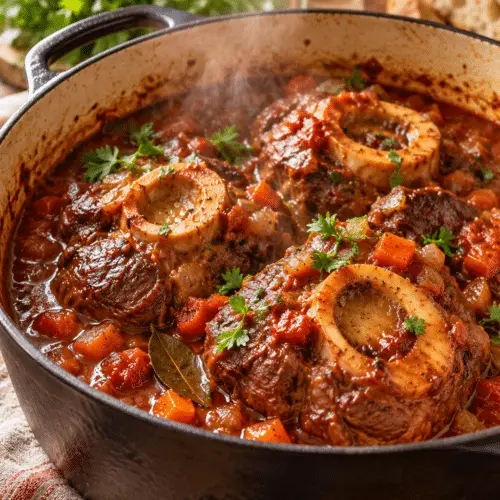
Easy Osso Buco with Beef Shanks
Ingredients
Ingredients
- 4 tablespoons olive oil divided
- 4 beef shanks about 3 pounds total
- kosher salt and fresh ground black pepper to taste
- 2 stalks celery diced
- 1 large carrot peeled and diced
- 1 small yellow onion finely diced
- 4 cloves garlic minced
- 2 cups red wine
- 2 cups crushed tomatoes
- 2 cups beef broth
- 3 sprigs thyme
- 2 bay leaves
- fresh parsley chopped, for garnish
Instructions
Instructions
- Preheat the oven to 350°F.
- Heat 3 tablespoons olive oil in a Dutch oven or braiser over medium-high heat.
- Pat dry the beef shanks, rub with the remaining oil, season with salt and pepper, and brown 3 to 4 minutes per side.
- Remove the shanks, reduce heat to medium, and cook celery, carrot, and onion for 4 minutes; stir in garlic for 15 seconds.
- Add wine, scrape up browned bits, and cook 8 minutes.
- Stir in tomatoes, broth, thyme, and bay leaves; season and bring to a simmer.
- Return shanks, cover, and bake 1 to 1 hour 20 minutes until fall-apart tender.
- Remove shanks and reduce the sauce on the stovetop for 5 minutes.
- Pour sauce over the shanks.
- Garnish with parsley and serve.