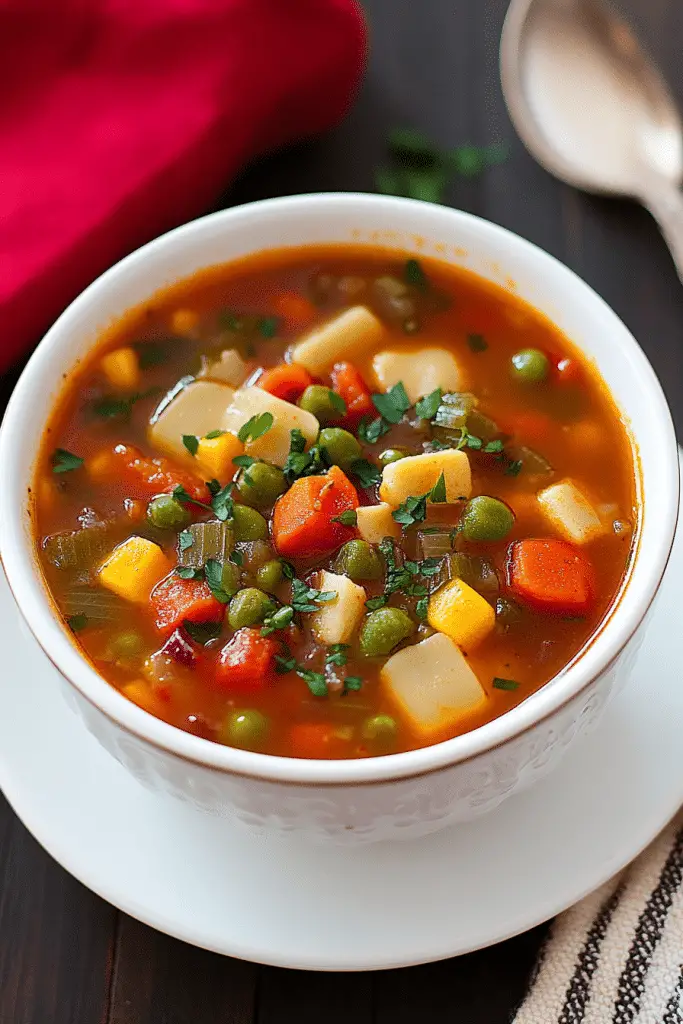
There’s something so comforting about a big bowl of vegetable soup, isn’t there? I remember cozy afternoons in my grandmother’s kitchen, the aroma of simmering veggies filling the air, making everything outside seem so much calmer. That smell of garlic, the bubbling broth, and the way the vibrant colors of fresh vegetables dance together still makes my stomach growl—and I’ve made this recipe so many times I’ve lost count. It’s honestly one of those dishes you can whip up in no time, especially when I want something nourishing but don’t feel like fussing around in the kitchen for hours. Plus, it’s perfect on busy weeknights or when I have a fridge full of odds and ends. My kids ask for this all the time, especially when I toss in some of their favorite seasonal veggies. Trust me, once you try this, it’ll become a family staple—plus, it’s so versatile, you can swap ingredients easily. The best part? It’s just like giving your body a big, warm hug from the inside out. Let’s dive into this simple, soulful vegetable soup that I’ll bet you’ll love as much as I do.
What is vegetable soup?
Think of vegetable soup as a cozy, forgiving pot of goodness — kind of like a blank canvas that lets you showcase whatever fresh vegetables you have lying around. It’s essentially a hearty, brothy mixture of chopped vegetables simmered with herbs and spices until tender, with a richness that can surprise you considering how simple the ingredients are. The name is pretty straightforward: “vegetable soup” because, well, it’s mainly vegetables, but don’t let that fool you into thinking it’s boring. My version is a little more personal—sometimes I add a handful of beans for protein, or a splash of tomato for tang. The beauty is, it’s flexible, forgiving, and incredibly nourishing. Think of it as a warm bowl of sunshine you can make any day—no fancy techniques or complicated steps, just real, honest cooking that hits the spot every single time. Whether you’re looking for a quick lunch or a cozy dinner, vegetable soup’s got your back.
How do I make vegetable soup?
Quick Overview
This vegetable soup is as easy as chopping, simmering, and tasting! I love how it comes together in under an hour, and you don’t need any fancy equipment—just a good-sized pot and your favorite veggies. Start with a savory base of onion, garlic, and carrots, then toss in whatever fresh produce you have—zucchini, potatoes, green beans, kale, or anything that’s calling your name. Simmer everything until tender, season to taste, and you’re done! The secret is in the slow simmer, which coaxes out all the natural flavors and makes the veggies melt in your mouth. It’s perfect for weeknight dinners, because you basically just toss everything in and forget about it. Plus, leftovers taste even better the next day—if you’re lucky enough not to finish it all at once! Trust me on this: the longer it sits, the more the flavors meld, making each spoonful even more comforting.
Ingredients
For the Broth:
- 4 cups vegetable broth (store-bought or homemade, my go-to is a mix of water and veggie scraps for extra flavor)
- 1 onion, diced (yellow or white, whatever you have)
- 3 cloves garlic, minced (fresh garlic really makes a difference)
- 2 carrots, peeled and sliced
- 2 celery stalks, sliced
For the Vegetables:
- 1 zucchini, chopped (leave the skin on for extra nutrients and color)
- 1 large potato, peeled and cubed (russet or yukon gold work well)
- 1 cup green beans, trimmed
- 1 cup kale or spinach, roughly chopped
- Optional: peas, corn, chopped tomatoes—whatever’s in season or in your fridge
For Seasoning & Extras:
- Salt and pepper to taste
- 1 teaspoon dried thyme or oregano
- A pinch of red pepper flakes (if you like a touch of heat)
- Olive oil or butter for sautéing
Step-by-Step Instructions
Step 1: Preheat & Prep Pan
Set your big soup pot over medium heat, drizzle in a tablespoon of olive oil, and let it warm up. While it heats, chop all your veggies—there’s something calming about the chopping process, right? Don’t worry if your pieces aren’t all perfectly uniform; rustic charm is part of the appeal. Once the oil is shimmering, toss in the diced onion, garlic, carrots, and celery. Sauté until the onion goes translucent and the garlic becomes fragrant—about 5 minutes. This step building flavor is key, so don’t rush it!
Step 2: Mix Dry Ingredients
In this stage, I like to add my herbs—dried thyme or oregano, along with salt and pepper. I sprinkle those in while sautéing, letting the herbs toast a little so their oils release and flavors deepen. This is a small trick I learned early on that makes all the difference. Always taste your seasoning here—remember, you can add more later but can’t take it out!
Step 3: Mix Wet Ingredients
Now, pour in your vegetable broth. If you don’t have homemade, the store-bought is perfectly fine—just look for low-sodium if you’re watching salt intake. Bring it to a gentle simmer. You’ll see the veggies start to soften and the broth develop a lovely aroma. I always do this step with the lid slightly ajar, so some of the liquid can escape, concentrating the flavors.
Step 4: Combine
Add in your tougher vegetables first—potatoes, carrots—and let everything simmer until they’re almost tender, about 10 minutes. Then, toss in zucchini and green beans, simmer for another 5-7 minutes. Keep an eye on it to avoid overcooking; the veggies want to be tender but still hold some bite. Overmushed veggies can turn your soup into a sad mush, and nobody wants that.
Step 5: Prepare Filling
If you’re adding any extras like beans or corn, stir them in now. This is also the moment to check seasoning—maybe a pinch more salt or a squeeze of lemon juice to brighten it up. If you like a little heat, sprinkle in red pepper flakes. Sometimes I add a splash of soy sauce or a dash of hot sauce for an extra flavor kick—trust me, it brightens the whole dish!
Step 6: Layer & Swirl
Not much layering here, but if you want to make it pretty or add a swirl of olive oil or a dollop of pesto on top before serving, do that now. It’s lovely to see the color contrast and add a final flavor boost. Speaking of swirls, I sometimes drizzle a tiny bit of cream or almond milk for a slightly richer, creamier touch—experiment to find what you love!
Step 7: Bake (Optional)
This isn’t a baked soup by any means, but if you want to deepen flavors even more, you can transfer everything to a baking dish and roast it at 375°F for about 20 minutes—this caramelizes the vegetables and sweetens the broth. I only do this if I have a little extra time, but it’s a fun twist!
Step 8: Cool & Glaze
Once cooked, I like to let the soup sit for a few minutes off the heat so the flavors settle. If you plan to serve it later, store it in an airtight container. If you’re adding a glaze or finishing sauce, do that just before serving. You can sprinkle herbs or fresh lemon juice to brighten everything up.
Step 9: Slice & Serve
Finally, ladle your vegetable soup into bowls, maybe add a sprinkle of Parmesan or crusty bread on the side, and enjoy! I often serve this with a fresh salad or some toasted baguette slices. It’s a meal in itself, filled with all the goodness of fresh vegetables—but I won’t judge if you sneak in a handful of noodles or a piece of crusty garlic bread, because I totally do that too.
What to Serve It With
This soup plays nicely with just about everything. For breakfast or brunch, I sometimes serve a simple poached egg or a slice of sourdough alongside. It makes for a cozy lunch with a side of crusty bread or a crunchy salad, especially if I want to keep things light and fresh. As a dinner star, I love pairing it with grilled cheese or even a stack of warm tortillas—think of it as a warm, nutritious companion. Personally, I also like to add a dollop of Greek yogurt or sour cream for creaminess, especially if I’ve added spicy elements or tomato. My family loves this with a sprinkle of fresh herbs on top—basil, parsley, or chives—and it’s a hit at our table no matter the season. This soup is one of those dishes that tastes even better the next day, so I often make a big batch and enjoy leftovers over the weekend. It’s honestly become my go-to comfort food when I need a quick, nourishing fix.
Top Tips for Perfecting Your Vegetable Soup
Over the years, I’ve learned a few tricks that make my vegetable soup turn out just right every time. First, prep your veggies smartly—slice things uniformly, but don’t stress if they’re not perfect. I learned that tougher veggies like potatoes and carrots need longer simmering, so I add them first, followed by delicate greens near the end, so they don’t overcook. For seasoning, always taste before serving—you might want a little more salt or acidity, like lemon juice or vinegar, to brighten everything. If you want extra depth of flavor, try adding a Parmesan rind while simmering or a splash of soy sauce—these little umami bombs can transform your broth. When it comes to swapping ingredients, I’ve tested so many variations—winter squash instead of potatoes, or kale instead of spinach—and it’s always delicious. One mistake I made early on was overcooking the veggies; now I keep a close eye and test with a fork—just when they’re tender enough but still have a nice bite. Also, if you want a thicker soup, blend part of it with an immersion blender or mash some of the cooked vegetables. Trust me on this—little tweaks can turn a good vegetable soup into a GREAT one.
Storing and Reheating Tips
This soup stores beautifully, making it perfect for meal prep. Let it cool completely before transferring it to airtight containers. In the fridge, it’ll stay fresh for 3-4 days—just reheat gently on the stove or microwave, stirring occasionally. If you want to keep it longer, freeze it in portions—you’ll want to leave some space in your containers for expansion. When reheating, add a splash of broth or water if it’s thickened too much, and taste to adjust seasoning. As for the glaze or garnishes—wait to add fresh herbs or a drizzle of oil until right before serving; this keeps everything looking vibrant. If you’re planning to freeze, I recommend holding off on adding any dairy or fresh herbs until you reheat, to keep them tasting fresh. Believe me, nothing beats a big batch of homemade vegetable soup waiting in the freezer on busy nights—just scoop, heat, and enjoy.
Frequently Asked Questions
Final Thoughts
This vegetable soup has truly become one of my kitchen staples. It’s warm, inviting, and so adaptable that I feel like I can make it stand out with whatever ingredients I have on hand. Whether I’m cooking for a tired family after a long day or just craving something nourishing and simple, this recipe never fails to deliver. It’s like a hug in a bowl, and honestly, I don’t think I’ll ever get tired of it. My hope is that you’ll try it out, tweak it to your taste, and maybe even add your own little twist. Remember, cooking is all about joy and experimentation, so don’t be afraid to make it your own. I’d love to hear how yours turns out—leave a comment or share a photo! Happy cooking, friends, and enjoy that bowl of comfort. Cheers to good food and good company!


vegetable soup
Ingredients
Main Ingredients
- 2 tablespoons olive oil
- 1.5 cups chopped yellow onion about 1 medium onion
- 2 cups peeled and chopped carrots about 5 carrots
- 1.25 cups chopped celery about 3 celery stalks
- 4 cloves garlic minced
- 4 cups low-sodium vegetable broth
- 2 cans diced tomatoes 14.5 oz cans, undrained
- 3 cups diced potatoes about 3 medium potatoes, 1/2 inch diced
- 0.33 cups chopped fresh parsley
- 0.5 teaspoons dried thyme or 1 tablespoon fresh thyme leaves
- 1 pinch salt and freshly ground black pepper
- 1.5 cups chopped green beans frozen or fresh
- 1.25 cups frozen or fresh corn
- 1 cup frozen or fresh peas
Instructions
Preparation Steps
- Heat olive oil in a large pot over medium-high heat.
- Add onions, carrots, and celery and sauté for 4 minutes, then add garlic and sauté for 30 seconds longer.
- Add broth, tomatoes, potatoes, parsley, bay leaves, thyme, and season with salt and pepper to taste.
- Bring to a boil, then add green beans.
- Reduce heat to medium-low, cover, and simmer until potatoes are almost tender, about 20-30 minutes.
- Add corn and peas and cook for an additional 5 minutes. Serve warm.
Notes
Featured Comments
“Impressed! Clear steps and turned out amazing results. Perfect for busy nights.”
“New favorite here — creamy. crowd-pleaser was spot on.”
“Super easy and turned out amazing! My family asked for seconds. Saving this one.”
“This sweet treat was absolutely loved — the bright really stands out. Thanks!”
“Made it tonight and wow — turned out amazing! Will definitely make Hearty Vegetable Soup Recipe: Simple & Delicious again.”
“Packed with flavor and so simple. Exactly what I wanted from Hearty Vegetable Soup Recipe: Simple & Delicious.”