

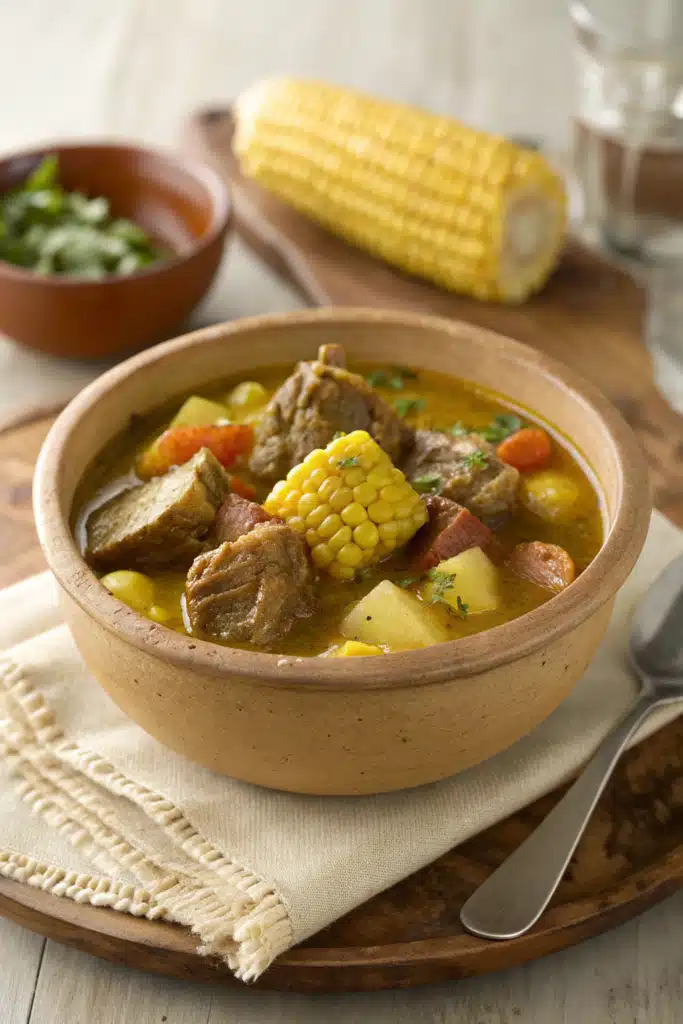
The Ultimate Authentic Dominican Sancocho Recipe
Let’s be real for a second—some days just call for a big, warm hug in a bowl. For me, that hug is always a steaming plate of this authentic Dominican Sancocho recipe. If you’ve never experienced the magic of walking into a kitchen where a massive pot of sancocho has been bubbling away for hours, you are in for an absolute treat today. I remember my grandmother making this on chilly, rainy afternoons, the rich aroma of garlic, cilantro, and slow-braised meats filling every corner of the house.
It wasn’t just dinner; it was an event. Friends would magically drop by, family members would pull up extra chairs, and we’d all gather around the table sharing stories over giant bowls of soup. Today, I’m sharing my cherished family recipe with you. It’s hearty, deeply flavorful, and honestly, it’s the ultimate comfort food. Grab your biggest soup pot, put on some good music, and let’s get cooking!
What Is Dominican Sancocho?
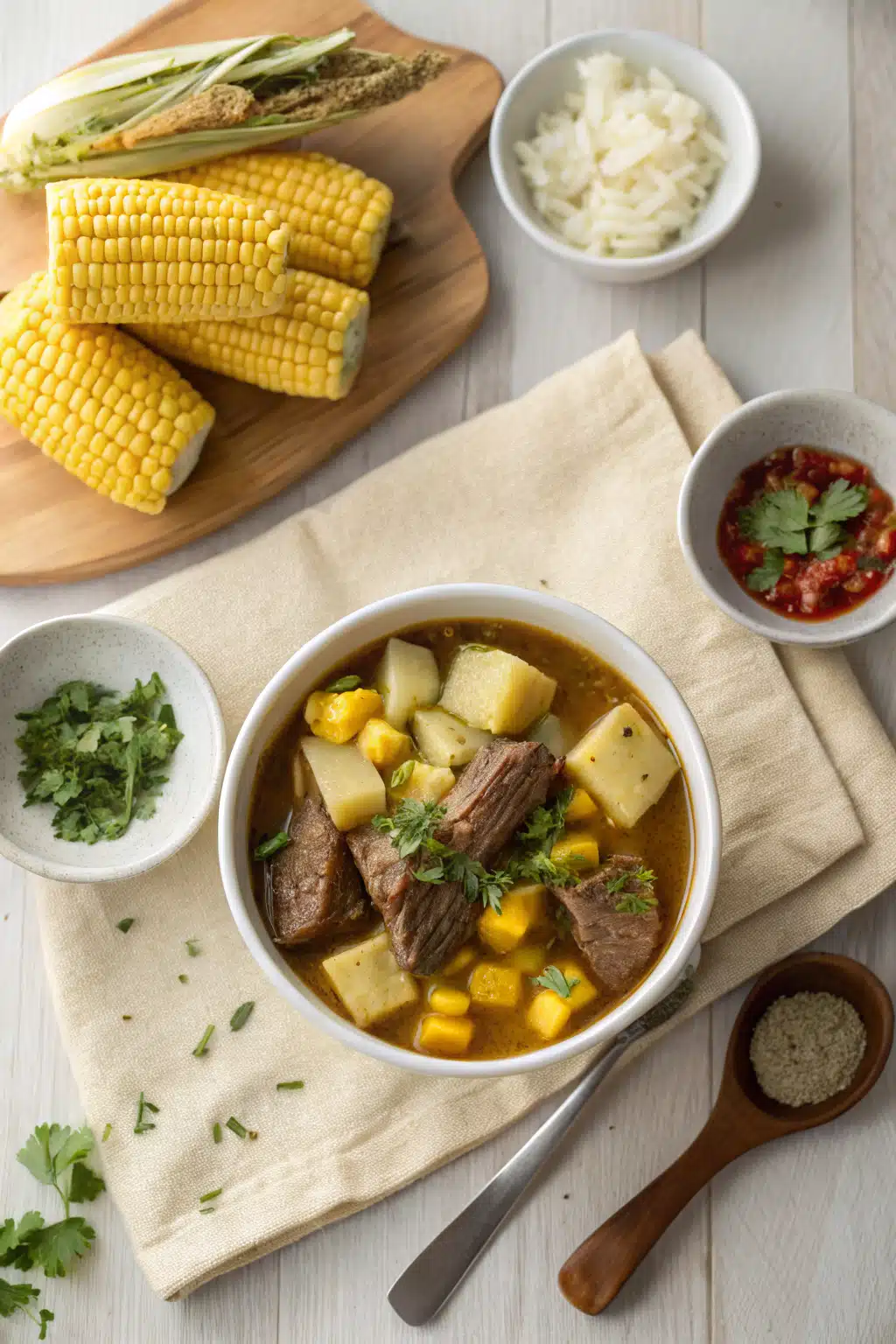
If you’re new to Caribbean cuisine, you might be wondering what exactly this dish is. Think of Dominican Sancocho as the absolute king of all stews. It is the beloved national dish of the Dominican Republic, typically reserved for special occasions, holidays, or those lazy Sundays when you just want to feed a crowd and take a nap afterward.
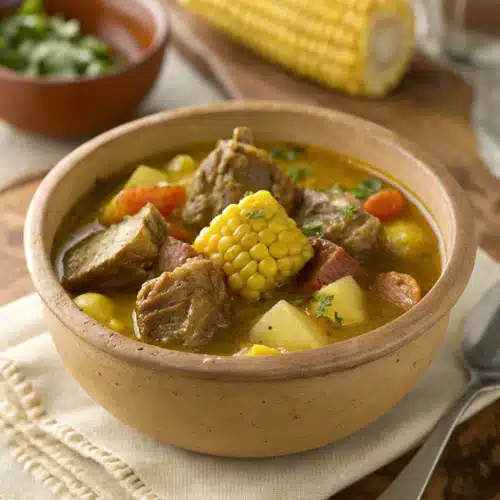
At its core, sancocho is a thick, incredibly robust stew made by simmering a variety of meats—often beef, pork, and chicken—alongside a vibrant mix of tropical root vegetables. We’re talking chunks of hearty yucca, sweet and starchy plantains, yautía (taro root), and bright orange auyama (kabocha squash). What really brings it all together, though, is the base. A classic Dominican sofrito made with fresh garlic, onions, bell peppers, and loads of cilantro gives the broth a complex, herbaceous flavor that is impossible to resist. It’s savory, slightly sweet from the squash, and completely unforgettable.
How to Make Dominican Sancocho
Quick Overview
Don’t let the long ingredient list intimidate you! Making sancocho is actually quite straightforward. We start by marinating our meats in a bright, zesty mix of lime and herbs. Then, we caramelize a little sugar in oil to give the meats a gorgeous brown color. After that, it’s just a matter of adding our broth and layering in the root vegetables based on how long they take to cook. It’s a slow simmer, but the hands-on time is surprisingly short.
Ingredients
For the Meats & Marinade:
- 1 lb beef stew meat (chuck roast works perfectly), cut into chunks
- 1 lb pork shoulder, cut into chunks
- 1 lb boneless, skinless chicken thighs
- 2 tablespoons Dominican sofrito
- 3 cloves garlic, minced
- 1 teaspoon dried oregano
- Juice of 2 fresh limes
- Salt and black pepper to taste
For the Stew:
- 2 tablespoons vegetable oil
- 1 tablespoon granulated sugar
- 1 large yellow onion, chopped
- 1 green bell pepper, chopped
- 1 bunch fresh cilantro, tied with a kitchen string
- 2 ears of corn, cut into 2-inch rounds
- 2 green plantains, peeled and sliced thick
- 1 lb yucca (cassava), peeled and cubed
- 1/2 lb yautía (taro root), peeled and cubed
- 1/2 lb auyama (kabocha squash or pumpkin), peeled and cubed
- 8 cups beef or chicken broth
Step-by-Step Instructions
Step 1: Marinate the Meats
Place your beef, pork, and chicken into a large mixing bowl. Add the sofrito, minced garlic, oregano, lime juice, salt, and pepper. Toss everything together until the meats are beautifully coated. If you have the time, cover the bowl and let it hang out in the fridge for at least 30 minutes. This builds our foundational flavor.
Step 2: Caramelize the Sugar & Brown the Meats
Grab your largest, heaviest pot (a Dutch oven or a traditional caldero is perfect). Heat the vegetable oil over medium-high heat. Sprinkle the sugar evenly over the oil. Watch it closely! As soon as the sugar turns a deep amber brown, carefully add the beef and pork. Stir well to coat the meat in that gorgeous caramelized color. Let them brown for about 10 minutes, then add the chicken and cook for another 5 minutes.
Step 3: Build the Broth
Once the meats are browned, toss in the chopped onions and bell peppers. Sauté until they soften up, about 3 minutes. Pour in the broth and add the tied bunch of cilantro. Bring the whole pot to a rolling boil, then reduce the heat to medium-low, cover, and let it simmer for about 30 minutes so the beef starts getting tender.
Step 4: Add the Hard Root Vegetables
Now it’s time to add the veggies that need a little more time to soften. Drop in the sliced green plantains, corn on the cob, and yautía. Cover the pot again and let it simmer for another 15 minutes.
Step 5: Add the Soft Roots & Thicken
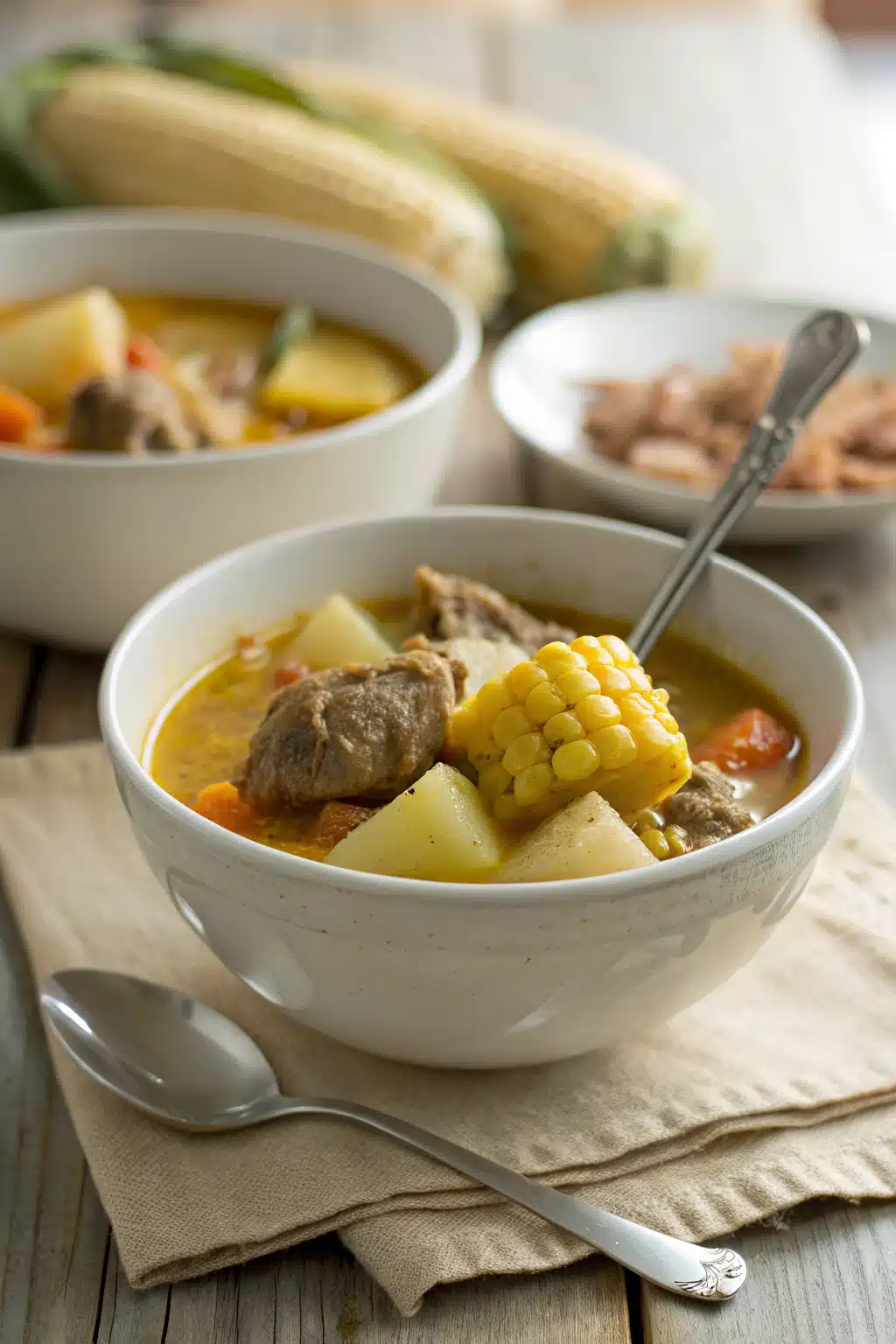
Finally, add the yucca and the auyama (squash). Continue to simmer uncovered for about 20 to 25 minutes. As the squash cooks, it will start to break down and melt into the broth, which naturally thickens the sancocho and gives it a beautiful golden color. If you want it even thicker, use the back of your spoon to mash a few pieces of squash against the side of the pot. Fish out the cilantro bundle, taste for salt, and you are ready to eat!
What to Serve It With
You absolutely cannot serve Dominican Sancocho on its own—it needs its trusty sidekicks! A big, steaming bowl of this stew is traditionally served with a generous scoop of fluffy white rice right in the middle of the bowl. The rice soaks up that glorious, savory broth like a sponge.
I also highly recommend serving a few slices of fresh, creamy avocado on the side. The cool richness of the avocado perfectly balances the hot, hearty stew. If you like a little kick, a dash of hot sauce or a squeeze of fresh lime juice right over the top brightens up all those deep, slow-cooked flavors.
Top Tips for Perfecting Your Dominican Sancocho Recipe
Want to make sure your stew turns out absolutely flawless on the very first try? Keep these simple tricks in mind:
- Don’t rush the sugar browning: Browning the meat with caramelized sugar is a classic Caribbean technique. It gives the broth a deep, rich color and a subtle depth of flavor. Just don’t let the sugar burn to black, or it will taste bitter!
- Keep an eye on the yucca: Yucca can go from perfectly fork-tender to complete mush if overcooked. Check it frequently during the last 20 minutes of cooking.
- Mash for thickness: If your broth is looking a little too thin for your liking, don’t reach for cornstarch! Just take a few pieces of the cooked squash and plantain, mash them up in a small bowl with a little broth, and stir the paste back into the pot.
- Use homemade sofrito: If you can, make your own sofrito blending peppers, onions, garlic, and cilantro. It makes a world of difference compared to the jarred stuff.
Storing and Reheating Tips
Like I mentioned earlier, this Dominican Sancocho recipe is one of those magical dishes that actually tastes better the next day. Let the stew cool completely to room temperature before transferring it to an airtight container. It will keep beautifully in the fridge for up to 4 days.
When you’re ready to reheat, pop it into a pot on the stove over medium-low heat. The broth will have thickened up quite a bit in the fridge, so you might want to add a splash of water or chicken broth to loosen it back up.
Can you freeze it? Yes, but with a tiny caveat. Root vegetables like yucca and potatoes can change texture slightly when frozen, becoming a bit grainy. If you plan to freeze a big batch, I recommend scooping out the root veggies and just freezing the meat and broth. It will stay fresh in the freezer for up to 3 months!
Frequently Asked Questions
Final Thoughts
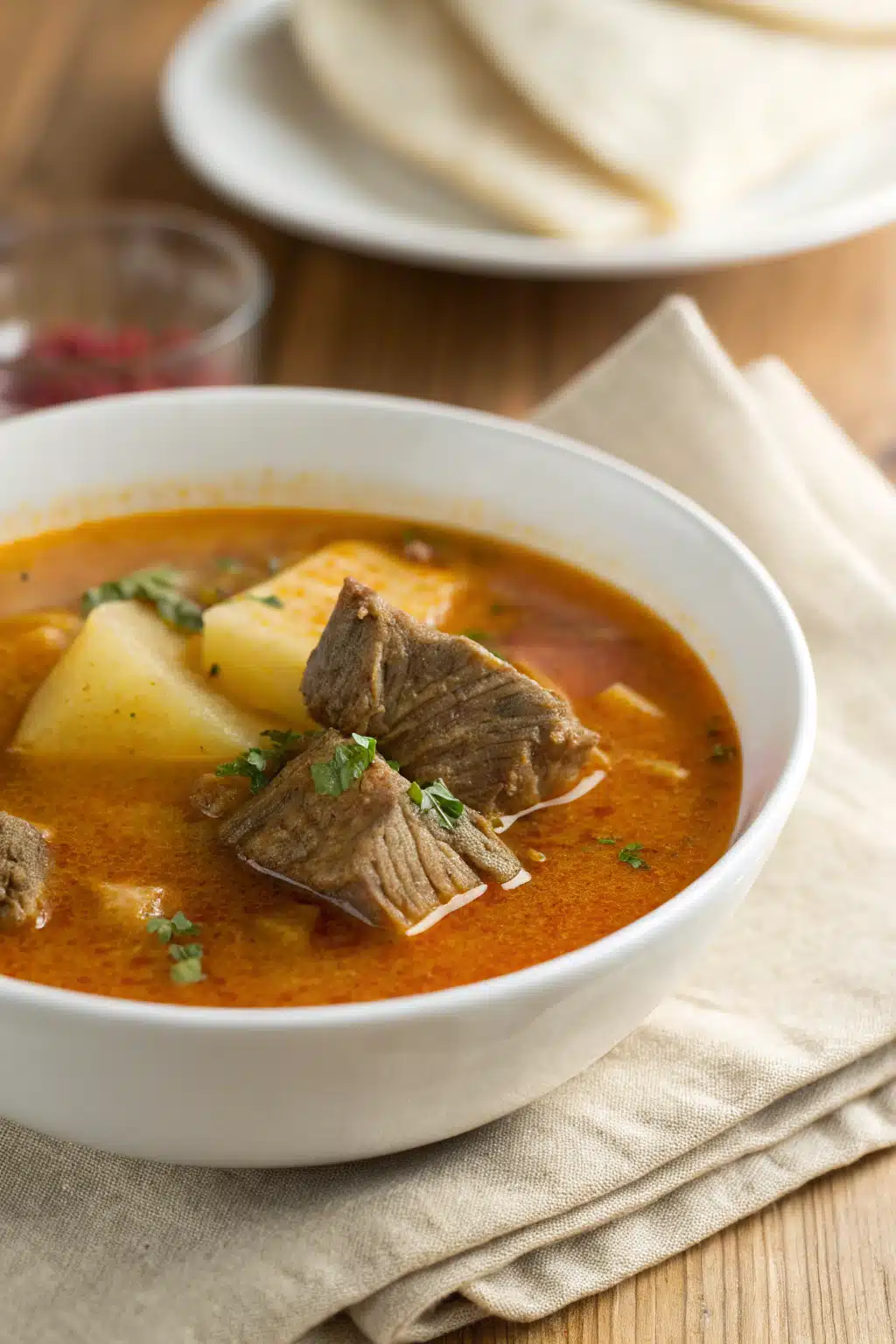
There you have it—my absolute favorite Dominican Sancocho recipe. It’s so much more than just a soup; it’s a celebration of culture, family, and the simple joy of sharing a good meal with the people you love. Whether you’re making this for a special occasion or just to warm up on a chilly evening, I hope it brings as much comfort and happiness to your kitchen as it does to mine. Don’t forget the avocado and a big scoop of rice! Happy cooking, friends!

Dominican Sancocho Recipe
Ingredients
Main Ingredients
- 1 lb beef chuck cut into 1-inch cubes
- 1 lb pork ribs or shoulder cut into pieces
- 1 lb chicken thighs cut into pieces
- 2 tablespoons vegetable oil
- 1 teaspoon sugar
- 0.25 cup Dominican sofrito
- 1 tablespoon adobo seasoning
- 1 teaspoon dried oregano
- 2 ears corn cut into 1-inch rounds
- 0.5 lb kabocha squash (auyama) peeled and cubed
- 2 green plantains peeled and cut into 1-inch pieces
- 1 lb yuca (cassava) peeled and cut into 1-inch pieces
- 0.5 lb yautia (taro root) peeled and cut into 1-inch pieces
- 1 bunch fresh cilantro
- 2 sour oranges (or limes) juiced
- 10 cups water or broth
Instructions
Preparation Steps
- Wash the beef, pork, and chicken with a splash of sour orange juice. In a large bowl, season the meats with sofrito, adobo, and oregano. Let marinate for at least 20 minutes.
- In a large, heavy-bottomed pot, heat the vegetable oil over medium-high heat. Add the sugar and let it melt and caramelize until it turns a deep brown color.
- Carefully add the marinated beef and pork to the pot (reserve the chicken for later). Sear the meats on all sides until well browned, about 10 minutes.
- Pour in enough water or broth to cover the meats. Bring to a boil, then lower the heat, cover, and simmer for 30 minutes until the beef and pork start to become tender.
- Add the chicken pieces and the kabocha squash (auyama) to the pot, along with the remaining water. Simmer for another 15 minutes so the squash begins to break down and thicken the broth.
- Stir in the green plantains, yuca, yautia, and corn rounds. Bring the stew back to a gentle boil, then reduce the heat to medium-low.
- Cover and simmer for 25 to 30 minutes, stirring occasionally, until all the root vegetables are fork-tender and the broth has thickened into a rich stew.
- Stir in the fresh cilantro and the juice of the remaining sour orange. Taste and adjust seasoning with salt and pepper if needed. Serve hot with white rice and avocado slices.









This recipe looks amazing—I’ve never tried Dominican sancocho, but it sounds comforting and flavorful. Can’t wait to give it a try!