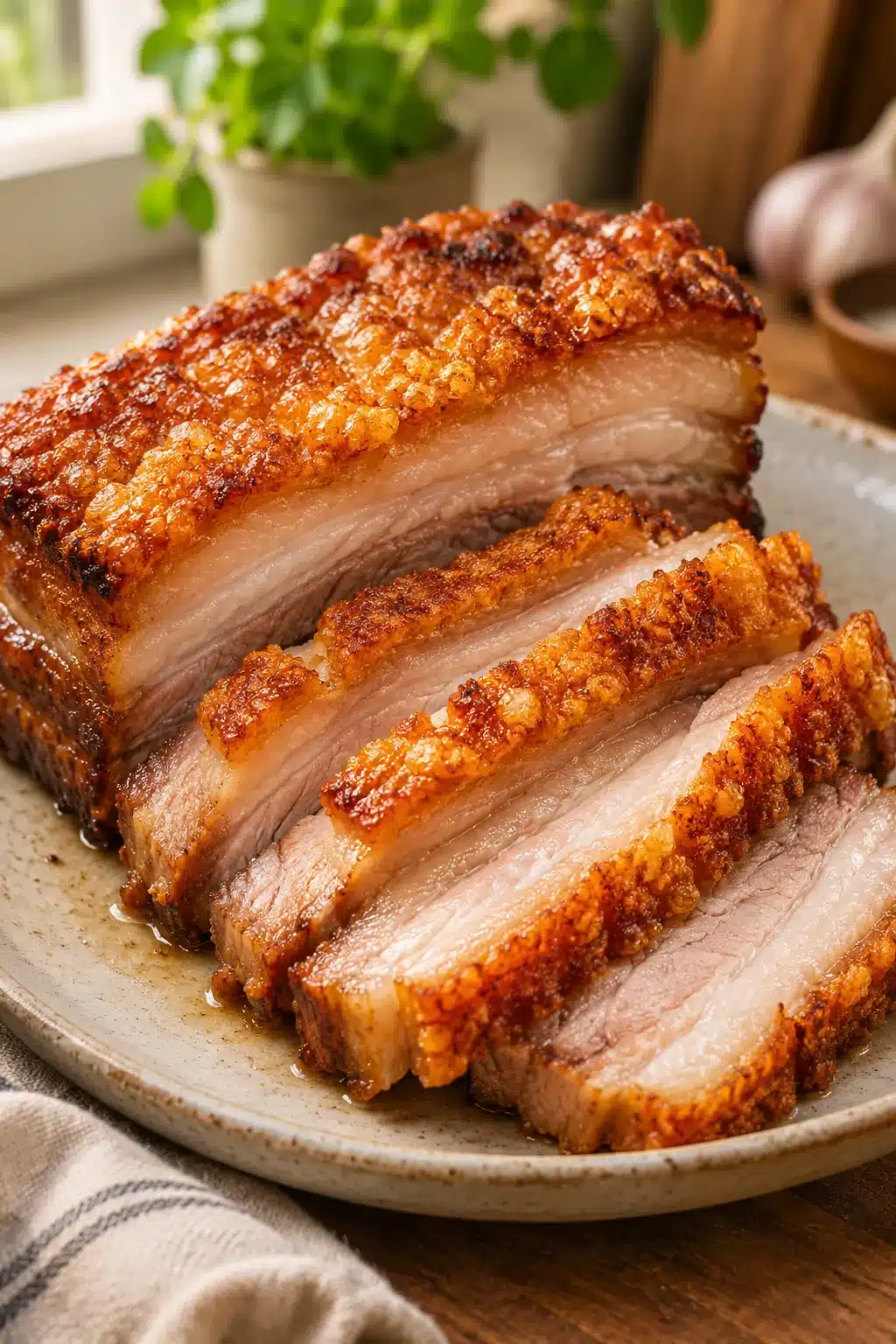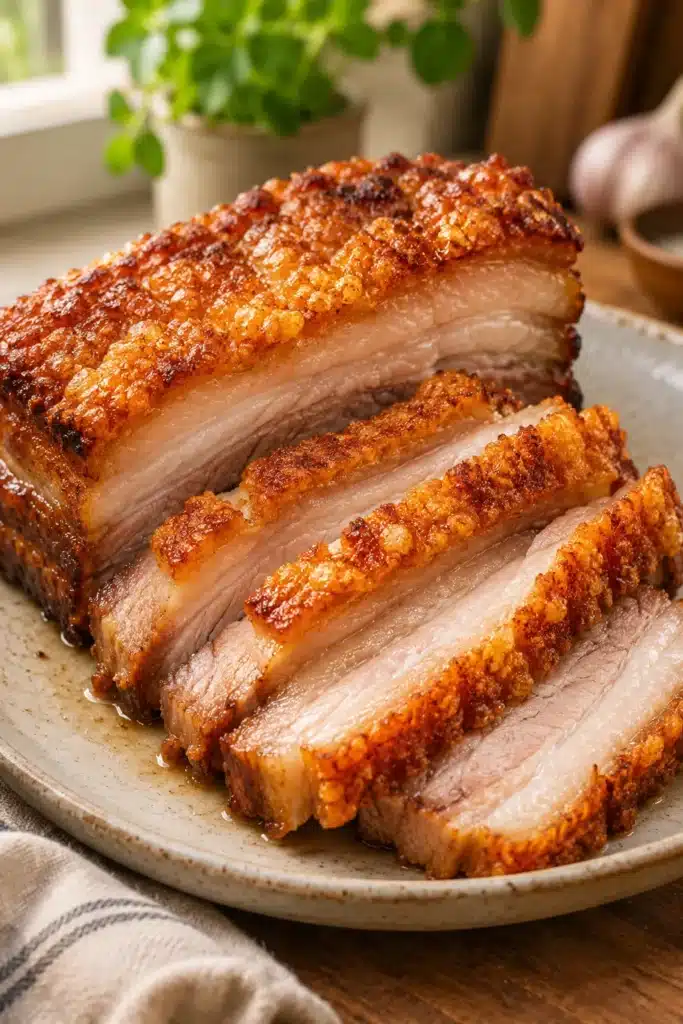
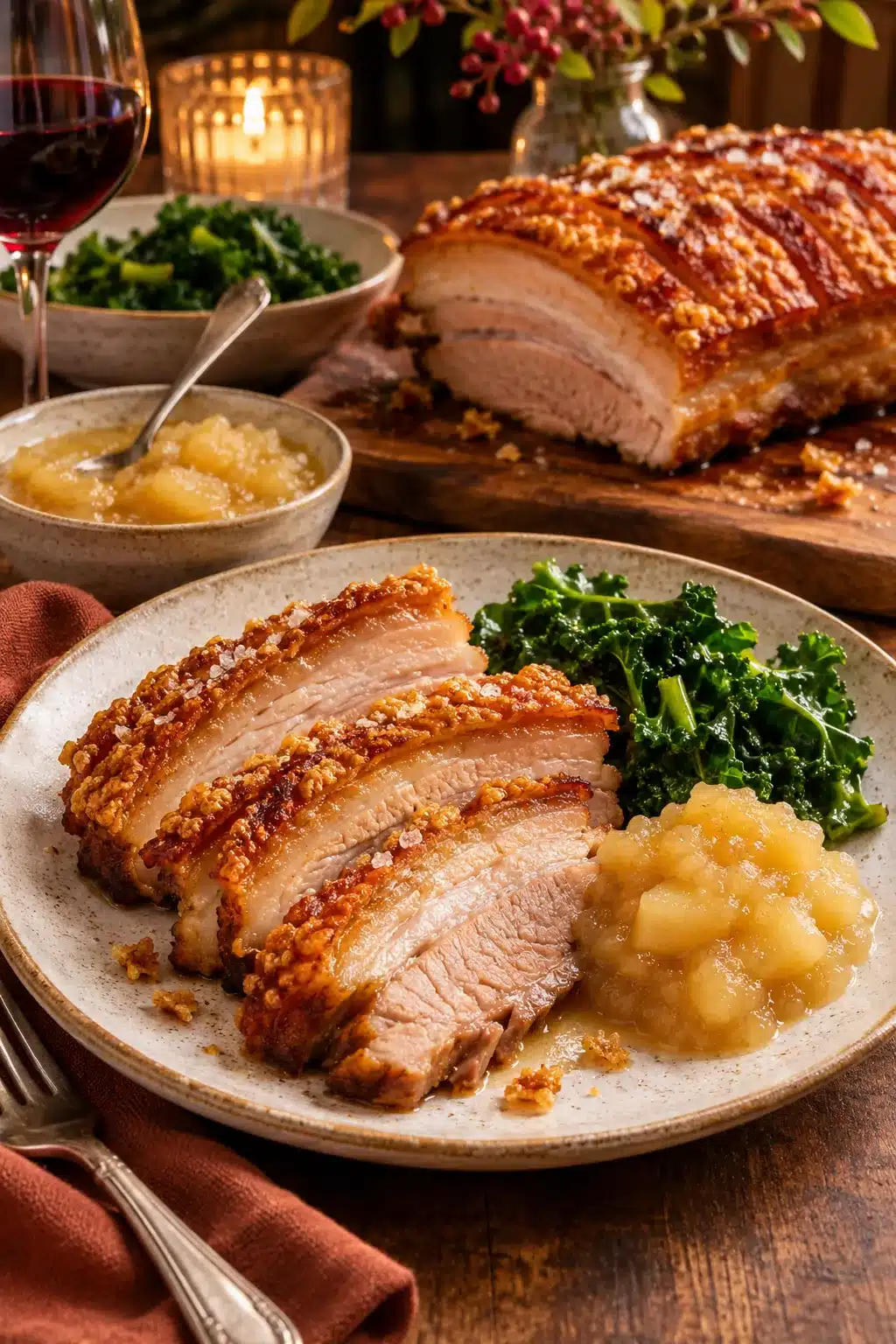
Slow roasted crispy pork belly is a dinner centerpiece with juicy, tender meat and golden skin. This slow roasted crispy pork belly method uses a gentle oven first and a hot finish, so the fat renders while the crackling puffs. Dry the skin well, keep the roast level, and let it rest before slicing. The pork belly needs space for its skin to dry, foil to protect the flesh, and a rack or another way to keep the skin horizontal during the final blast.
What is slow roasted crispy pork belly?
It is pork belly cooked slowly until the meat is succulent, then finished at high heat until the skin becomes crisp crackling. Low heat renders fat without drying the meat. A snug foil wrap holds moisture close to the flesh, while the uncovered final roast drives moisture from the skin.
Why this method works
The slow stage gives the collagen and fat time to soften, while the hot stage focuses heat on the skin. Keeping the pork level makes the crackling more even and helps every slice have the same appealing contrast.
Ingredients for slow roasted crispy pork belly
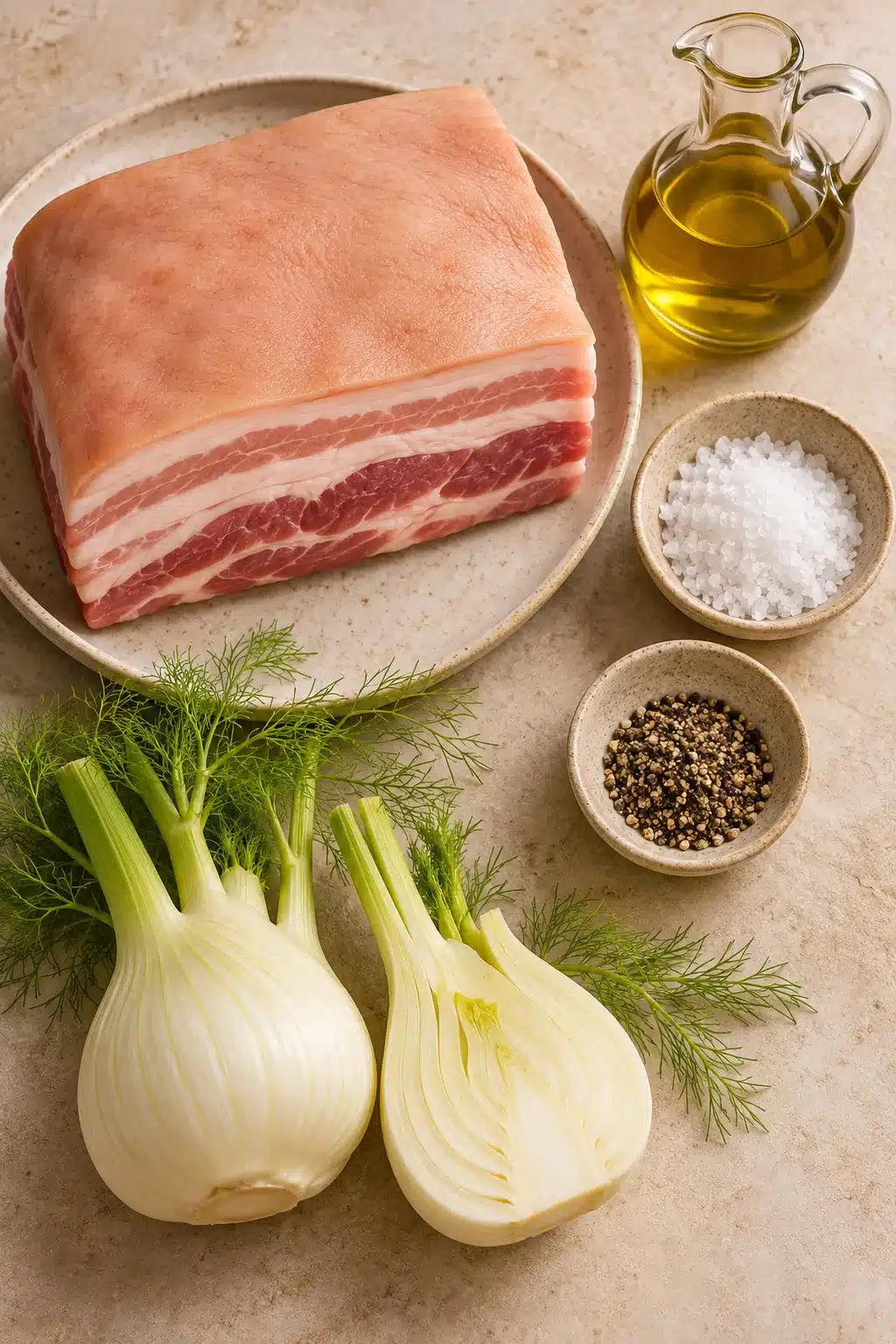
- 1 kg pork belly with skin on
- 1 1/2 tsp olive oil, divided
- 1/2 tsp ground fennel, optional
- 1 tsp kosher salt, divided
- 1/4 tsp black pepper
Serve with apple sauce, vermouth jus, cauliflower purée, or a crisp green salad.
How to make slow roasted crispy pork belly
- Pat the pork skin dry and leave it uncovered in the refrigerator overnight if possible.
- Heat the oven to 285°F (140°C). Rub the flesh with 1 teaspoon oil, fennel, half the salt, and the pepper.
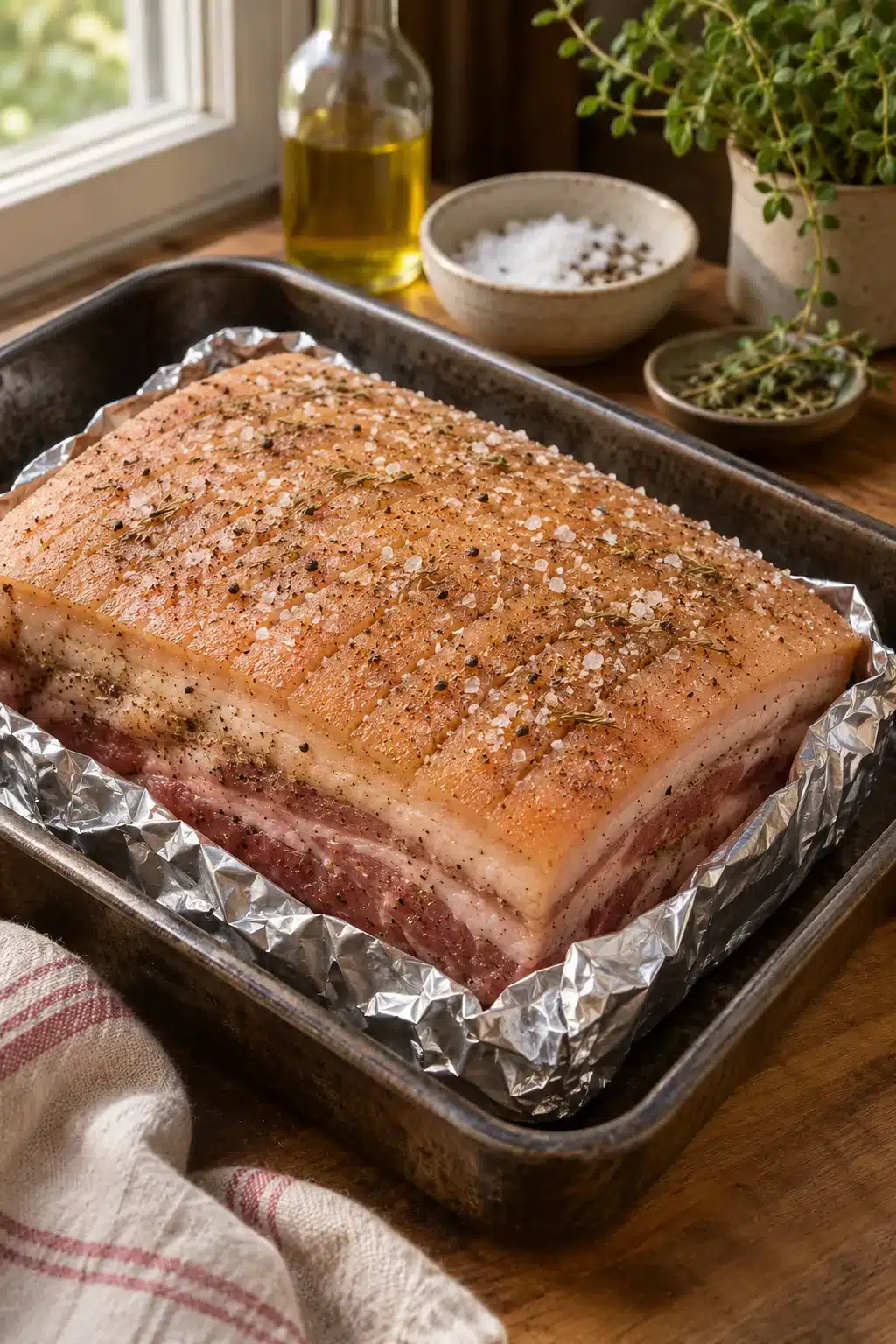
- Wrap the pork snugly in foil with the skin exposed and place it on a tray.
- Dry the skin again, rub it with the remaining oil, and sprinkle with the remaining salt.
- Roast for 2 1/2 hours, tightening the foil after 1 1/2 hours as the pork shrinks.
- Remove the foil, raise the oven to 465°F (240°C), and place the pork skin-side up on a rack.
- Prop the pork level with small foil balls and roast for 30 minutes until the crackling is puffed and deeply golden.
- Rest for 10 minutes, then slice and serve.
Tips for crisp crackling
Do not rush the drying stage. Moisture on the skin prevents it from blistering evenly, so use paper towels and leave the pork uncovered whenever your schedule allows. During the high-heat stage, rotate the tray if your oven colors unevenly and cover any fast-browning patches with foil. Open the oven carefully because rendered fat can create smoke.
Choose a piece with an even thickness so it cooks at the same pace from edge to edge. If the skin is particularly damp, pat it dry more than once before seasoning. Keep the salt measured because the skin can concentrate seasoning as it crisps. A roasting rack lets hot air circulate underneath, but a sturdy tray is fine if the pork is supported and cannot tip.
After roasting, resist cutting immediately. A short rest lets the juices settle and gives the crackling time to firm. Use a serrated knife with a steady sawing motion rather than pressing straight down, which can shatter the crust. Slice through the meat in portions that keep a strip of crackling attached to every serving.
Watch the oven during the final minutes because crackling can move from golden to too dark quickly. If one corner is ready first, shield it with foil while the rest catches up. The pork should feel tender when tested at the thickest part, but the visual cues are just as useful: the skin should be blistered, dry, and audibly crisp when tapped lightly. Letting the tray sit for a few minutes after the oven is switched off can help, but do not cover the roast, because trapped steam softens the skin.
Optional variation
Replace the fennel with a small pinch of caraway or finely grated lemon zest. This optional variation changes the aroma without changing the roasting temperatures or the essential crackling technique.
Serving and storage
Slice the pork with a serrated knife after its ten-minute rest. Refrigerate leftovers in a covered container for up to three days. Reheat slices on a rack in a hot oven so the skin can crisp again; avoid microwaving if crackling is important.
This roast is especially useful when you want a main dish that can be prepared in stages. Dry and season the pork earlier in the day, complete the slow roast, and reserve the high-heat finish for just before dinner. That timing keeps the kitchen calm and makes it easier to serve the meat hot. Pair the rich pork with something fresh, such as dressed greens, steamed vegetables, or a sharp apple relish. A simple side lets the crackling remain the star while adding color and balance to the plate.
FAQ
Slow roasted crispy pork belly rewards patience. Once the skin is dry and the roast is level, the oven does most of the work: the low roast gives you tender slices and the final hot stage delivers crackling.


Slow-Roasted Crispy Pork Belly
Ingredients
Ingredients
- 1 kg pork belly with skin on
- 1 1/2 tsp olive oil divided
- 1/2 tsp ground fennel
- 1 tsp kosher salt divided
- 1/4 tsp black pepper
Instructions
Instructions
- Pat the pork skin dry and leave it uncovered in the refrigerator overnight if possible.
- Heat the oven to 285°F (140°C). Rub the flesh with 1 teaspoon oil, fennel, half the salt, and the pepper.
- Wrap the pork snugly in foil with the skin exposed and place it on a tray.
- Dry the skin again, rub it with the remaining oil, and sprinkle with the remaining salt.
- Roast for 2 1/2 hours, tightening the foil after 1 1/2 hours as the pork shrinks.
- Remove the foil, raise the oven to 465°F (240°C), and place the pork skin-side up on a rack.
- Prop the pork level with small foil balls and roast for 30 minutes until the crackling is puffed and deeply golden.
- Rest for 10 minutes, then slice and serve.