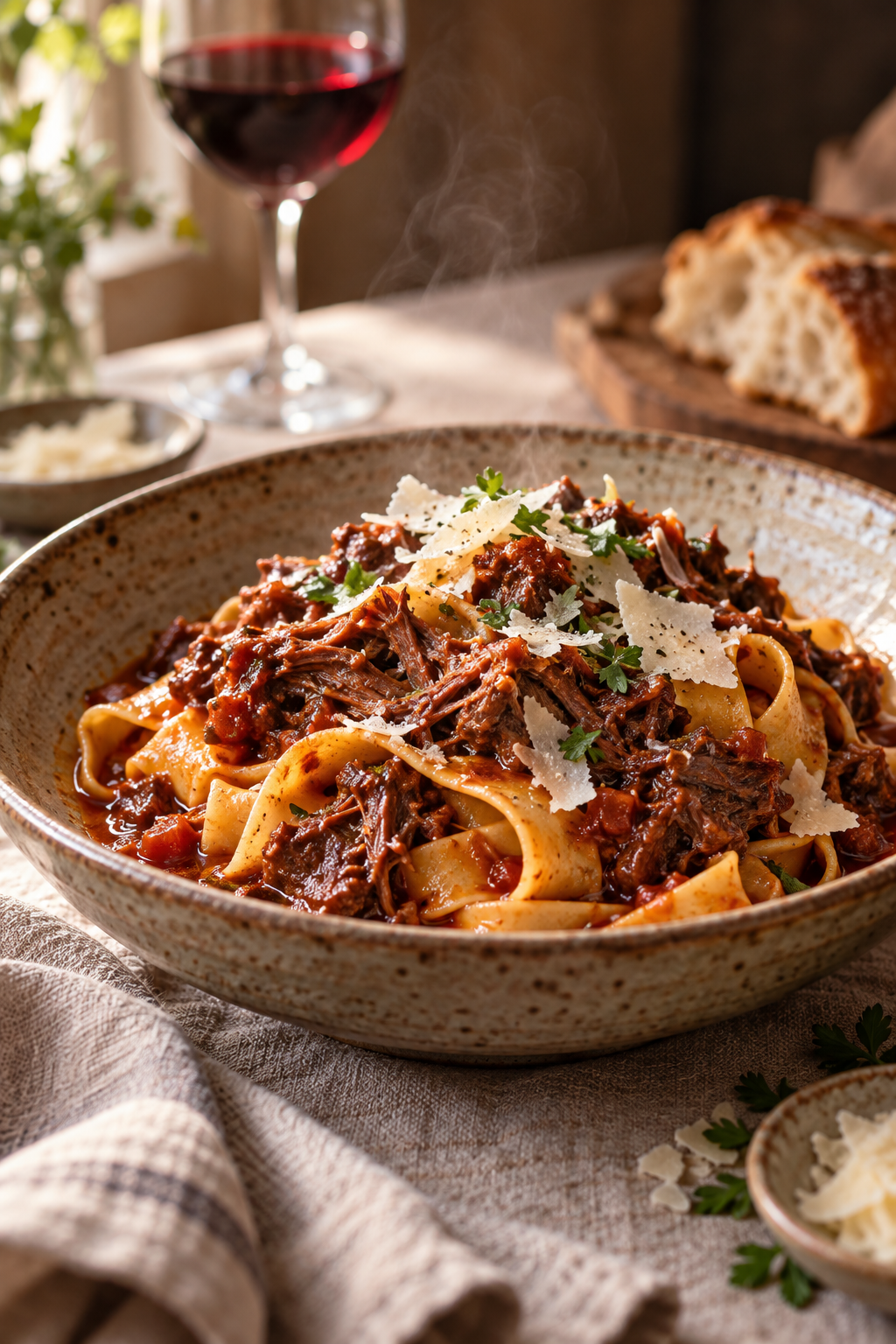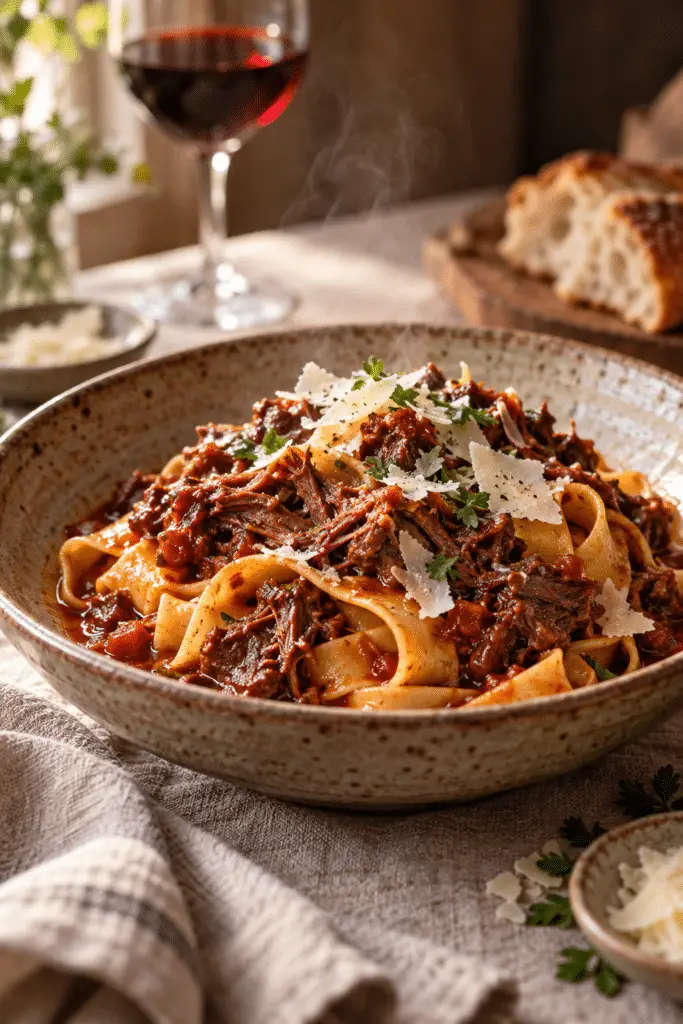
Beef cheek ragu pasta is a practical way to turn tender leftover beef and its rich cooking sauce into a complete dinner in about 15 minutes. The meat stays in generous shreds while tomato, onion, garlic, and starchy pasta water make a glossy sauce that clings to every strand. It is comforting, economical, and especially useful after a slow-cooked beef cheek meal.
What is beef cheek ragu pasta?
This quick pasta uses cooked beef cheek, tomato, aromatics, and spaghetti. It is not a second long braise: the sauce is assembled quickly and the already-tender beef is warmed at the end.
Why this recipe works
Tomato and beef cooking sauce provide depth without a long simmer. Onion and garlic add freshness, while Parmesan gives a salty finish. Cooking the pasta just shy of al dente lets it finish in the skillet and absorb flavor.
How to make beef cheek ragu pasta
Ingredients
- 350 g spaghetti
- 2 cups shredded cooked beef cheek
- 1 cup beef cooking sauce
- 1 diced onion
- 2 minced garlic cloves
- 2 tablespoons olive oil
- 2 cups crushed tomatoes
- 3 tablespoons tomato paste
- Parmesan to serve
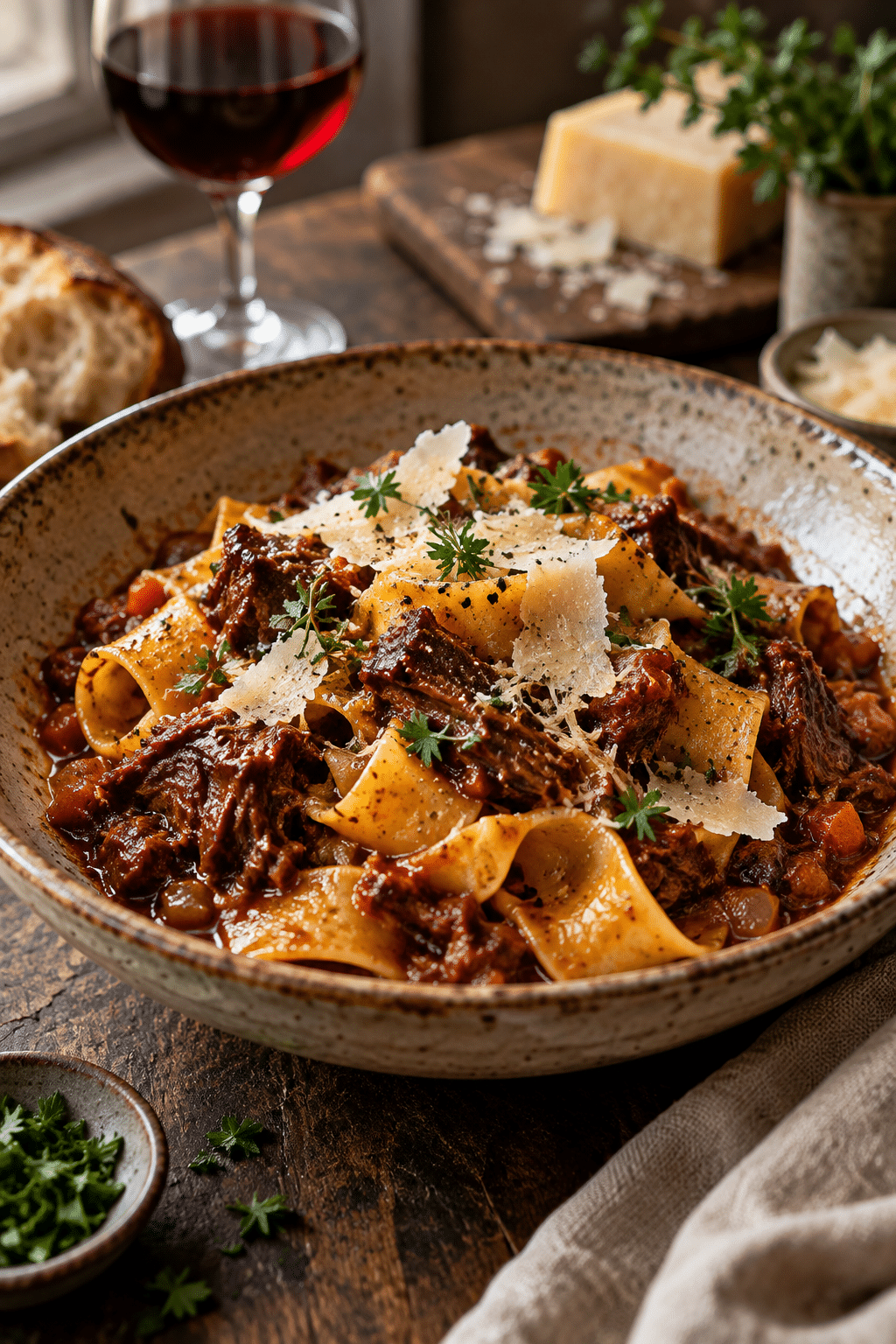
Method
- Boil salted water, cook spaghetti just shy of al dente, reserve pasta water, and drain.
- Cook onion in olive oil until soft, then stir in garlic.
- Add tomatoes, tomato paste, water, and beef sauce; simmer until glossy.
- Fold in beef, add pasta, and loosen with reserved water.
- Season and serve with Parmesan and parsley.
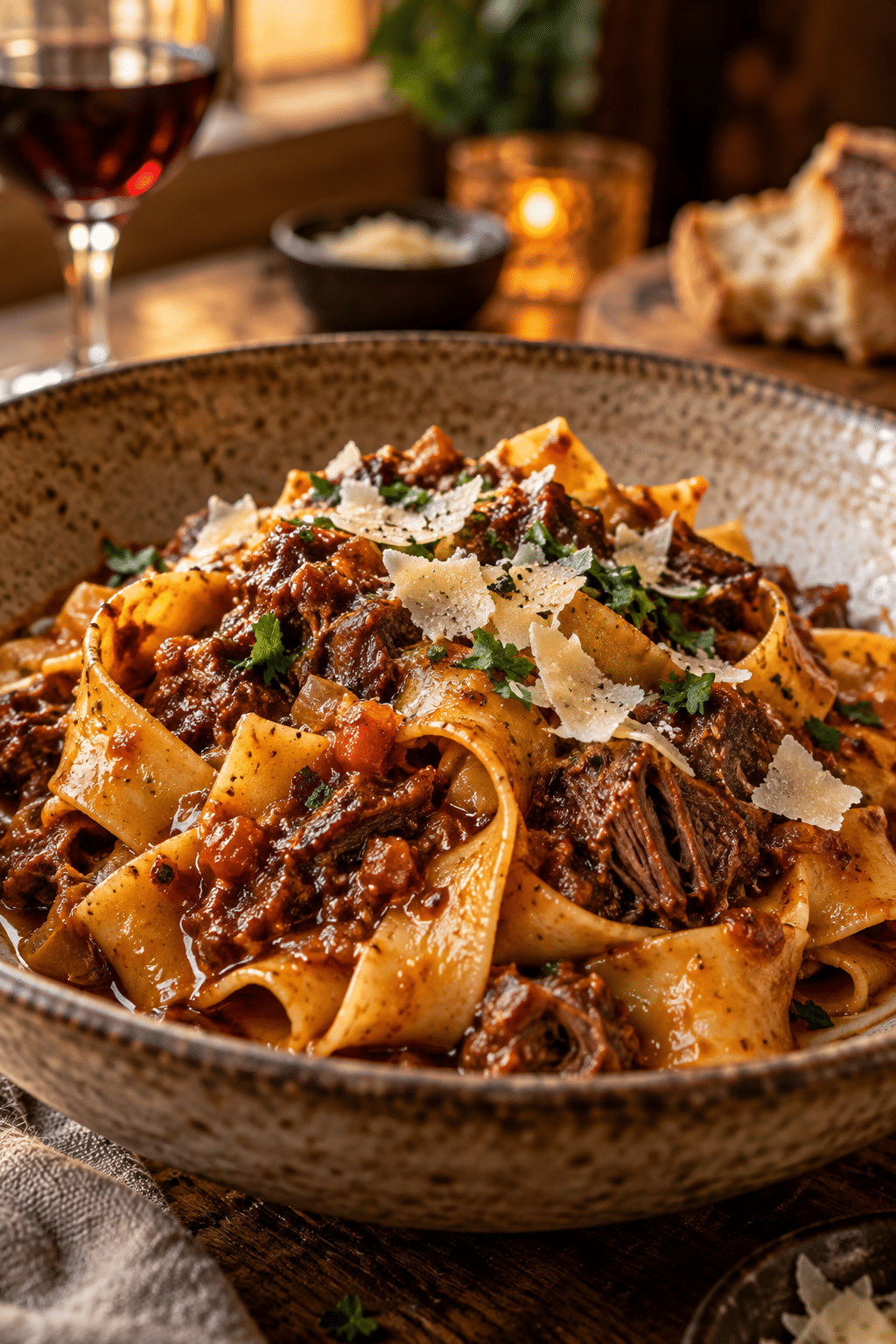
What to know before cooking
Choosing and preparing the beef
Use beef cheek that has already been braised until tender. Shred it into bite-size pieces rather than mincing it. This preserves the contrast between silky sauce and substantial meat. If the beef is chilled, let it warm slightly while the pasta water heats, but keep it refrigerated until needed.
Tips for a glossy sauce
Making the sauce glossy
A wide skillet gives the sauce room to reduce. Add reserved pasta water gradually, tossing after each splash. The starch helps the tomato and braising liquid cling to the noodles. Taste only after the beef sauce is mixed in, since it may already be seasoned.
Serving ideas and optional variation
Serve immediately with Parmesan and parsley. A crisp salad, broccoli, or roasted vegetables make easy sides. Optional variation: use bucatini or rigatoni instead of spaghetti, or add a pinch of chili flakes for gentle heat.
Storage and reheating
Refrigerate leftovers in a covered container for up to two days. Reheat gently with a splash of water until hot, then add fresh Parmesan. The noodles absorb sauce as they rest, so extra liquid restores a silky texture.
For a relaxed dinner, prepare the beef, grate the cheese, and chop the parsley before the water boils. Keeping each ingredient close to the stove makes the short finishing stage calm. If the sauce seems too thick, use more pasta water rather than extra oil. If it seems thin, let it simmer briefly before adding the noodles.
The dish is flexible but its order matters. Pasta water first, aromatics second, tomato sauce third, and beef near the end preserve the best texture. Tossing the pasta in the skillet gives the sauce a chance to coat it evenly. Taste at the end and serve while the noodles are glossy.
Planning the meal
This recipe fits a busy evening because the sauce can be started while the pasta water heats. Gather the tomatoes, paste, beef, and aromatics first. A wide pan makes tossing easier and prevents the noodles from sitting in a thick layer. Serve the pasta as soon as it is finished for the best texture.
Texture and seasoning
The ideal sauce is loose enough to move but thick enough to cling. Add water in small additions and toss thoroughly before adding more. Since the beef was cooked previously, it needs only enough heat to become hot. Fresh parsley and Parmesan bring contrast to the deep, savory ragu.
Make-ahead notes
You can shred the beef and measure the sauce earlier in the day. Keep both chilled until cooking. Grate Parmesan and chop parsley shortly before serving. These small preparations make the final fifteen minutes straightforward, and they also reduce the chance of overcooking the beef while searching for ingredients.
Finishing the plate
Use warm bowls so the sauce stays fluid. Twirl long noodles with tongs and spoon extra beef over the top. Finish with Parmesan, parsley, and black pepper. A bright salad or steamed green vegetable keeps the meal balanced and lets the ragu remain the focus.
FAQ
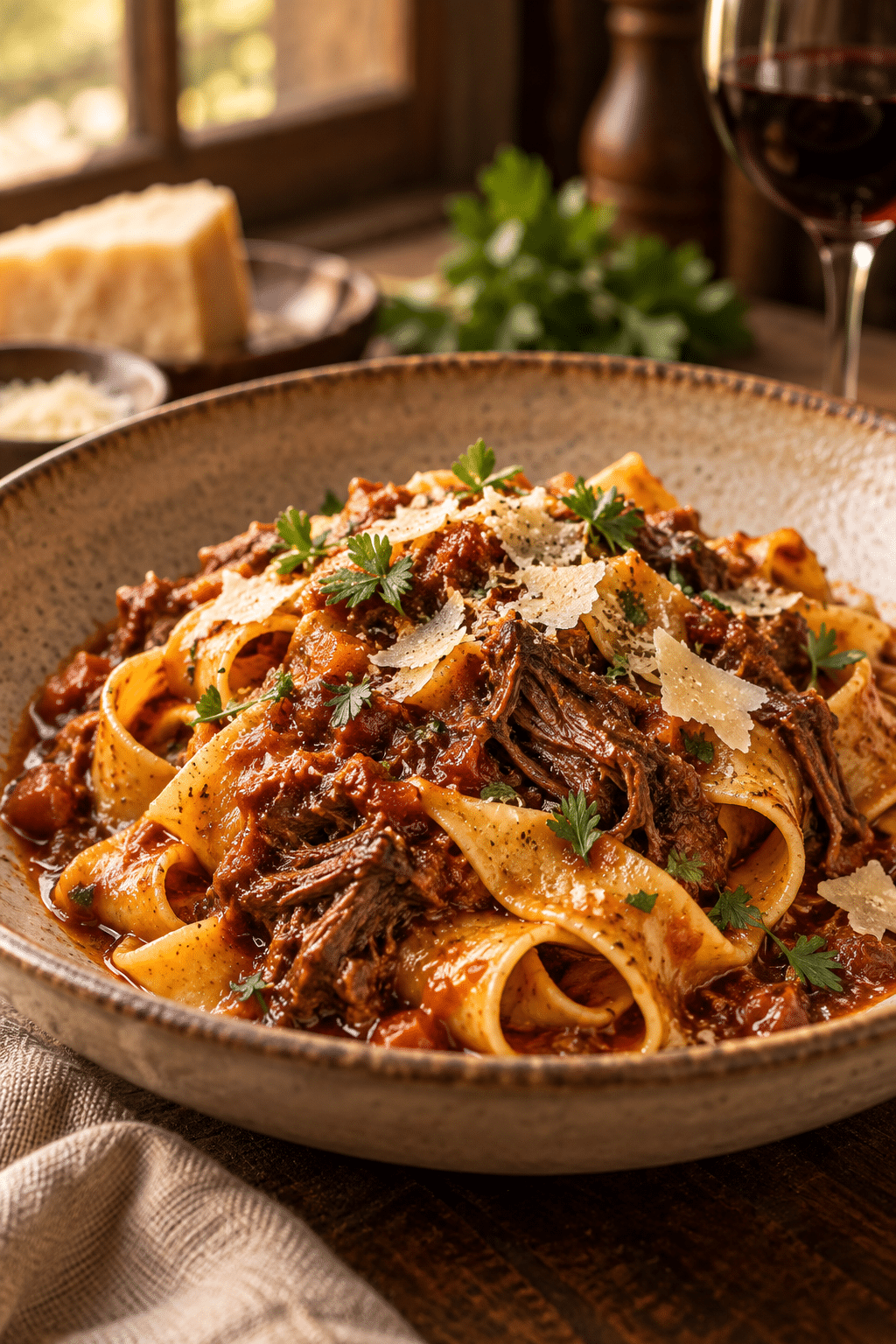
This quick ragu makes slow-cooked beef feel new again: deeply savory, tomato-rich, and ready for the table fast.
Keep the heat moderate once the sauce begins to simmer. A fast boil can reduce the liquid too quickly and make the finished pasta feel dry. Gentle bubbling gives the tomatoes time to soften and lets the beef sauce blend evenly. Stir from the bottom of the pan so tomato paste does not catch.
Keep the heat moderate once the sauce begins to simmer. A fast boil can reduce the liquid too quickly and make the finished pasta feel dry. Gentle bubbling gives the tomatoes time to soften and lets the beef sauce blend evenly. Stir from the bottom of the pan so tomato paste does not catch.
Keep the heat moderate once the sauce begins to simmer. A fast boil can reduce the liquid too quickly and make the finished pasta feel dry. Gentle bubbling gives the tomatoes time to soften and lets the beef sauce blend evenly. Stir from the bottom of the pan so tomato paste does not catch.
Keep the heat moderate once the sauce begins to simmer. A fast boil can reduce the liquid too quickly and make the finished pasta feel dry. Gentle bubbling gives the tomatoes time to soften and lets the beef sauce blend evenly. Stir from the bottom of the pan so tomato paste does not catch.
Keep the heat moderate once the sauce begins to simmer. A fast boil can reduce the liquid too quickly and make the finished pasta feel dry. Gentle bubbling gives the tomatoes time to soften and lets the beef sauce blend evenly. Stir from the bottom of the pan so tomato paste does not catch.

Beef Cheek Ragu Pasta with Rich Tomato Sauce
Ingredients
Ingredients
- 350 g spaghetti
- 2 cups shredded cooked beef cheek
- 1 cup beef cooking sauce
- 1 onion diced
- 2 cloves garlic minced
- 2 tablespoons olive oil
- 2 cups crushed tomatoes
- 3 tablespoons tomato paste
- Parmesan to serve
Instructions
Instructions
- Boil salted water, cook spaghetti just shy of al dente, reserve pasta water, and drain.
- Cook onion in olive oil until soft, then stir in garlic.
- Add tomatoes, tomato paste, water, and beef sauce; simmer until glossy.
- Fold in beef, add pasta, and loosen with reserved water.
- Season and serve with Parmesan and parsley.