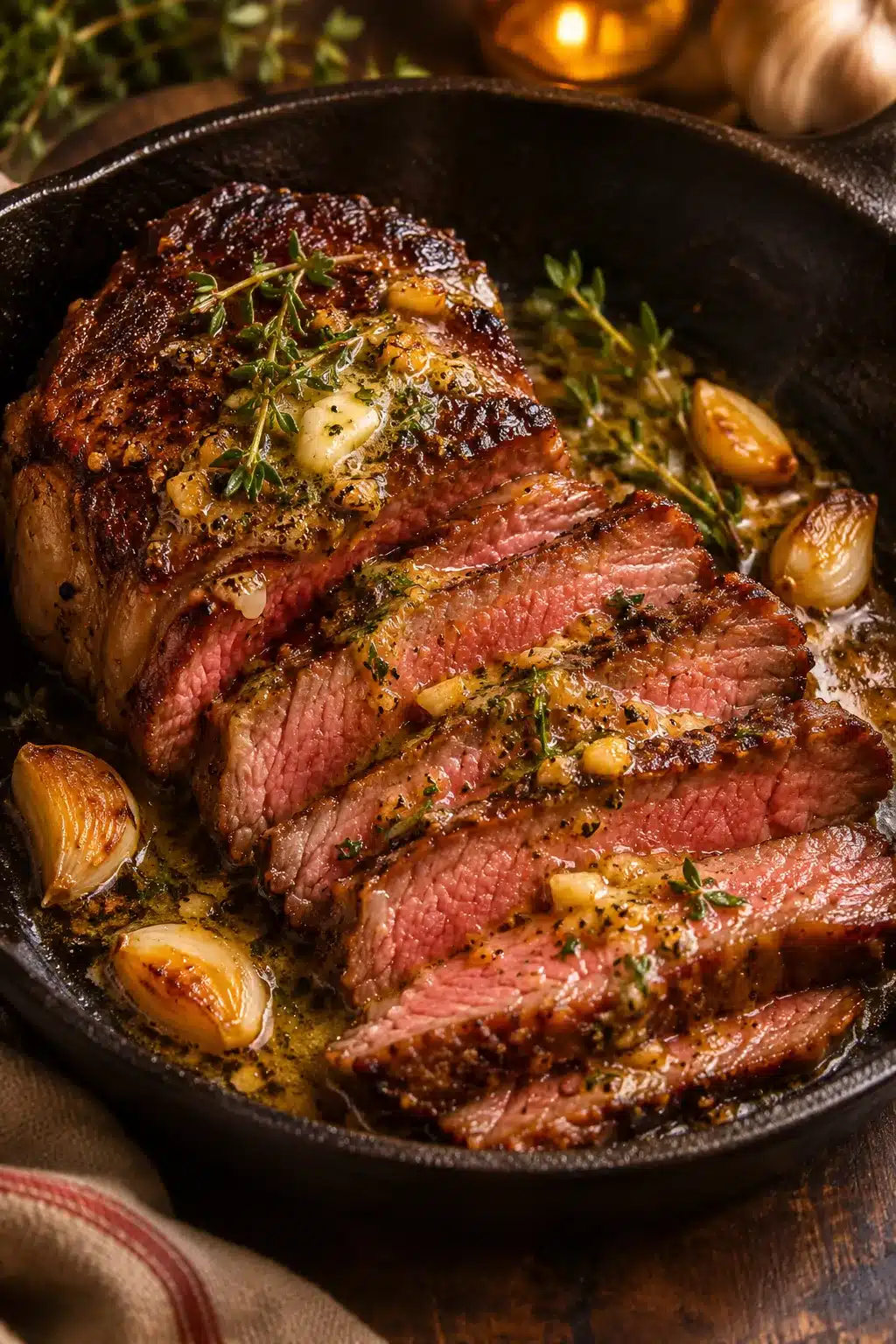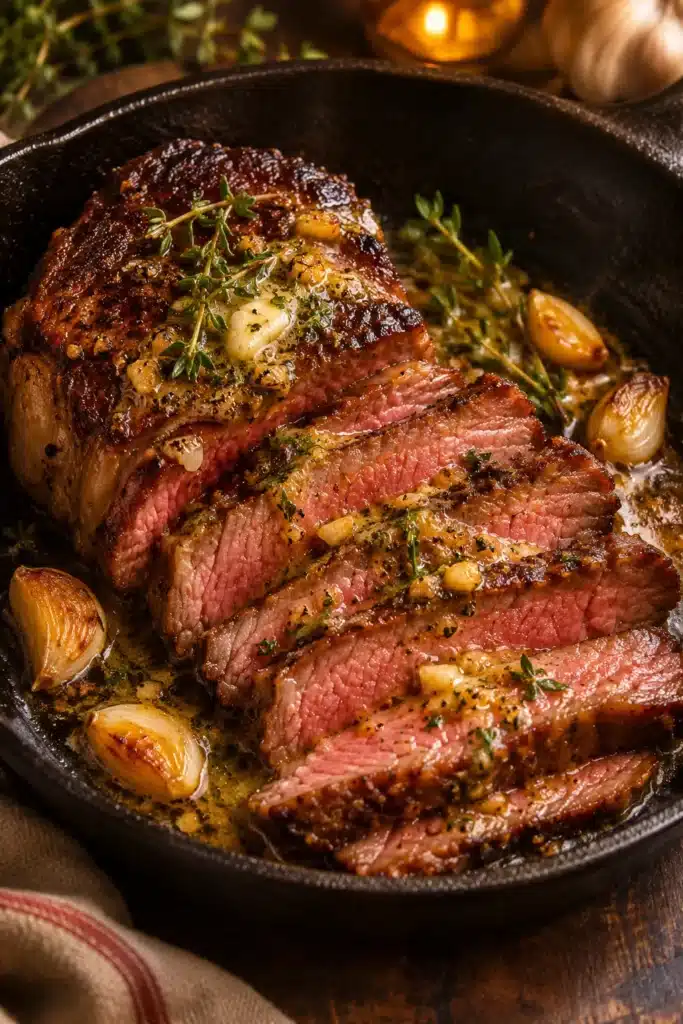
Garlic butter steak is a fast, confidence-building dinner with a deeply browned crust, tender center, and glossy sauce made in the same skillet. Temper and dry the steak, heat the pan properly, sear without fuss, then baste with butter, garlic, and thyme. Resting lets the juices settle. This guide covers ingredients, timing, doneness cues, serving ideas, and practical fixes for a steak that tastes special without a complicated sauce.
What makes garlic butter steak special?
A dry surface browns effectively, while a hot heavy skillet creates the savory crust associated with a restaurant grill. Butter, garlic, and thyme are added after the first turn so they perfume the pan without burning. Spoon-basting coats the steak repeatedly with browned butter and herb flavor. The result is rich, direct, and ready in minutes.
Why this skillet method works
Taking the steak out of the refrigerator removes the chill that can make the outside overcook while the middle remains cold. Drying prevents steaming. High heat gives the first side time to form a crust before the butter enters, and turning once keeps cooking predictable. A brief rest lets the center finish gently and makes slicing cleaner.
Ingredients for garlic butter steak
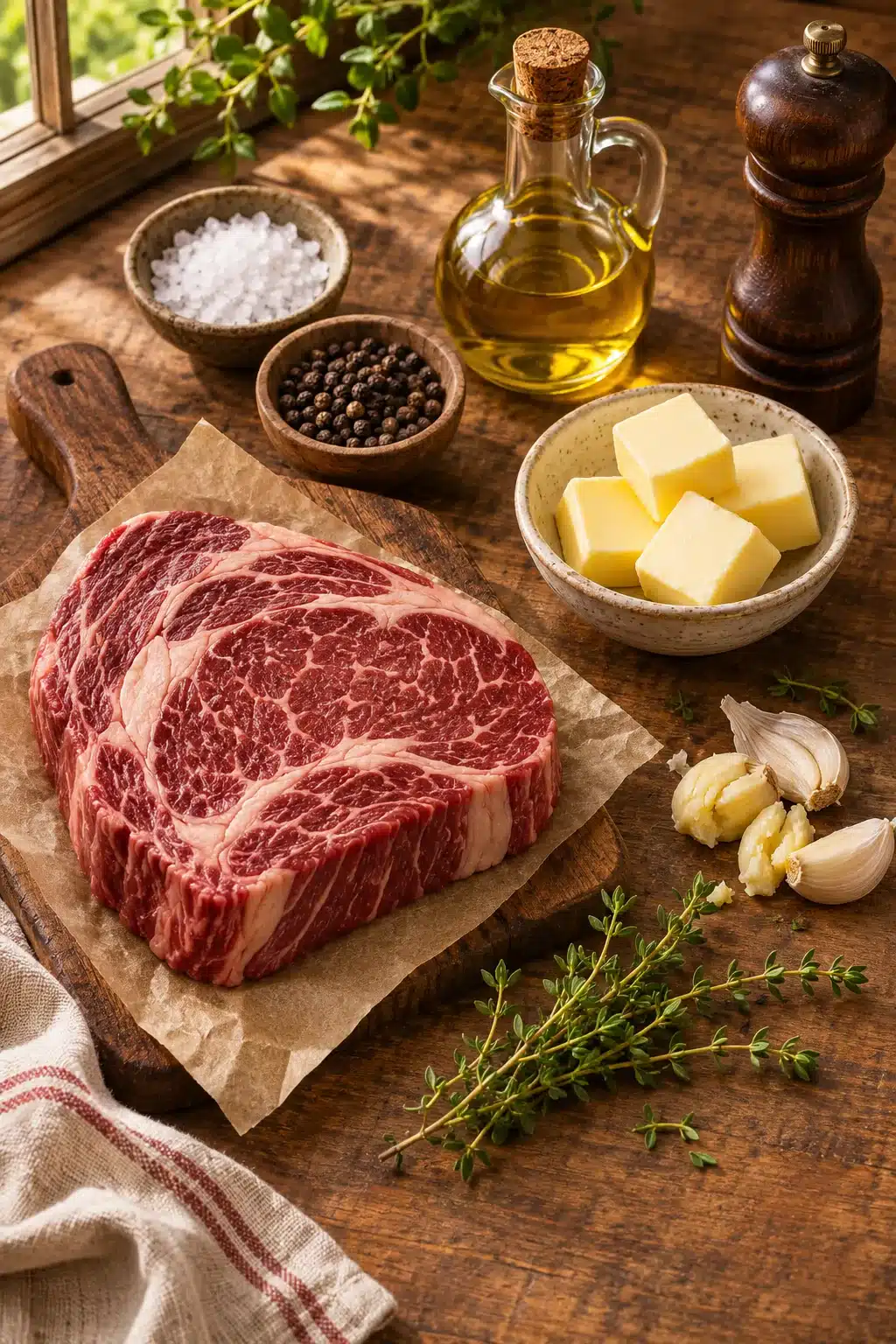
Use one or two boneless ribeye or scotch fillet steaks about one inch thick. You also need one tablespoon vegetable oil, salt and black pepper, five tablespoons unsalted butter cut into cubes, six sprigs fresh thyme or three sprigs rosemary, and five peeled garlic cloves smashed with a knife. Unsalted butter gives seasoning control, and fresh herb stems flavor the butter.
How to make garlic butter steak
Bring the steak to room temperature for 30 minutes, then pat it dry. Heat oil in a heavy skillet over high heat until very hot. Season the steak with salt and pepper and place it in the skillet.
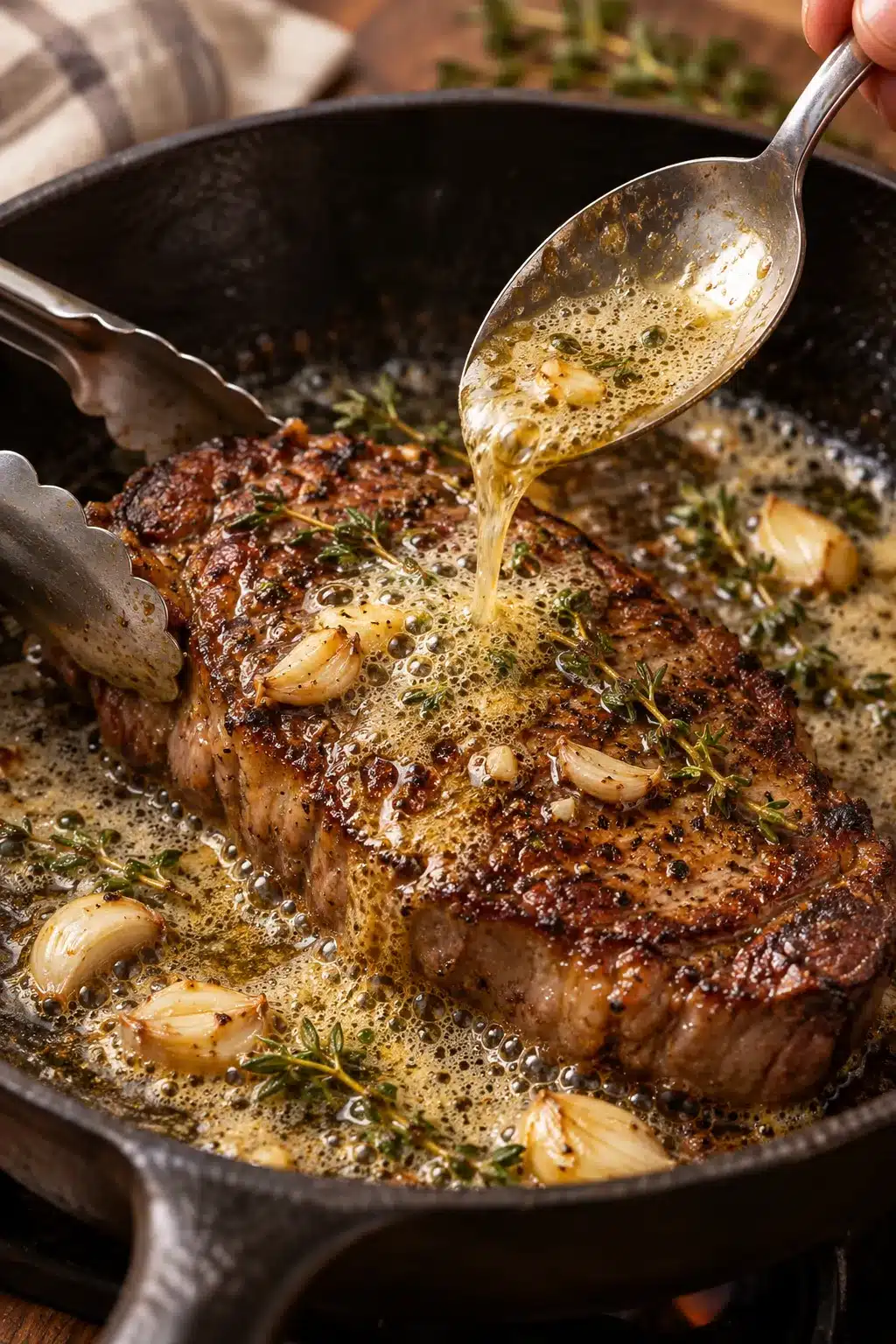
Sear the first side for 2 to 2 1/2 minutes until deeply browned, then turn the steak. After 1 minute, add butter, garlic, and thyme. Once the butter melts, spoon it continuously over the steak until cooked to your preferred doneness. Sear the edges briefly if desired, then transfer the steak to a plate, cover loosely, and rest 5 to 10 minutes.
How to judge doneness
Time is a starting point, but steak thickness and pan heat vary. For medium-rare, the source recipe gives 52°C or 125°F as a guide. A thermometer inserted from the side gives the clearest reading, and temperature rises slightly while resting. For medium or well done, continue basting and check again. Avoid cutting repeatedly because juices escape.
Tips for a better crust
Pat the meat dry and season immediately before cooking. Let the skillet become hot; oil should shimmer. Do not crowd two steaks, because trapped moisture slows browning. Add butter only after the steak colors, and lower heat if butter darkens too quickly. Spoon foaming butter over the top rather than moving the steak constantly.
Optional variation: replace thyme with rosemary for a resinous herb note, or add a small squeeze of lemon to the rested pan butter. This variation changes the finish, not the core method.
Serving and storage
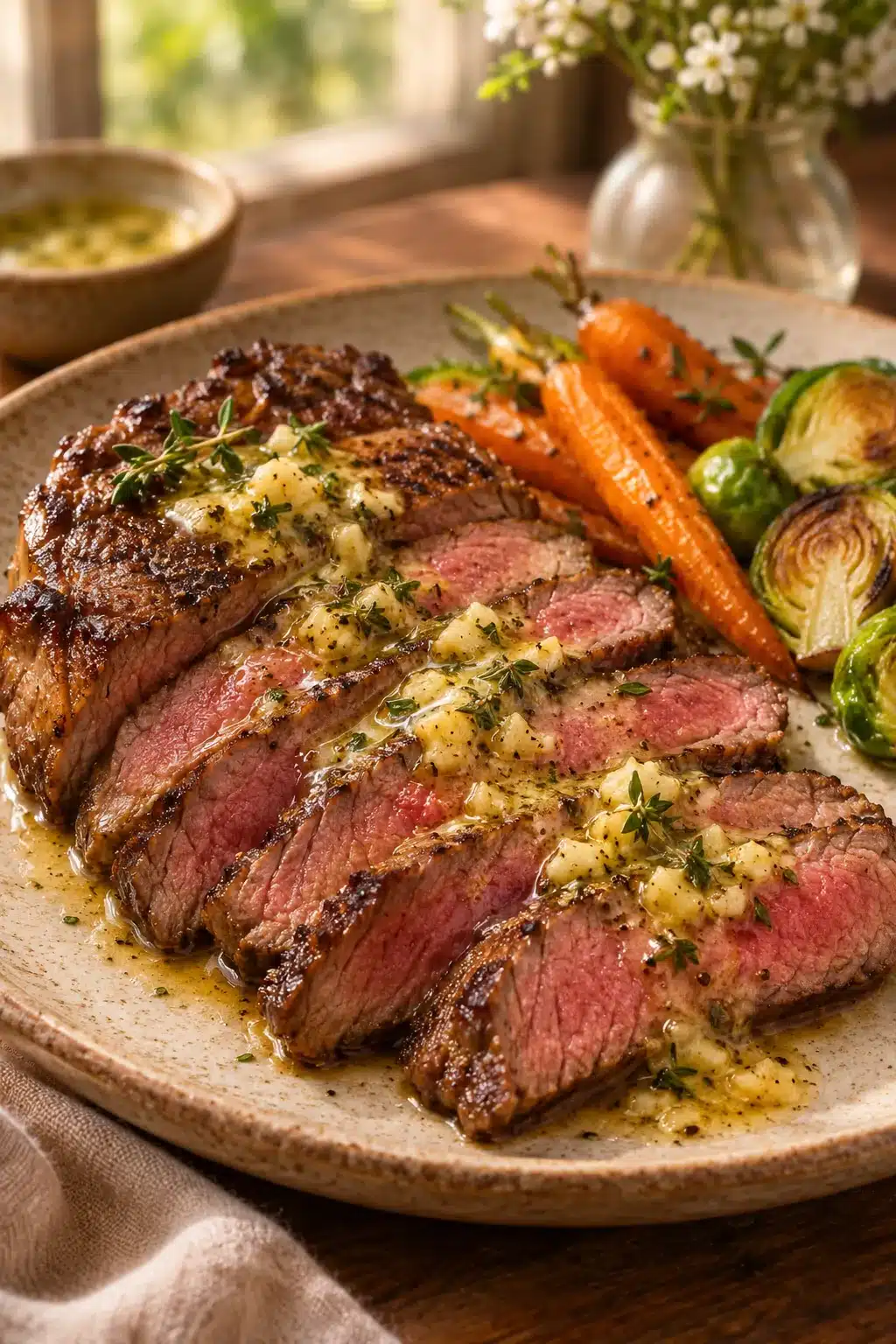
Slice rested steak across the grain and spoon garlic butter over each portion. Serve with potatoes, green beans, roasted vegetables, or salad. Cool leftovers promptly and refrigerate covered. Slice them thinly for sandwiches, grain bowls, or salads the next day. Rewarm gently, since aggressive heat turns the tender center firm.
Recipe questions and FAQ
Final notes
Garlic butter steak rewards attention to a few details rather than a long ingredient list. Dry the meat, heat the skillet, build the crust before adding butter, baste steadily, and rest before slicing. These steps keep the center juicy while garlic and herbs turn pan juices into a ready-made sauce. Serve warm with browned butter spooned over the top.
Planning the meal
Because the cooking itself is quick, prepare the sides before the steak enters the skillet. Set out the serving plate, thermometer, tongs, spoon, and foil first. A warm plate helps the rested steak stay inviting, while a sharp knife makes clean slices without pressing out the juices. If you are cooking for guests, bring the steaks to room temperature together, but keep them covered and away from direct heat until the pan is ready.
Choose sides that can wait a few minutes. A crisp salad, steamed greens, or potatoes prepared in advance all work well. The steak is rich, so a fresh or lightly dressed accompaniment balances the butter. Keep the sauce in the pan; scraping the browned bits into the spooned butter adds flavor without another saucepan.
Texture and flavor details
Ribeye brings generous marbling, while a leaner cut benefits especially from careful timing and resting. The crust should feel browned and savory rather than blackened. Garlic should be smashed, not finely minced, because larger pieces are less likely to scorch while the butter is spooned over the meat. Thyme or rosemary contributes aroma, and the butter carries that aroma across the entire surface.
If the steak is thicker than the source recipe specifies, rely on temperature rather than the clock. If it is thinner, begin checking early. A heavy skillet retains heat well, so remember that the pan continues cooking after you lower the burner. Moving the steak to a plate is part of the recipe, not an optional presentation step.
Make it confidently
The most reliable approach is calm and deliberate. Dry first, season second, sear without constant nudging, then baste after turning. Watch the butter, listen for a steady sizzle, and use the thermometer when you want certainty. Once rested, slice across the grain and spoon the aromatic butter over the top. With those habits, garlic butter steak becomes an easy weeknight dinner as well as a dependable dish for company.

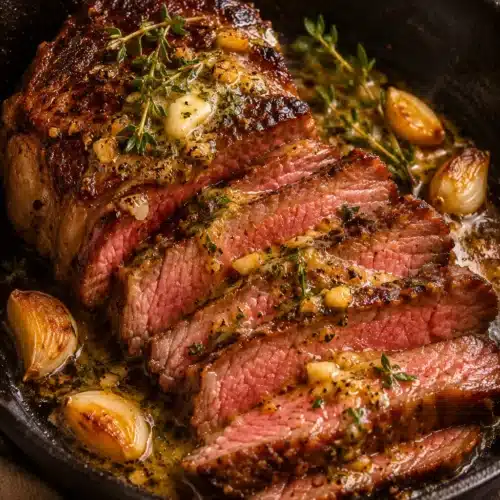
Garlic Butter Steak
Ingredients
Ingredients
- 1 to 2 boneless ribeye or scotch fillet steaks about 1 inch thick
- 1 tablespoon vegetable oil
- salt and black pepper to taste
- 5 tablespoons unsalted butter cut into cubes
- 6 sprigs fresh thyme or 3 rosemary sprigs
- 5 cloves garlic peeled and smashed
Instructions
Instructions
- Bring the steak to room temperature for 30 minutes, then pat it dry.
- Heat oil in a heavy skillet over high heat until very hot. Season the steak with salt and pepper and place it in the skillet.
- Sear the first side for 2 to 2 1/2 minutes until deeply browned, then turn the steak.
- After 1 minute, add butter, garlic, and thyme. Once the butter melts, spoon it continuously over the steak until cooked to your preferred doneness.
- Sear the edges briefly if desired, then transfer the steak to a plate, cover loosely, and rest 5 to 10 minutes.