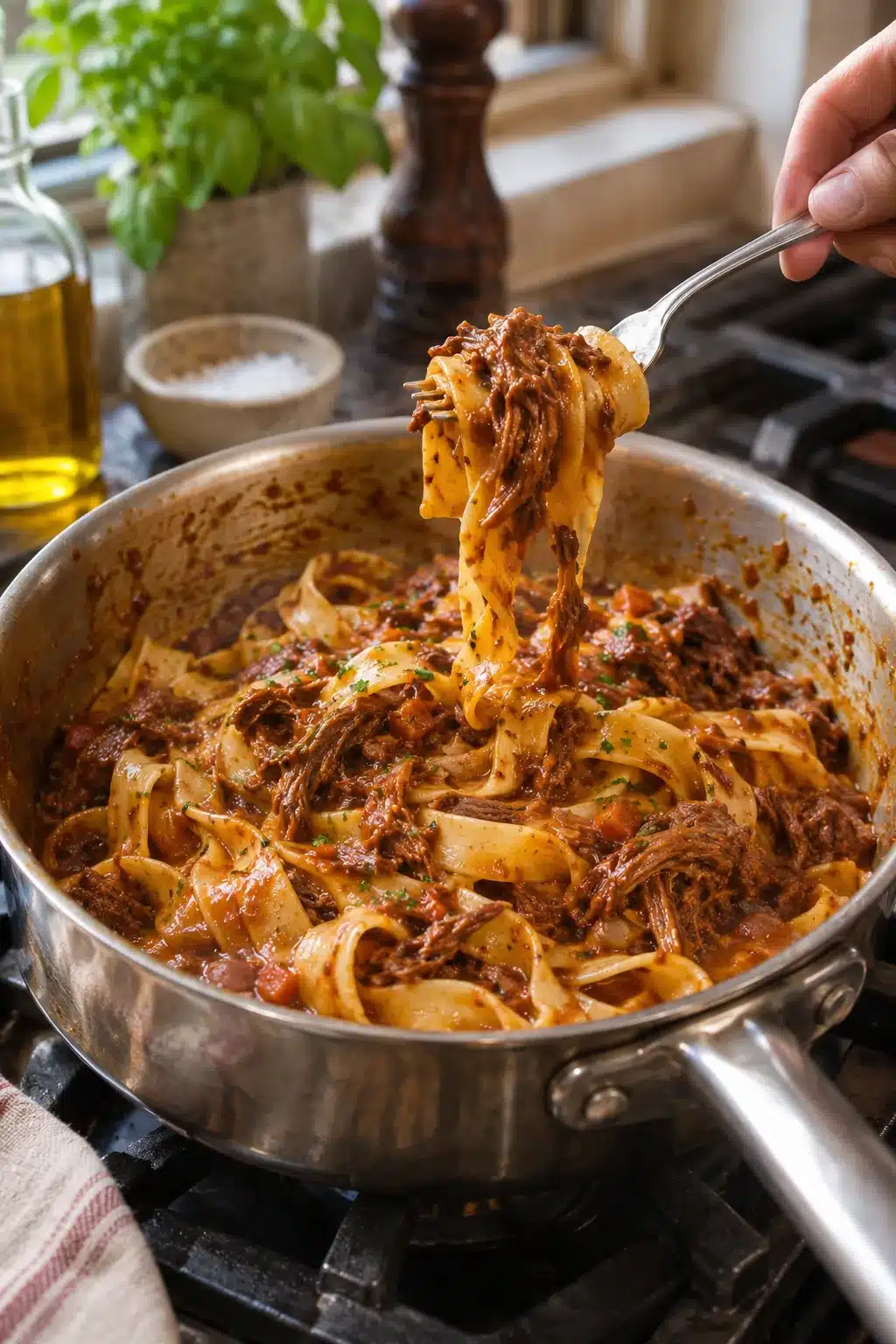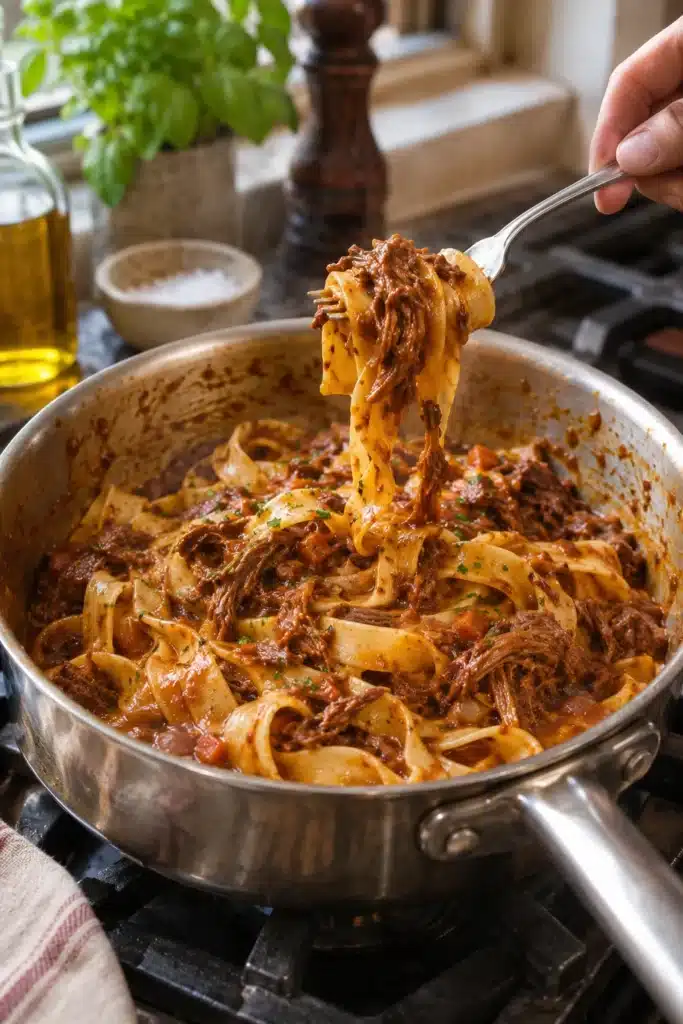
Beef cheek ragu pasta turns leftover braised beef into a deeply savory dinner with very little extra cooking. The sauce is already rich and tender, so a short simmer with garlic, tomato paste, and stock is enough to make it cling to al dente pasta. Finish with Parmesan and parsley for contrast, and keep a little pasta water nearby: it is the simple trick that turns a thick leftover sauce into a glossy, spoonable coating.
What beef cheek ragu pasta is
This is a quick pasta built from cooked beef cheeks and their red-wine sauce rather than a long raw-meat braise. Shredding the beef lets it distribute through every serving, while the existing sauce supplies body and concentrated flavor. The result is comforting but practical, especially when you have leftovers that deserve a fresh presentation.
Why this beef cheek ragu pasta works
The recipe uses three small balancing moves. Tomato paste adds savory depth without making the sauce watery, stock loosens the braising juices, and starchy pasta water helps the sauce emulsify around the noodles. Because the beef is already tender, the cooking time is only long enough to heat it gently and bring the sauce together.
How to make beef cheek ragu pasta
Ingredients
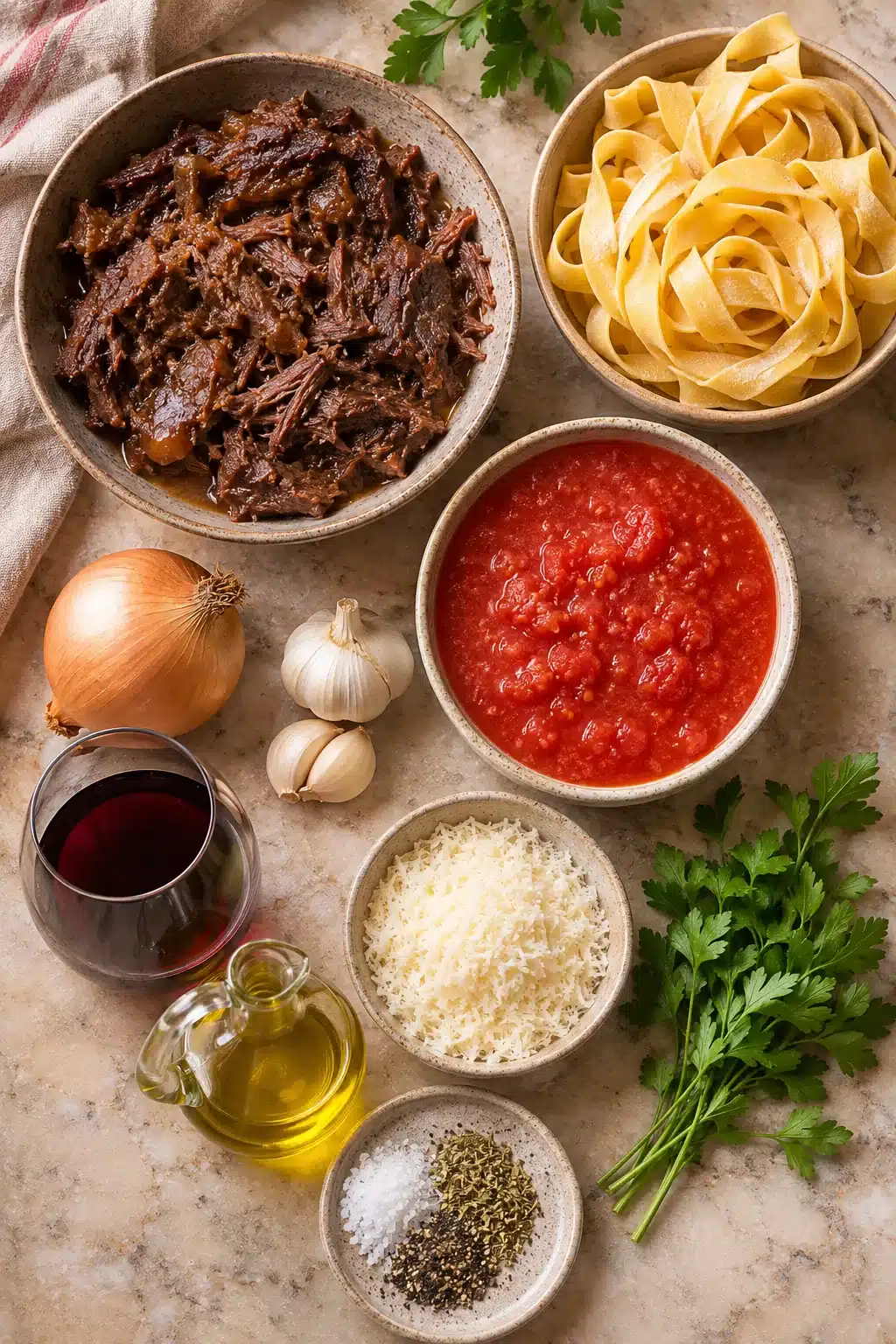
- 400 g cooked beef cheeks in red wine sauce, shredded
- 300 g pasta, cooked until al dente
- 1 tablespoon olive oil
- 1 garlic clove, finely chopped
- 1 tablespoon tomato paste
- 120 ml beef stock
- 30 g finely grated Parmesan
- 2 tablespoons chopped flat-leaf parsley, optional
- A pinch of freshly ground black pepper
Method
- Cook the pasta in salted water until just al dente, reserving a mug of pasta water before draining.
- Warm the olive oil in a large skillet over medium heat. Add the garlic and cook briefly until fragrant, then stir in the tomato paste.
- Add the shredded beef cheeks and their sauce with the stock. Simmer for 3 to 4 minutes until bubbling and glossy.
- Add the drained pasta and toss, loosening with reserved pasta water until the sauce coats every strand.
- Finish with Parmesan, black pepper, and parsley. Taste, adjust the seasoning, and serve hot.
Serving ideas
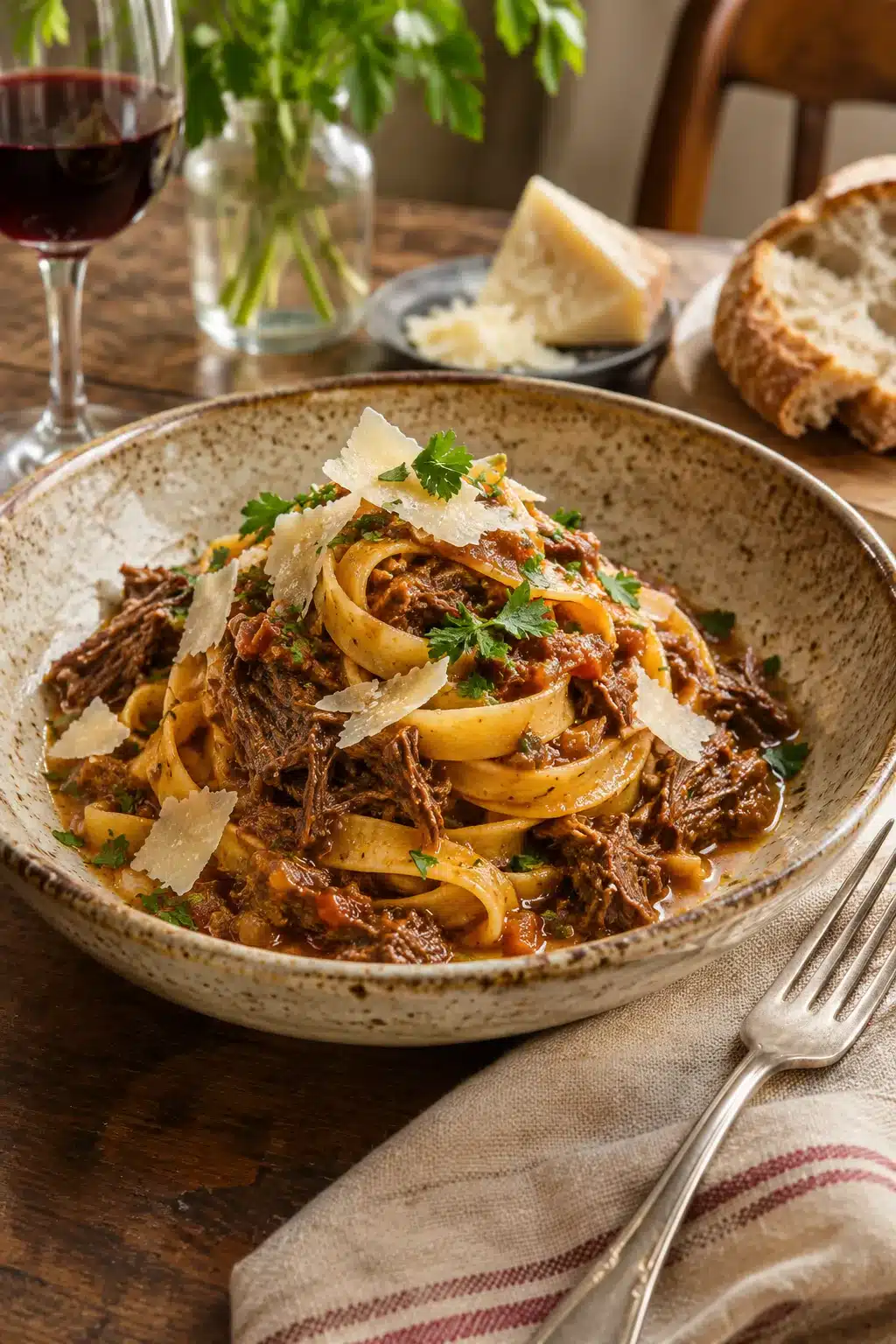
Serve the pasta in warmed bowls with extra Parmesan and a little parsley. A sharp green salad, steamed broccolini, or roasted vegetables keeps the meal balanced beside the rich sauce. For a dinner-party finish, add a spoonful of the beef cheeks on top of each portion so the main ingredient is immediately visible.
Tips and an optional variation
Keep the skillet at a gentle simmer once the beef goes in. A hard boil can reduce the sauce too quickly and make the shredded meat feel dry. Start seasoning after the stock and braising sauce are hot because both may already contain salt.
Optional variation: Stir in a teaspoon of finely grated lemon zest with the parsley at the end. It does not change the core recipe, but the fresh citrus aroma gives the rich beef sauce a lighter finish.
Storage and reheating
Cool leftovers promptly and refrigerate them in a covered container for up to three days. Reheat gently in a skillet with a splash of water or stock, stirring until the sauce loosens and the pasta is hot throughout. Avoid high heat, which can make the beef tighten and the pasta soften before the center warms.
If you are planning ahead, keep the beef and sauce separate from the pasta. The sauce reheats more smoothly, while freshly cooked pasta gives you the best texture. When combining them, use low heat and toss for a full minute so the sauce has time to settle into the folds and ridges.
Texture and timing guide
Look for small bubbles around the edge of the skillet and a sauce that leaves a brief trail when you drag a spoon through it. The shredded beef should be hot and yielding, never aggressively boiling. Pasta should still have a little resistance when you drain it because it will finish cooking as it absorbs the sauce.
Use the reserved water carefully. Begin with a tablespoon or two, toss, and add more only if the noodles look dry. Too much liquid can dilute the red-wine flavor, while a small addition creates the smooth coating that makes this quick dish taste finished rather than assembled.
Search answers for beef cheek ragu pasta
What pasta is best?
Tagliatelle, pappardelle, fettuccine, and rigatoni all work well. Choose a shape with enough surface or ridges to hold the thick sauce.
Can I use leftover beef cheek sauce?
Yes. Use the sauce that clings to the cooked cheeks, then add stock and pasta water gradually until it reaches a glossy consistency.
How do I stop the sauce from drying out?
Reserve pasta water and toss the noodles in the skillet rather than spooning sauce over them. The starch helps the sauce stay fluid.
FAQ
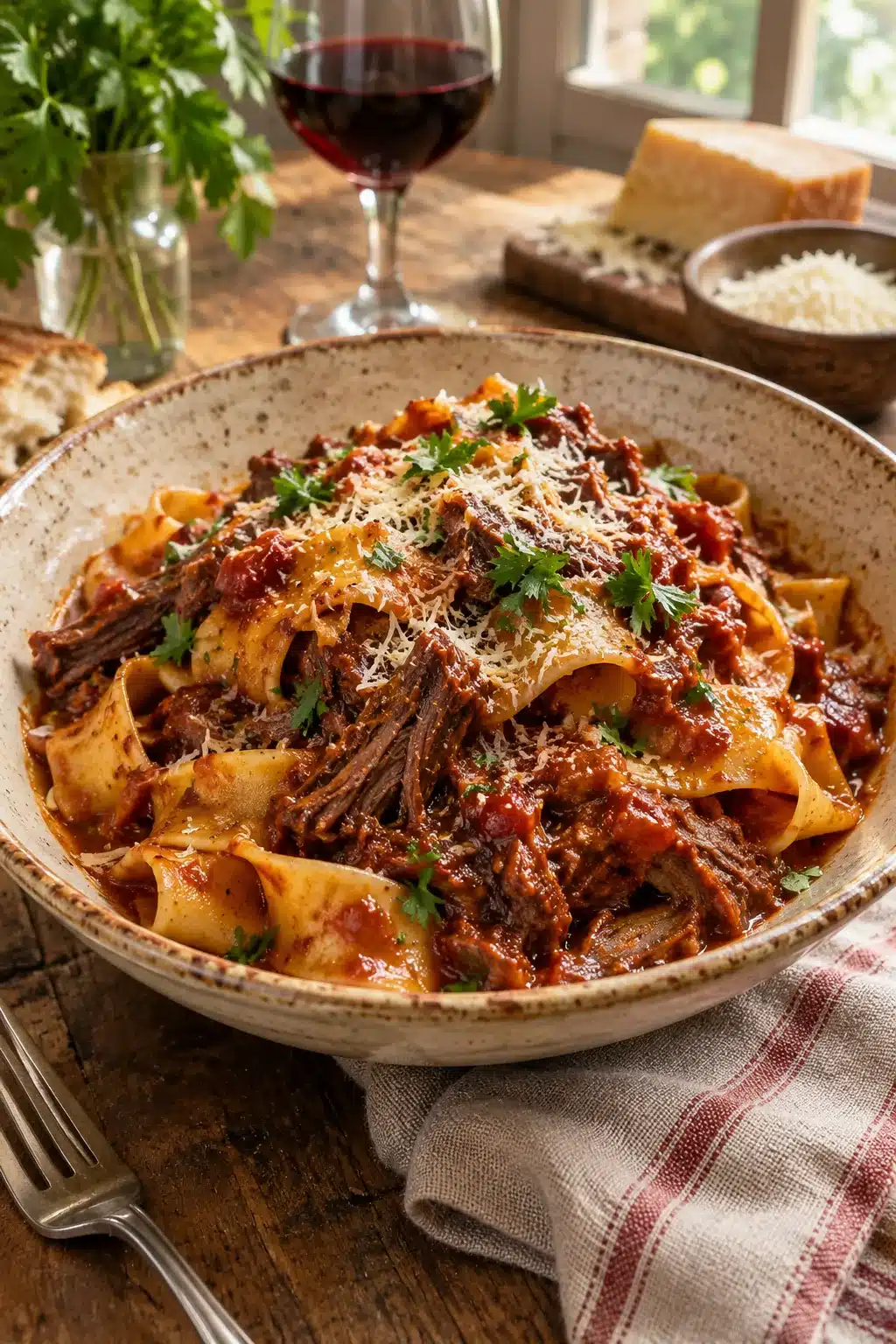
Beef cheek ragu pasta is a smart way to give a slow-cooked meal a second life. Keep the sauce glossy, warm the beef gently, and let the pasta water do the final blending.

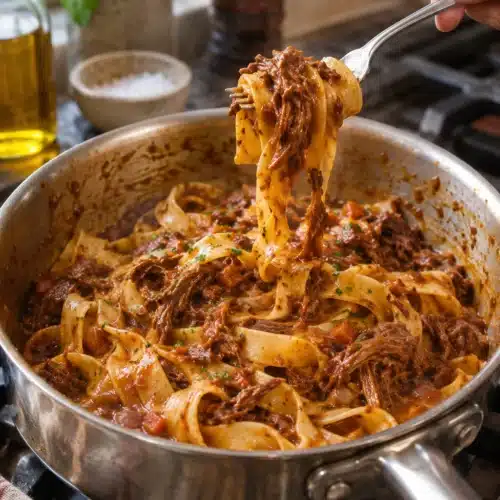
Beef Cheek Ragu Pasta
Ingredients
Ingredients
- 400 g cooked beef cheeks in red wine sauce shredded
- 300 g pasta cooked until al dente
- 1 tbsp olive oil for the pan
- 1 garlic clove finely chopped
- 1 tbsp tomato paste
- 120 ml beef stock
- 30 g Parmesan finely grated
- 2 tbsp flat-leaf parsley chopped
- 1 pinch black pepper freshly ground
Instructions
Instructions
- Cook the pasta in salted water until just al dente, reserving a mug of pasta water before draining.
- Warm the olive oil in a large skillet over medium heat. Add the garlic and cook briefly until fragrant, then stir in the tomato paste.
- Add the shredded beef cheeks and their sauce with the stock. Simmer for 3 to 4 minutes until bubbling and glossy.
- Add the drained pasta and toss, loosening with reserved pasta water until the sauce coats every strand.
- Finish with Parmesan, black pepper, and parsley. Taste, adjust the seasoning, and serve hot.