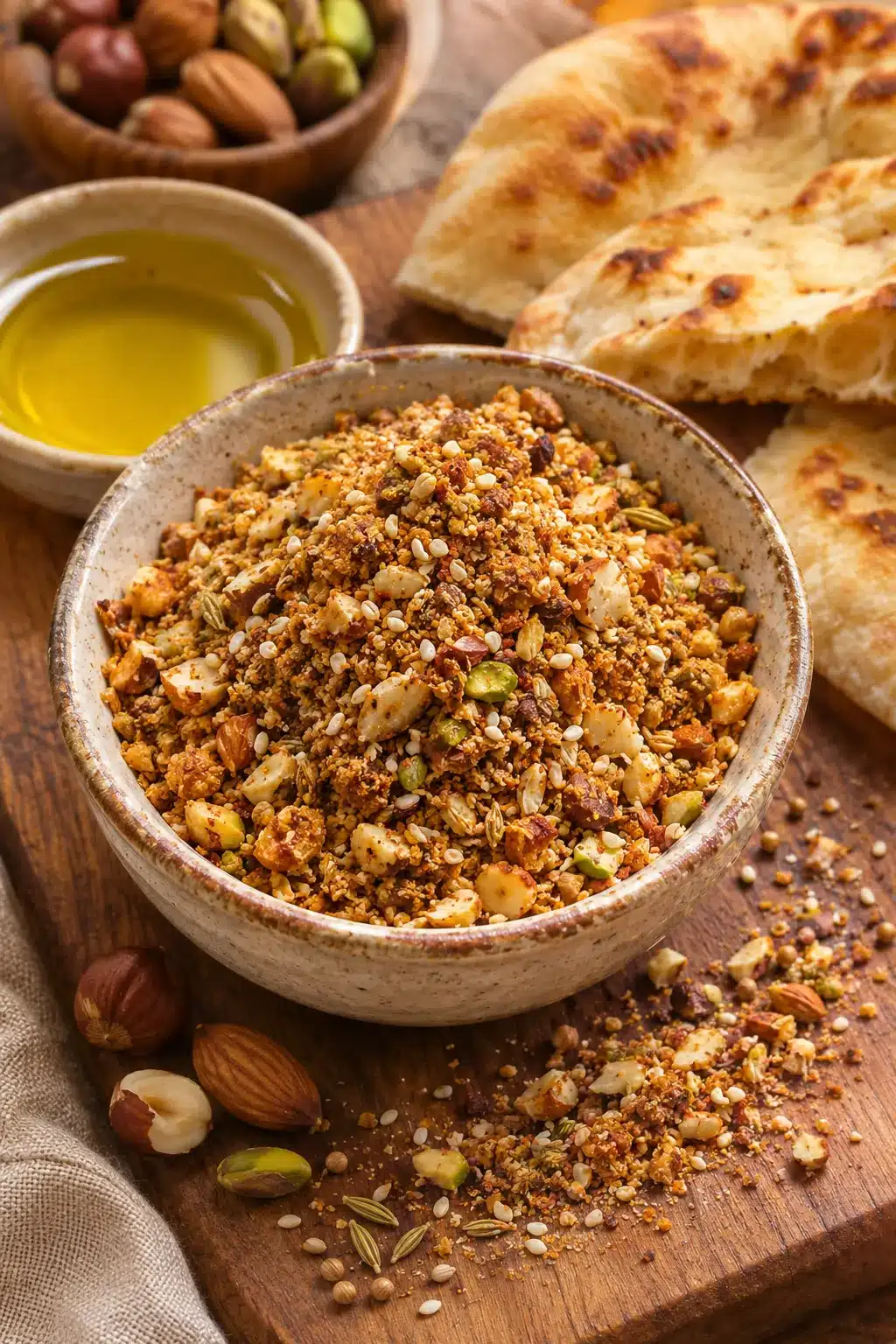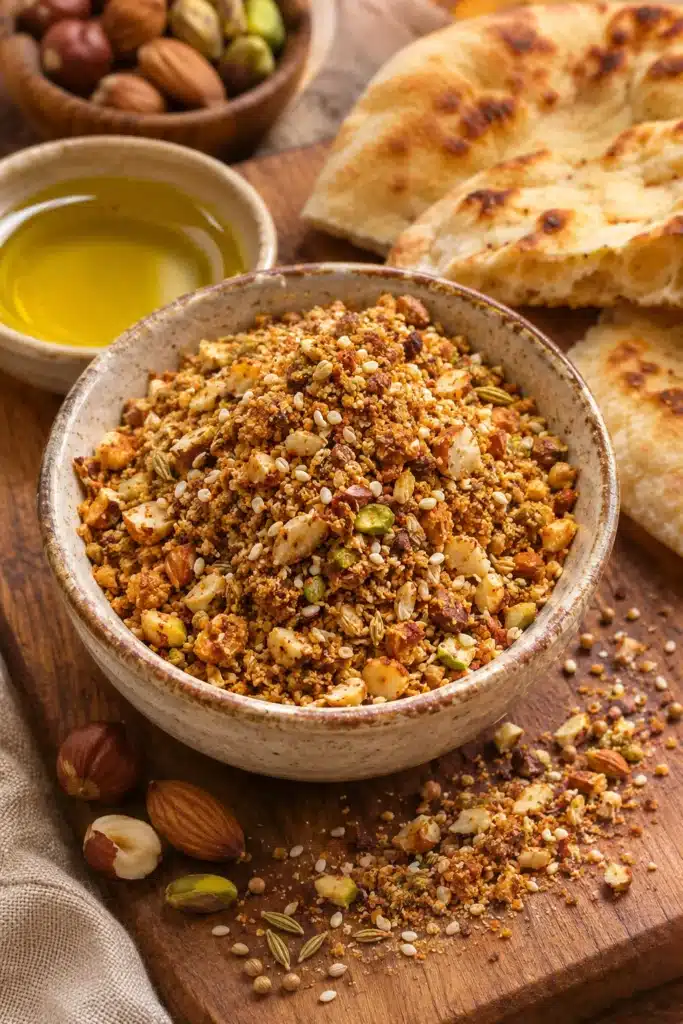
Dukkah is a crisp, savory blend of toasted nuts, seeds, and spices that turns a simple snack or finished meal into something with real texture and character. This homemade dukkah recipe uses hazelnuts, almonds, pistachios, sesame, fennel, cumin, coriander, and a little cayenne. The process is quick, but gentle toasting and a coarse grind matter: you want fragrant crumbs and nutty pieces, not a fine powder. Keep a jar ready for bread dipping, vegetables, eggs, and easy appetizers.
What makes this dukkah recipe useful
Dukkah is traditionally served with bread and olive oil, but its usefulness goes well beyond the dipping bowl. The nuts bring richness, sesame adds a subtle roasted note, fennel gives the blend a fresh aromatic edge, and cumin and coriander supply warmth. Because the mixture is dry and crunchy, a small spoonful adds contrast to soft foods without requiring another sauce or complicated preparation.
The blend is also easy to adjust. Cayenne provides a gentle spark, while the salt ties the toasted ingredients together. Keep the core nut-and-seed ratio intact, then change the heat or swap an optional nut when needed. The finished texture should remain pleasantly coarse, with enough larger pieces to make every bite interesting.
Why gentle toasting matters
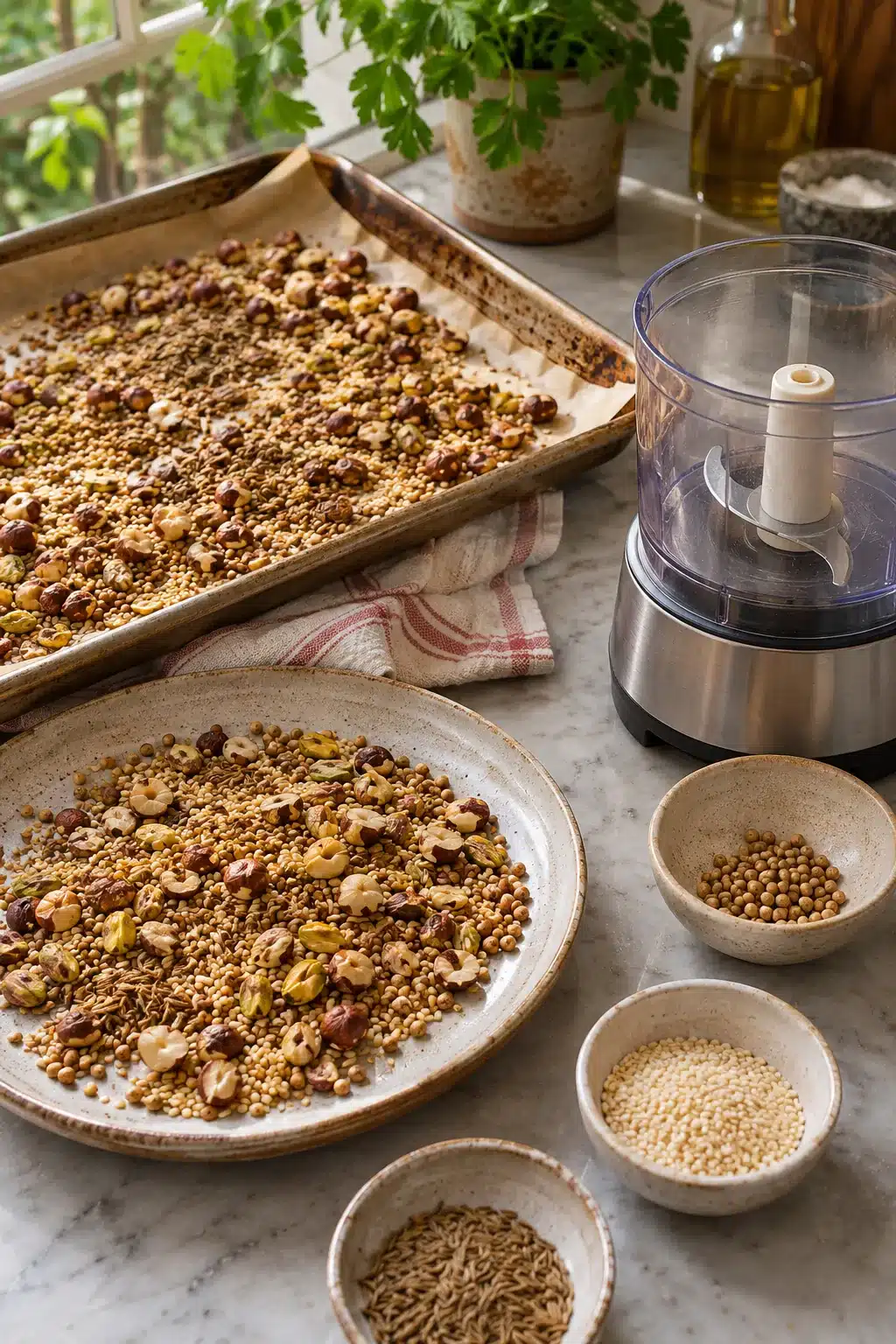
Toasting concentrates the flavor of the nuts and seeds, but the small ingredients can move from fragrant to bitter quickly. Roast the nuts first, then add sesame and fennel for the shorter final toast. Cooling the tray before grinding prevents carryover heat from turning the oils into a paste. A few pulses are better than running the processor continuously.
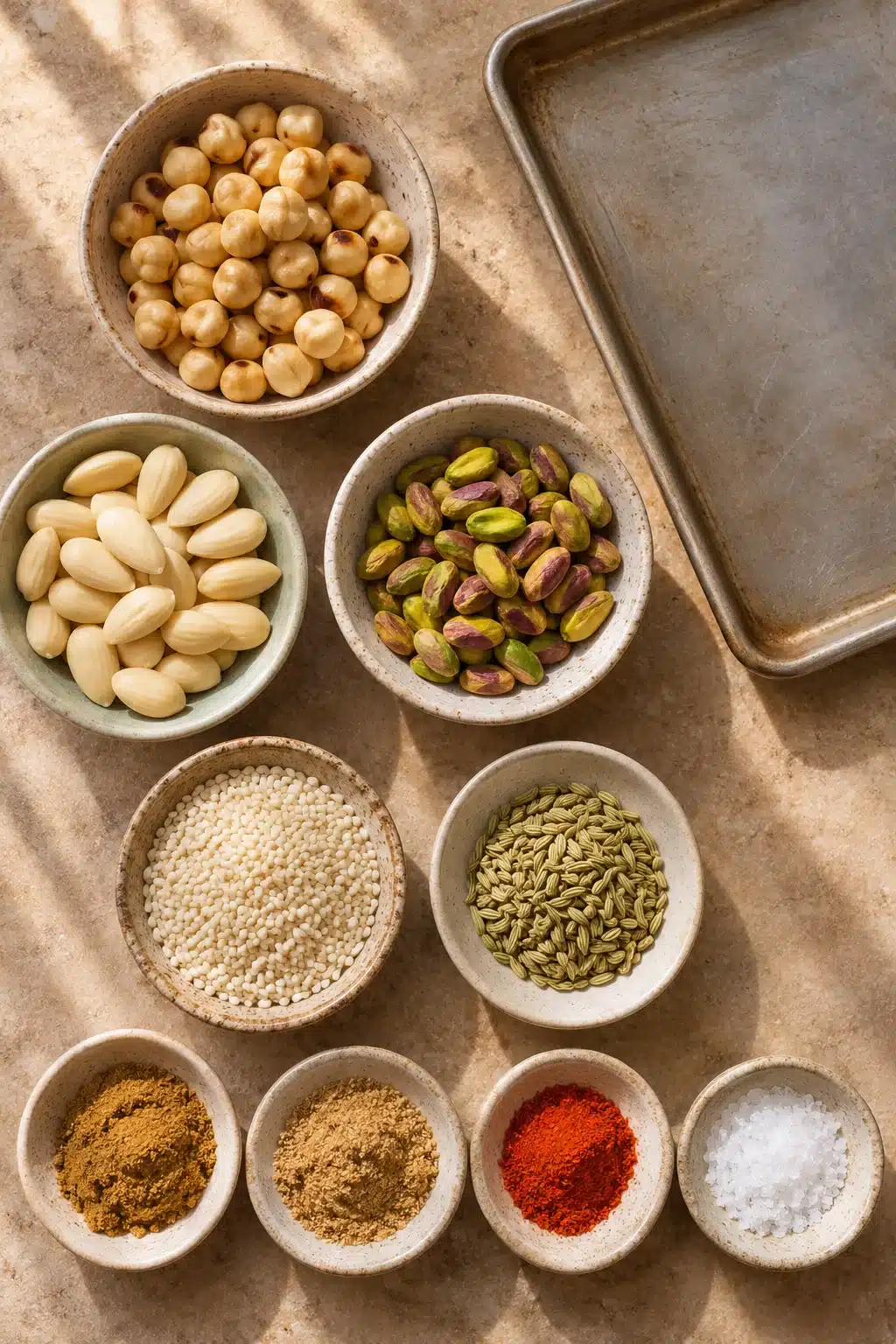
Ingredients for homemade dukkah
Measure everything before you begin because the roasting stages move quickly.
- 1/4 cup skinless hazelnuts, roasted
- 1 1/2 tablespoons blanched almonds
- 2 tablespoons unsalted pistachio kernels
- 2 tablespoons white sesame seeds
- 1 1/2 teaspoons fennel seeds
- 1/2 teaspoon ground cumin
- 1/2 teaspoon ground coriander
- 1/4 teaspoon cayenne pepper, optional and adjustable
- 1/4 heaped teaspoon kosher salt
How to make dukkah
Start with a dry baking tray and a mini food processor. A mortar and pestle also works, and a sealed bag with a rolling pin can handle the crushing if you do not have a processor. The goal is a coarse, spoonable blend.
- Preheat the oven to 350°F (180°C), or 320°F (160°C) fan-forced.
- Spread the hazelnuts, almonds, and pistachios on a tray and roast for 5 minutes.
- Add the sesame seeds and fennel seeds, shake the tray to spread them, and roast for 3 minutes more.
- Cool everything on the tray for 15 minutes, then transfer it to a mini food processor with the cumin, coriander, cayenne, and salt. Pulse until coarsely ground, never powdery.
- Serve as a bread dipper with olive oil or sprinkle generously over finished dishes.
How to serve dukkah
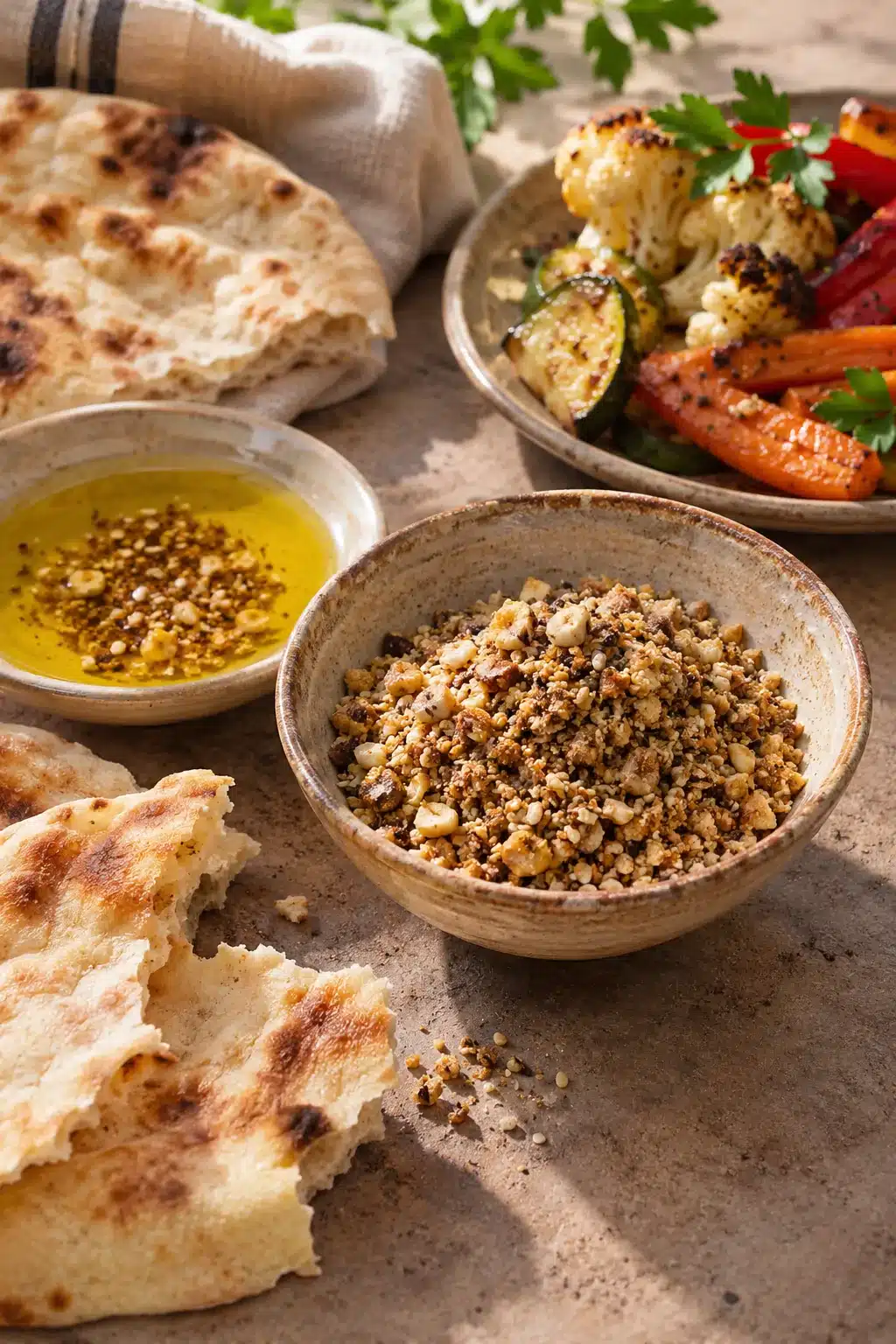
For the classic appetizer, place dukkah in one shallow bowl and good olive oil in another. Dip warm bread into the oil first, then into the blend so the nuts and seeds cling to the surface. Warm flatbread, focaccia, pita, or crusty sourdough all work well. This is a concrete, low-effort use case for a dinner-party starter: set out the two bowls with cut bread and let guests build each bite.
You can also finish roasted carrots, potatoes, cauliflower, or green beans with a generous sprinkle after cooking. Dukkah is especially good on avocado toast, scrambled eggs, hummus, whipped feta, labneh, grilled chicken, and pan-fried fish. Add it at the end when possible so the nuts stay crisp.
Tips and an optional variation
The most important tip is to watch the tray closely during the final three minutes. Sesame and fennel should be aromatic and lightly colored. If the blend tastes flat, it usually needs a little more salt; if it tastes harsh, the nuts may have over-toasted. Always cool the ingredients before pulsing so the mixture stays crumbly.
Optional variation: replace the almonds with walnuts or cashews, or use extra pistachios. Reduce or omit the cayenne for a milder blend. These changes are optional and do not alter the primary recipe method.
Storage and freshness
Once completely cool, transfer dukkah to an airtight jar and store it in a cool, dry cupboard. Use a clean, dry spoon each time. Because the blend contains nuts and seeds, its flavor is best while the toasted oils still smell fresh. For longer storage, refrigerate the sealed jar and let a small portion come to room temperature before serving so the aroma opens up.
Dukkah questions answered
What is dukkah used for?
Use dukkah as a dip with olive oil and bread, or sprinkle it over vegetables, eggs, dips, fish, chicken, and toast. Its main job is to add toasted flavor and crunch.
Should dukkah be fine or coarse?
Dukkah should be coarse. Pulse briefly and stop when you see distinct nut and seed pieces. A powder loses the texture that makes the blend useful.
Can I make dukkah without a food processor?
Yes. Cool the toasted ingredients, then crush them in a mortar and pestle or inside a sturdy sealed bag with a rolling pin. Work gradually so the mixture stays coarse.
FAQs about dukkah
Homemade dukkah is a small preparation with a big payoff: toast carefully, cool completely, and pulse only until coarse. Once the jar is ready, a quick appetizer or flavorful finishing touch is always within reach.

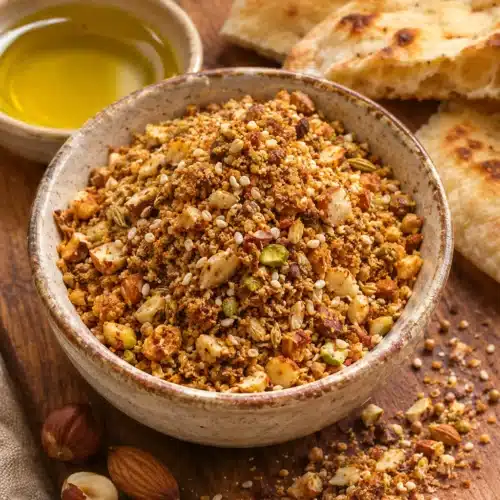
Homemade Dukkah
Ingredients
Ingredients
- 1/4 cup skinless hazelnuts roasted
- 1 1/2 tablespoons blanched almonds skinless
- 2 tablespoons unsalted pistachio kernels
- 2 tablespoons white sesame seeds
- 1 1/2 teaspoons fennel seeds
- 1/2 teaspoon ground cumin
- 1/2 teaspoon ground coriander
- 1/4 teaspoon cayenne pepper adjust to taste
- 1/4 heaped teaspoon kosher salt
Instructions
Instructions
- Preheat the oven to 350°F (180°C), or 320°F (160°C) fan-forced.
- Spread the hazelnuts, almonds, and pistachios on a tray and roast for 5 minutes.
- Add the sesame seeds and fennel seeds, shake the tray to spread them, and roast for 3 minutes more.
- Cool everything on the tray for 15 minutes, then transfer it to a mini food processor with the cumin, coriander, cayenne, and salt. Pulse until coarsely ground, never powdery.
- Serve as a bread dipper with olive oil or sprinkle generously over finished dishes.