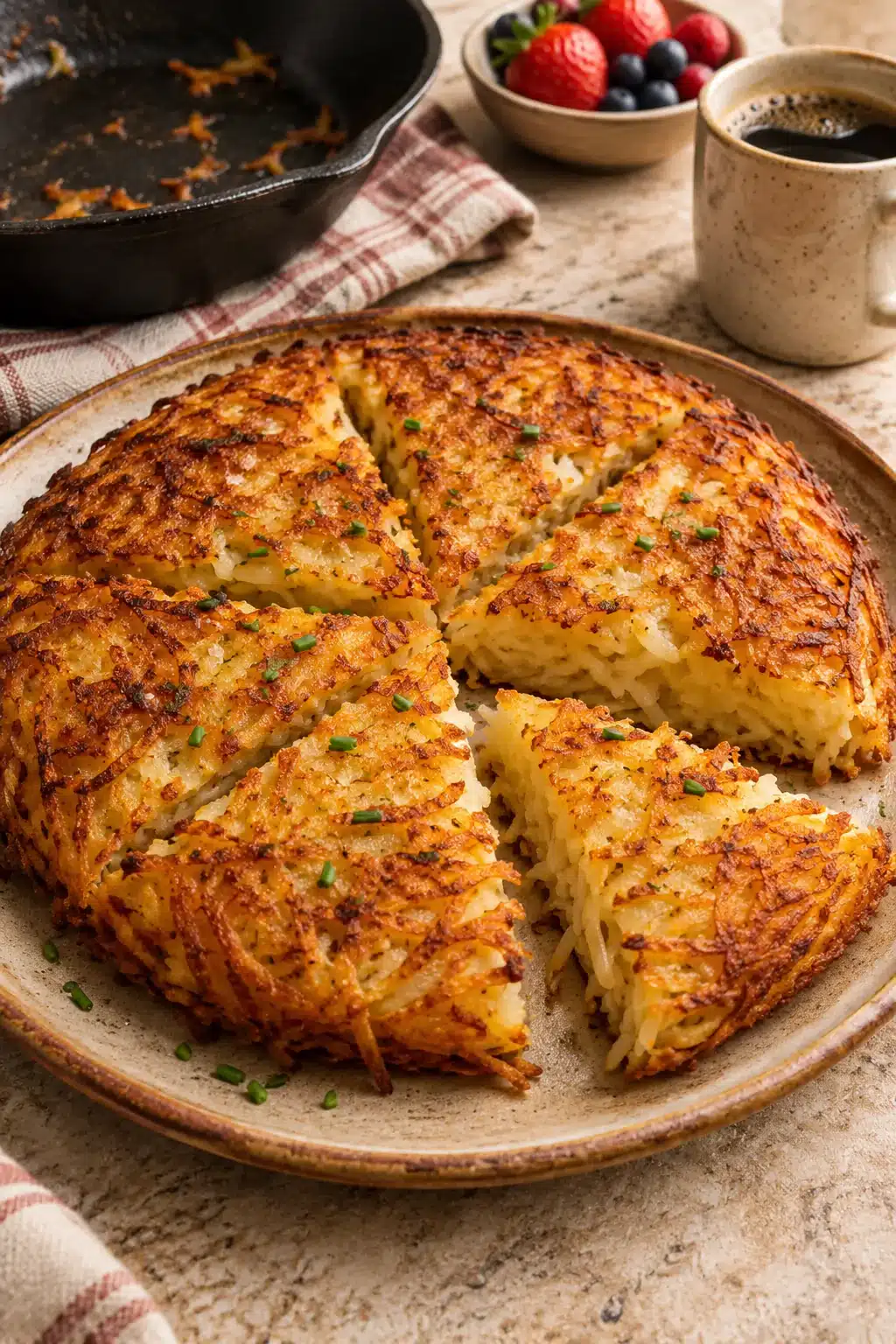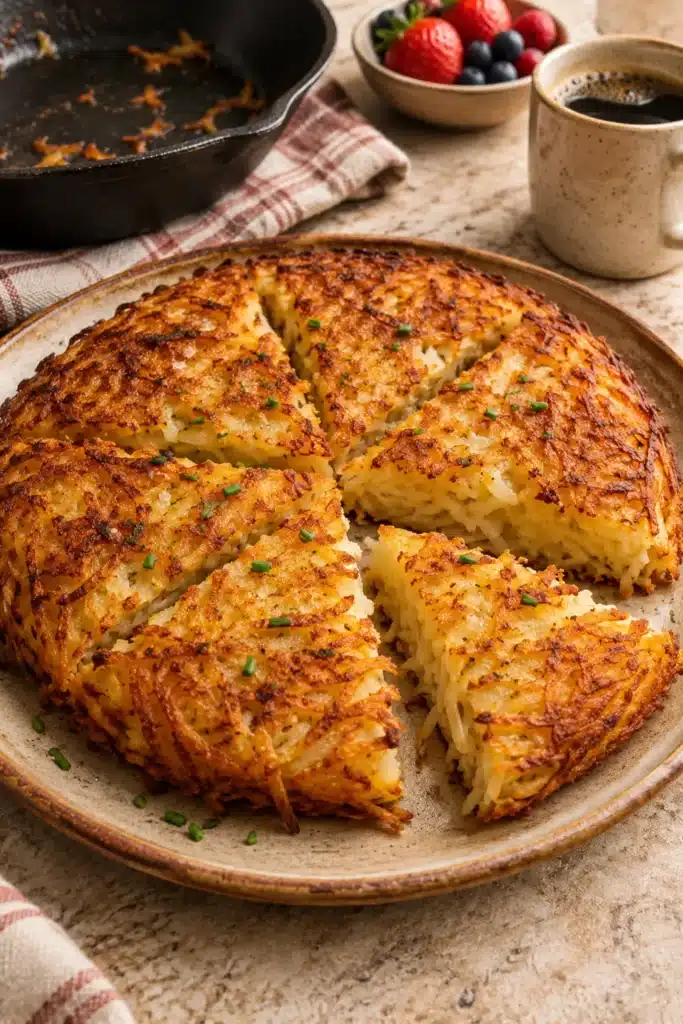
A giant hash brown gives you the crisp, golden potato crust you want from breakfast without standing over the stove making individual patties. This giant hash brown recipe uses grated starchy potatoes, olive oil, salt, and pepper, then cooks them as one skillet-sized cake that serves four to six. The key is simple: rinse away excess starch, squeeze the shreds very dry, and let each side develop a deep, crunchy crust before slicing.
What makes a giant hash brown work
Individual hash browns are delicious but require repeated batches. A single large cake is easier to serve for brunch and keeps the center tender while the outside turns crisp. Rinsing the potato removes surface starch, and drying it thoroughly prevents steaming. A nonstick skillet makes the flip manageable and helps the browned crust release in one piece.
Why this method works
The recipe uses a short rinse and a very hot first sear to create the contrast that makes a hash brown satisfying. Water is the enemy of browning, so the squeezed potato goes into the pan as dry as possible. The thin, even layer gives the heat enough access to cook the shreds through, while the oil carries heat around the edges and encourages an even crust. Turning the cake on a plate protects the shape and avoids trying to rotate a fragile round directly with a spatula.
Starchy potatoes are especially useful because their dry interior cooks fluffy while their surface forms a lacy, browned network. Resist pressing repeatedly once the potatoes are in the skillet; one gentle pat creates contact, but constant pressure can compact the center. Keep the heat at medium-high long enough to brown, then reduce it slightly if the crust is darkening before the center feels tender.
Ingredients
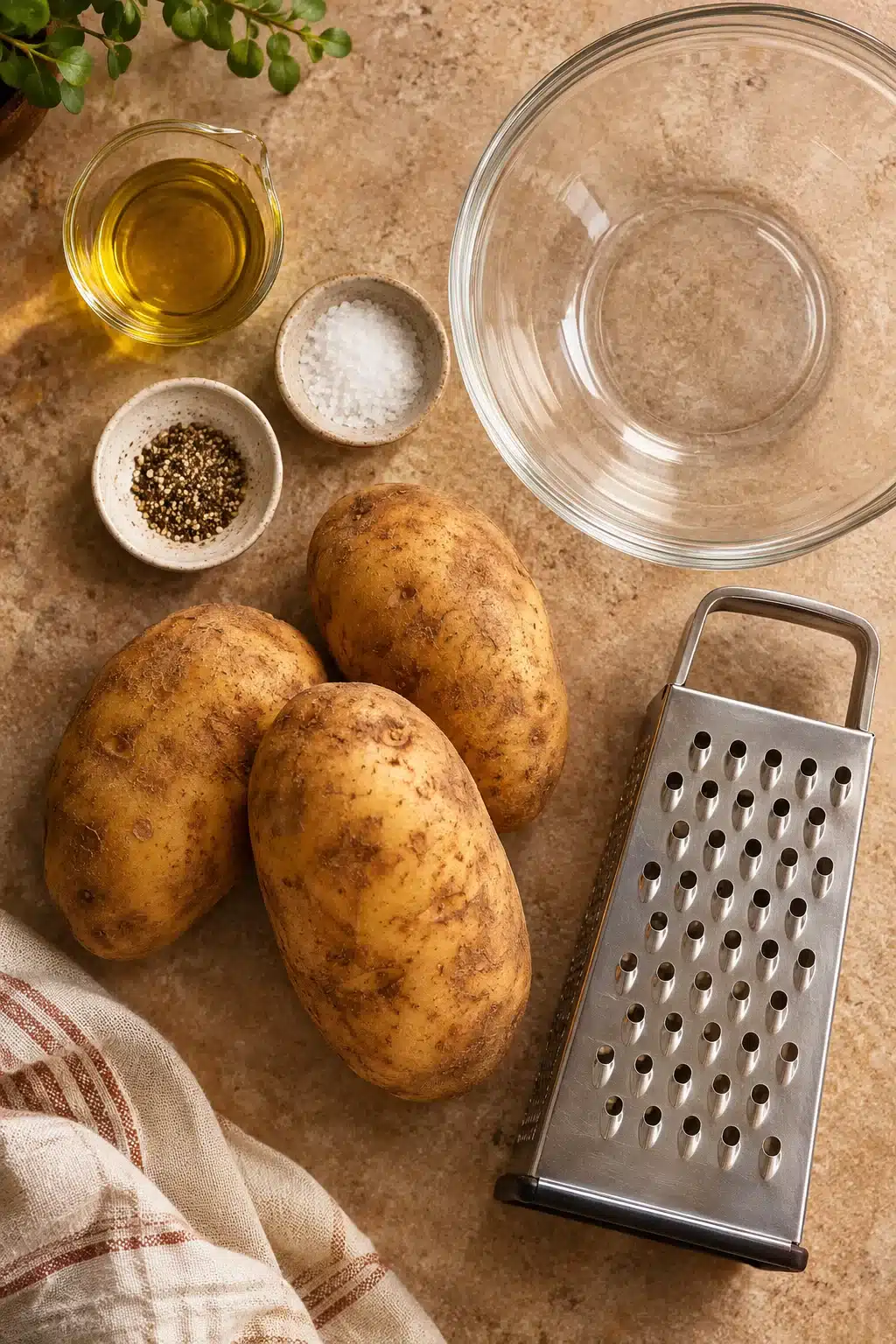
- 1 kg starchy potatoes, peeled and grated
- 1 teaspoon fine salt, plus more to taste
- 1/2 teaspoon freshly ground black pepper
- 4 tablespoons extra-virgin olive oil, divided
How to make a giant hash brown
Use a bowl of cold water, a large colander, a clean towel, and a 9-inch nonstick skillet. Keep the potato layer even so the outside browns before the center becomes too soft.
- Peel and grate the potatoes into a large bowl of water.
- Rinse the grated potato until the water runs clear, then squeeze it very dry in handfuls.
- Mix the potato with 1 tablespoon olive oil, the salt, and pepper.
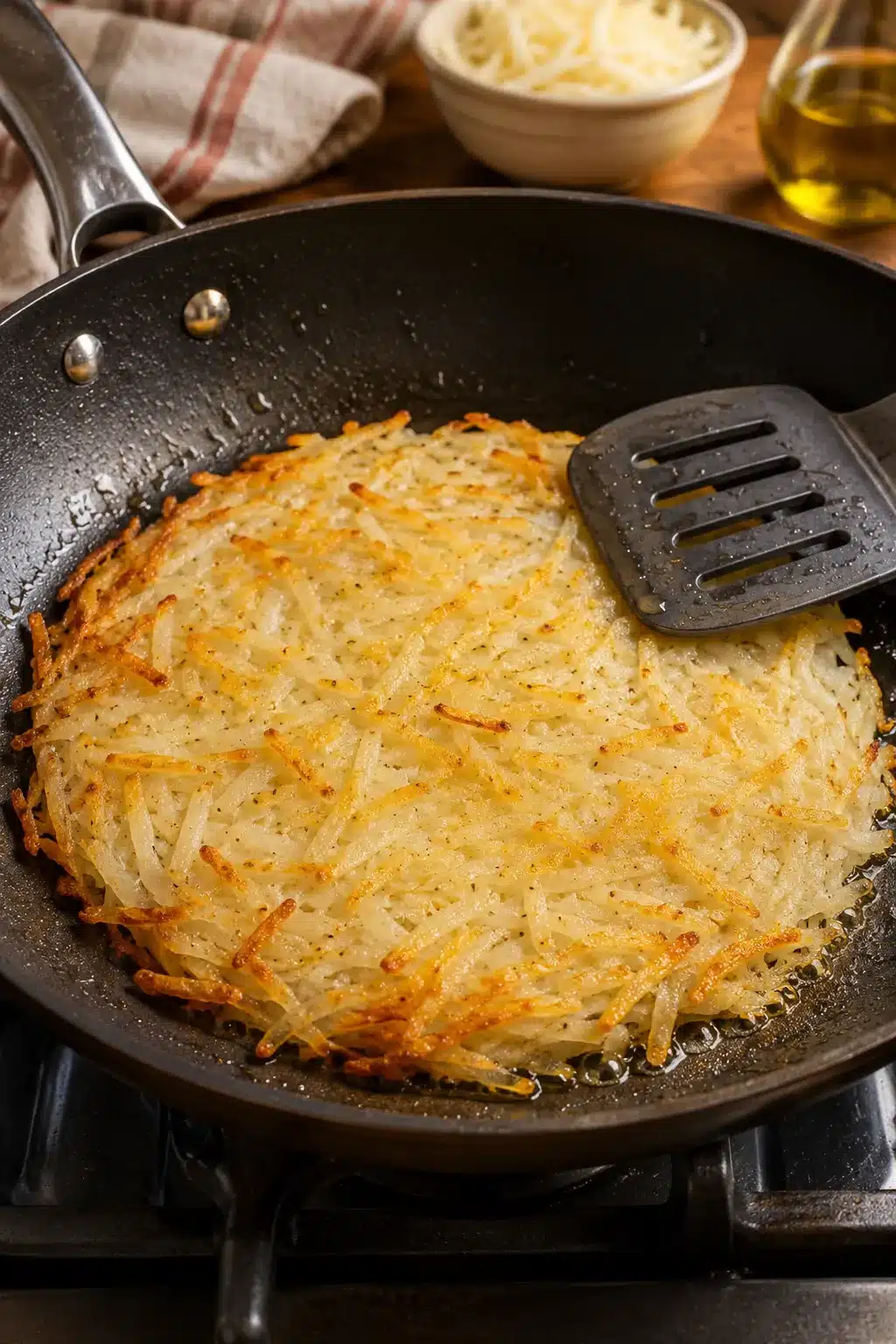
- Heat 2 tablespoons oil in a 9-inch nonstick skillet over medium-high heat. Spread in the potato and pat it to about 1.5 cm thick.
- Cook 5–8 minutes until the underside is golden and crisp, then slide onto a plate and invert it back into the skillet.
- Drizzle the remaining oil around the edge and cook 4–6 minutes more until crisp. Slide onto a plate, season, garnish if desired, and cut into wedges.
Serving ideas
Cut the finished hash brown into wedges and serve it with fried or poached eggs, sautéed greens, roasted tomatoes, or a simple fruit salad. It is a particularly useful centerpiece for a weekend brunch: put the skillet cake on a board, add small bowls of sour cream, hot sauce, or chopped herbs, and let everyone take a wedge.
For a fuller breakfast plate, pair one wedge with an egg and a spoonful of beans or sautéed mushrooms. For a lighter meal, add a sharp salad dressed with lemon or vinegar to balance the richness of the olive oil and potatoes. Serve the hash brown soon after cooking so the crust remains audibly crisp at the table.
Tips and an optional variation
The most important tip is to squeeze out as much water as possible. Wet shreds soften the crust and make flipping harder. Check the underside by lifting a small edge; it should be richly golden before you turn it. If the potato browns too quickly, lower the heat so the center has time to cook.
Optional variation: add a little chopped parsley after cooking, or serve with a spoonful of sour cream and sliced scallions. Keep the primary potato, oil, salt, and pepper method unchanged.
Storage and reheating
Cool leftovers, cover them, and refrigerate for up to three days. Reheat wedges in a skillet or a hot oven until the crust is crisp again. Avoid microwaving when possible because it softens the browned edges. Freeze fully cooled wedges in a sealed container, separating layers with parchment, then reheat from thawed or frozen in a hot oven.
Giant hash brown questions answered
Why rinse grated potatoes?
Rinsing removes surface starch that can make the shreds gummy and less crisp. Clearer rinse water is a useful visual cue.
How do I know when to flip it?
Lift one edge with a spatula. The underside should be firm and deep golden, while the top should hold together when the cake slides onto a plate.
Can I use a cast-iron skillet?
Yes, but release and flipping are easier in a well-seasoned pan. A nonstick skillet is the most forgiving choice for a first attempt.
FAQs
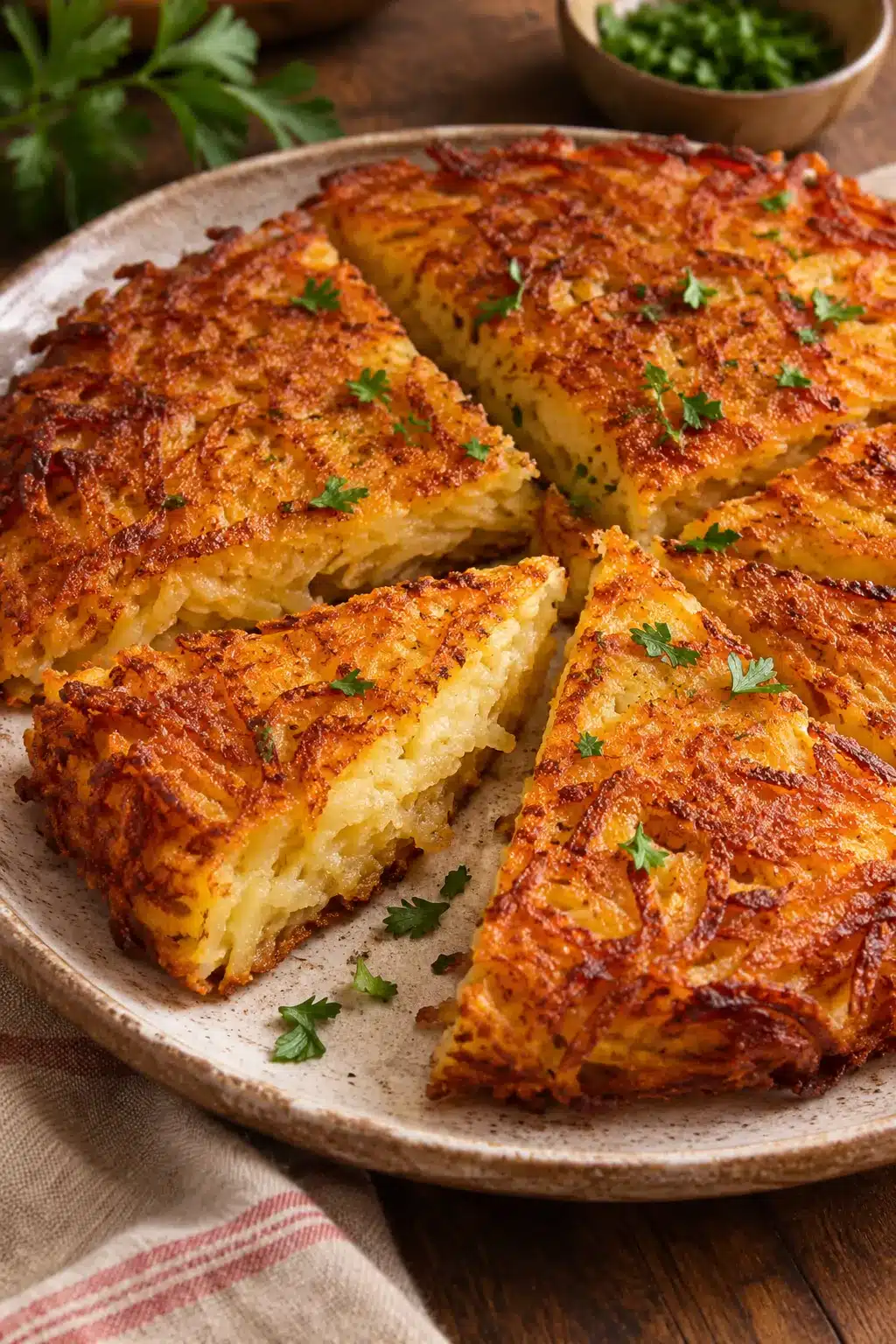
Once you master the dry potato shreds and patient first side, this giant hash brown becomes a dependable breakfast centerpiece: crisp enough to crack with a fork, tender enough to serve in generous wedges.

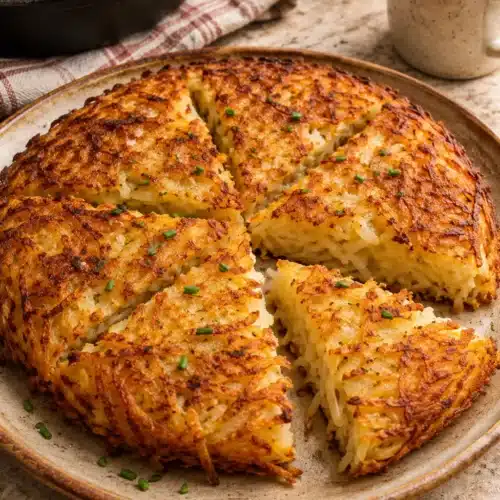
Giant Hash Brown
Ingredients
Ingredients
- 1 kg starchy potatoes peeled and grated
- 1 teaspoon fine salt plus more to taste
- 1/2 teaspoon black pepper freshly ground
- 4 tablespoons extra-virgin olive oil divided
Instructions
Instructions
- Peel and grate the potatoes into a large bowl of water.
- Rinse the grated potato until the water runs clear, then squeeze it very dry in handfuls.
- Mix the potato with 1 tablespoon olive oil, the salt, and pepper.
- Heat 2 tablespoons oil in a 9-inch nonstick skillet over medium-high heat. Spread in the potato and pat it to about 1.5 cm thick.
- Cook 5–8 minutes until the underside is golden and crisp, then slide onto a plate and invert it back into the skillet.
- Drizzle the remaining oil around the edge and cook 4–6 minutes more until crisp. Slide onto a plate, season, garnish if desired, and cut into wedges.